
Jeon Beom-seon: "I was shocked to learn my ancestor was Yi Wan-yong's interpreter"
Yangbans vocalist Jeon Beom-seon opens up about the trauma of discovering his ancestor, Yi Injik, was a prominent pro-Japanese collaborator.
As controversy surrounding the pro-Japanese activities of actress Oh Ha-young's great-grandfather draws social attention, the confession of Jeon Beom-seon—vocalist of the band Yangbans who previously revealed himself to be a "descendant of pro-Japanese collaborators"—is gaining renewed attention. Jeon revealed he was deeply shocked to learn late in life that his ancestor was a prominent pro-Japanese figure during the Japanese colonial period, prompting him to personally trace his ancestor's footsteps.
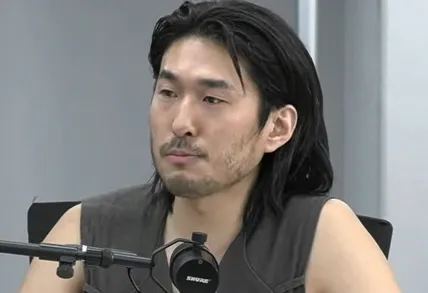
Appearing on the YouTube channel "Choi Wook's Maebul Show" on the 14th, Jeon confessed, "I developed a trauma" after discovering his lineage.
Previously, in April, Jeon appeared on the YouTube channel "Museum P" and revealed he is the fifth-generation descendant of Yi Injik, a journalist and author of "The Blood of Tears," considered Korea's first modern novel. The issue was that Yi was not merely a man of letters, but a figure who left a legacy of pro-Japanese activities during the Japanese colonial period.
It is known that after studying in Japan during the Korean Empire era, Yi served as an interpreter for the Japanese Navy during the Russo-Japanese War and subsequently continued his pro-Japanese activities, including serving as an interpreter for Yi Wan-yong. For Jeon, the most shocking realization was that this specific individual was his ancestor.
Even more ironic is that Jeon himself is a dedicated student of history.
After graduating from Minjok Sahwan High School in Hoengseong, Gangwon Province, he majored in history at Dartmouth College in the United States and earned a master's degree from Oxford University in the United Kingdom. During his university years, he developed a deep interest in modern Korean history after learning about Dr. Homer Hulbert, who served as a missionary, independence activist, and diplomat in the Korean Empire and during the Japanese colonial period.
Then one day, the history he was studying collided with his own family history.
According to Jeon, his mother revealed his ancestor's name to him, saying, "I know you study history, but do it after knowing your own background." While he initially associated Yi Injik with the literary figure who wrote "The Blood of Tears," he was unaware of the man's pro-Japanese collaboration.
His mother's explanation was even more jarring: Yi was not just a collaborator, but a man who served as an interpreter for Yi Wan-yong.
Recalling his feelings at the time, Jeon said he was profoundly shaken. The fact that his mother had kept this secret for so long highlights the weight of the memory left to the family; she admitted she could not bring herself to speak of it for a lifetime due to shame.
Jeon Beom-seon's story carries a meaning greater than a simple "confession of being a descendant of a pro-Japanese collaborator."
History is often remembered through grand events and famous names. However, the moment history enters an individual's life, it takes on a different face. The history of pro-Japanese collaboration, once a matter of nation and people, transforms into a matter of a single family's silence, shame, and the identity of a descendant.
The shock felt by Jeon arises from this intersection. He discovered late that the history of the independence movement, which he respected and studied, sat on the opposite side of his own bloodline.
He subsequently began researching the writings and records left by Yi. He did not stop at merely confirming his ancestor's wrongdoings, but instead asked, "Why did he abandon his family and his country?"
This question changes how one views historical figures. It is not an attempt to justify or grant amnesty to pro-Japanese acts, but an effort to understand the process through which a human being sided with the violence and power of the era.
Citing facts such as Yi's remarriage to a Japanese woman and his conversion to a Japanese religion, Jeon evaluated him as having "abandoned not only his country but also his family." He viewed how the betrayal of one's motherland and family could overlap within a single life through his own family history.
This is not to say that Jeon seeks to shoulder his ancestor's historical responsibility himself. Rather, his actions reflect a way of distinguishing between past and present responsibility while refusing to turn away from the past.
While one cannot inherit the sins of an ancestor, one also cannot claim there is no obligation to face the past.
For Jeon, that method was "study." Without glorifying his ancestor or labeling himself a criminal solely due to his bloodline, he looked directly at historical records. He used this process to reconstruct his own identity.
His work as an author follows this same logic. By writing "Jeon Beom-seon's Korean History Therapy" and connecting history with popular music, he has worked to transform past trauma into a realm of knowledge and creativity.
In psychoanalytic terms, this is a process of bringing repressed memories into conscious awareness rather than burying them. Erasing the past does not heal the wound; rather, by verbalizing memory and understanding its structure, an individual can finally form a new relationship with the past.
This is why Jeon's case is so compelling.
To him, being a descendant of a pro-Japanese collaborator was neither a badge of honor nor a stigma to be hidden for life. It was an uncomfortable historical legacy that forced him to question who he is.
Instead of running away, he chose to look closer.
After graduating from Dartmouth, Jeon returned to Korea and formed "Jeon Beom-seon and Yangbans" in 2014. In 2016, he released the album "Revolutionary," inspired by Jeon Bong-jun, and won the Best Rock Song award at the Korean Music Awards the following year for the track "Revolution from Below." He currently performs as part of the reorganized group Yangbans.
His musical journey shows that his interest in history is not a mere image strategy, but a fundamental pillar of his creativity.
Ultimately, a descendant does not choose their lineage. However, what they do after discovering that truth is a choice available to the living.
Jeon Beom-seon has demonstrated that choice: not mistaking an ancestor's sins for his own, but refusing to ignore them. He turns shame into inquiry, inquiry into study, and study into creative and social expression.
History is not inherited through blood, but carried through memory. While the wrongdoings of the past cannot be genetically passed down as guilt, how one remembers that past and responds to the present remains the responsibility of the descendant.
In his lineage, Jeon found more than just "pro-Japanese blood." He found a history of how the power, desire, betrayal, and silence of an era remain embedded in a family's memory.
Facing these uncomfortable memories, he chose record-keeping over silence. Perhaps the most mature responsibility toward history is not carrying the sins of the past, but asking how those sins were made and remembering them so that such forgetfulness never repeats.



Comments 0
Comments are currently disabled.