
Soyou: "Cohabitation is a must before marriage" — Reality over romance
Singer Soyou shares her pragmatic views on marriage, prioritizing lifestyle compatibility and cohabitation over romantic ideals.
Singer Soyou has revealed a pragmatic approach to dating, moving away from the romantic expectations of marriage and childbirth she held in her 20s. She stated she will only decide whether to marry after living with a partner first. Specifically, she expressed a shift in values, viewing marriage not as a matter of emotion, but as a matter of "lifestyle compatibility," citing economic status, daily habits, and even perceived body temperature as key factors.
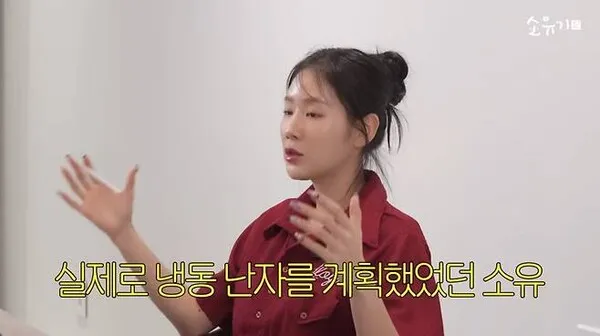
On the 17th, Soyou spoke candidly about her evolving views on marriage in a video released on her YouTube channel, "Soyougi."
In SISTAR's hit song "Give It To Me," the lyrics include the line, "Should I marry before I turn thirty?" Soyou recalled that she actually thought seriously about marriage when she sang that song. "I was 23 when I sang that song," she stated. "As a singer, my goals were professional, but my ultimate life goal was to become a mother."
At that time, marriage for Soyou was a natural next step that was intrinsically linked to childbirth. She even made plans to freeze her eggs once she turned 30. Having heard that one should prepare while young and healthy to ensure egg quality, she looked into the costs and storage periods, but ultimately gave up after learning she would have to administer daily abdominal injections.
However, as time passed, her perspective on marriage and childbirth changed significantly.
The decisive turning point was COVID-19. Soyou, who was not dating at the time, explained that her thoughts on childbirth shifted as she watched children who were unable to even go outside freely due to the pandemic.
"There are so many fun things in the world, and it was pitiful to see children unable to do anything because of COVID-19," she said. "I felt that if I had a child in such a world, there would be too many things to worry about."
The woman who considered "becoming a mother" the ultimate goal of her life in her 20s is now contemplating life after childbirth and the broader social environment. Rather than accepting marriage and childbirth as a natural life cycle, her values have shifted toward weighing the responsibilities and realistic conditions she must manage.
In particular, from around the age of 32, her desire for marriage itself decreased noticeably.
"If I'm not going to have children, I don't really want to get married," Soyou said candidly. "I'm not sure if I can live with one person for the rest of my life."
That does not mean she has completely closed the door to marriage. However, she noted that if she chooses to marry, the economic gap with her partner should not be excessively large. While it is fine if a partner has slightly more or less money than her, she finds an extreme disparity in economic power to be burdensome.
The clearest criterion Soyou revealed was "cohabitation."
She emphasized, "I will definitely try living together before getting married." This is because, through her long experience living in dormitories with SISTAR members and living with her older sister, she experienced firsthand that two people living in close proximity cannot resolve differences simply through romantic feelings.
In particular, Soyou cited minor but realistic living conditions as examples.
"It is really difficult when a person who feels the cold meets someone who feels a lot of heat. If the partner turns the heating up high in the winter, I might feel too hot," she explained.
Conflicts surrounding marriage do not necessarily stem from massive clashes of values. Rather, subtle differences in repetitive daily life—such as temperature, sleep, cleanliness, eating habits, and spending habits—can determine the sustainability of a relationship. The fact that Soyou mentioned "perceived temperature" as an important criterion suggests she is specifically imagining the practical life that follows the initial romance.
Her criteria for physical appearance were also a lower priority. Soyou stated that she values self-management, lifestyle habits, and musical tastes more. Rather than listing the conditions of an ideal type, her attitude is to weigh how well their lifestyles can harmonize when sharing a space.
Ultimately, Soyou's stance on cohabitation aligns with a generational shift in perception regarding marriage. It reflects a move away from the traditional concept of marriage as the ultimate destination of love, toward choosing a formal union only after confirming if a partner is someone they can truly live with.
Meanwhile, Soyou has also been actively managing her own finances. Revealing that she invested approximately 100 million won in Samsung Electronics and SK Hynix about 10 years ago to study the stock market, she later used the profits from those investments to help purchase her new home.
After leaving the home she lived in for six years, Soyou recently showcased her new residence via YouTube, featuring a sauna, workout space, studio, and dressing room.
While the 23-year-old Soyou once imagined her future through song lyrics, the 35-year-old Soyou now looks past the institution of marriage toward the actual life lived within it. Her shift from deciding marriage based on love to evaluating economic stability, lifestyle habits, and daily compatibility serves as a candid reflection of how the concept of marriage is being redefined.
Oh Seo-yoon reports for Mediafine Global, mainly covering K-Variety and also writing on K-drama, K-pop and K-movie.
Related Articles

BTS Concerts Shake South American Economic Landscape — 51.7 Billion Won in Bogotá, 72 Billion Won in Chile

Following BTS, Stray Kids Also Declare Non-Participation in Grammy Awards 'With Confidence'

Comments 0
Comments are currently disabled.