
Demi Moore: What happened after receiving 16.8 billion won for her role as a stripper?
Actress Demi Moore reflected on the moment 36 years ago when she demanded fair compensation for her work, leading to her becoming one of Hollywood's highest-paid actresses for the film 'Striptease', but also facing backlash and forced shame due to the nature of her role.
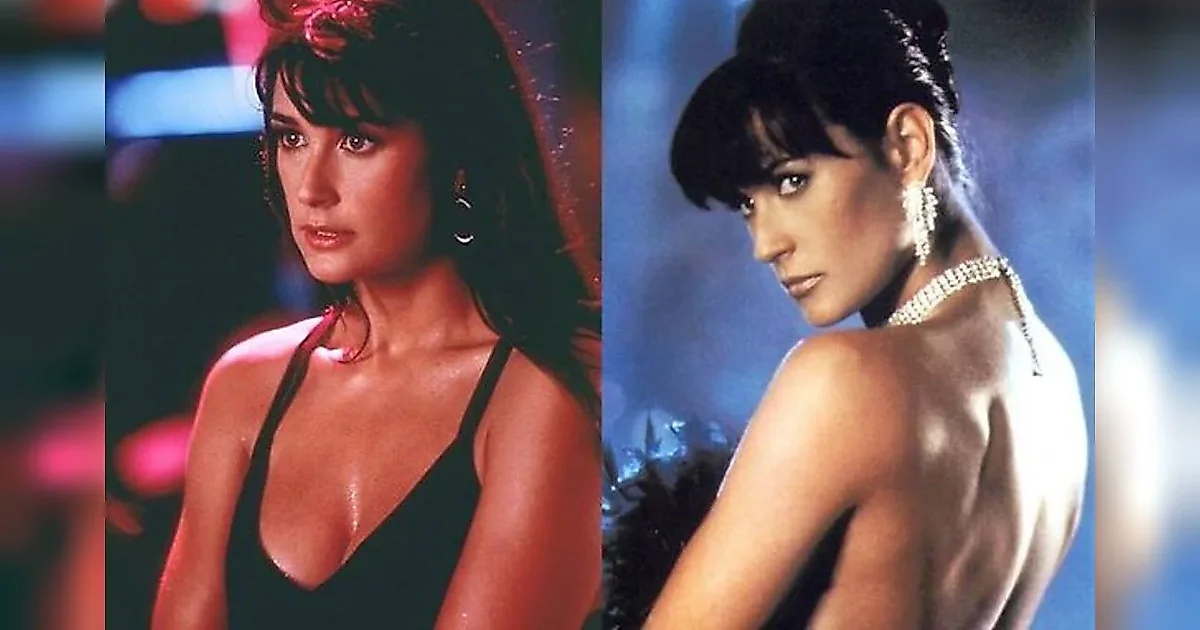
Actress Demi Moore looked back on a moment 36 years ago when she proudly demanded the reward for her efforts. By receiving a whopping 12.5 million dollars—approximately 16.8 billion won at the time—for the film 'Striptease', she rose to the position of one of Hollywood's highest-paid actresses, but what returned was not just congratulations. She says she was forced to endure criticism and shame simply because she played a stripper.
Attending the '2026 Inspiration Awards' held in LA on the 4th (local time), Moore recalled the time she demanded compensation worthy of her labor. The 1996 release 'Striptease' brought Moore an unprecedented salary for the time, making her the highest-paid actress in Hollywood that year.
Moore did not define the situation at that time simply as 'something won by fighting someone.' She said, "Language is very important. If you view something as a fight, it produces further opposition," adding, "I don't think I am fighting for something." She continued to emphasize, "Why should I not receive what I rightfully deserve? If it is something I earned through my effort, it was not given for free."
The problem began from the moment she secured a higher market value by competing with male actors. Moore recalled the time, saying, "After 'Striptease', when I became the highest-paid actress, there were people who tried to pull me down." This means it wasn't just about an actress's salary increasing, but the fact that a female actress actively asserted her economic value itself was perceived as uncomfortable.
In particular, the attacks directed at Moore were a mixture of the film's subject matter and the social perspective on the female body. She said, "At that time, because I was filming a stripper movie about the female body, I was forced to endure extreme shame." She explained that when her acting utilizing her body was combined with a high salary, rather than acknowledging the value, eyes followed her to judge the actress by applying moral standards.
Hidden here is a strange duality that has existed not only in Hollywood but in popular culture as a whole. While female beauty and sexuality are constantly commodified, the moment a woman chooses her own body and labor and demands its value in economic terms, evaluations of being 'excessive' often follow. The experience of being 'forced to endure shame' that Moore mentioned is not unrelated to this contradiction.
Furthermore, the 12.5 million dollars Moore received at the time is not just a number symbolizing individual success. It is also an example showing that an actor's body, image, and stardom are also part of the labor traded by the film industry. However, in the process of a female actress having her market value recognized, there were many cases where appearance, private life, and sexual image were evaluated before skill or box office power.
That is why Moore emphasized choosing a 'position' rather than a 'fight.' She explained her chosen attitude, saying, "Sometimes, if you ask the right questions, you can get answers. But if you don't even ask the proper questions, there will be no change." This means that rather than raising one's voice to defeat someone, constantly questioning why one should receive fair compensation is the starting point for making change.
As time passes, Moore's choice is read in another sense. She solidified her position as a top star through works such as 'Ghost', 'A Few Good Men', 'The Scarlet Letter', and 'G.I. Jane', and in 2024, she once again proved her presence with the body horror film 'The Substance'. She has entered a second heyday, winning Best Actress awards at the Golden Globe Awards, as well as the Critics Choice Awards and the Screen Actors Guild Awards.
Ultimately, the 16.8 billion won from 36 years ago did not remain merely as a large sum of money received by an actress. While it was a hot topic at the time as 'money received too much', looking back now, it is also an event where a female actress tried to define her own labor and market value. This is also why Moore speaks of that shame and backlash even after a long time. She is scheduled to continue her new acting journey through director David Weil's new work 'Tyrant'.
Lee Chang-seok is the CEO and editor of Mediafine and writes for Mediafine Global, mainly covering K-Variety and also writing on K-pop, Celebrity and K-drama.



Comments 0
Comments are currently disabled.