
Kim Kang-woo portrays multifaceted leader in KBS2's 'Sword & Silence'
Actor Kim Kang-woo portrays the complex leadership of Kim Chun-chu, balancing cold political strategy with warm human inclusivity in the KBS2 epic drama 'Sword & Silence'.
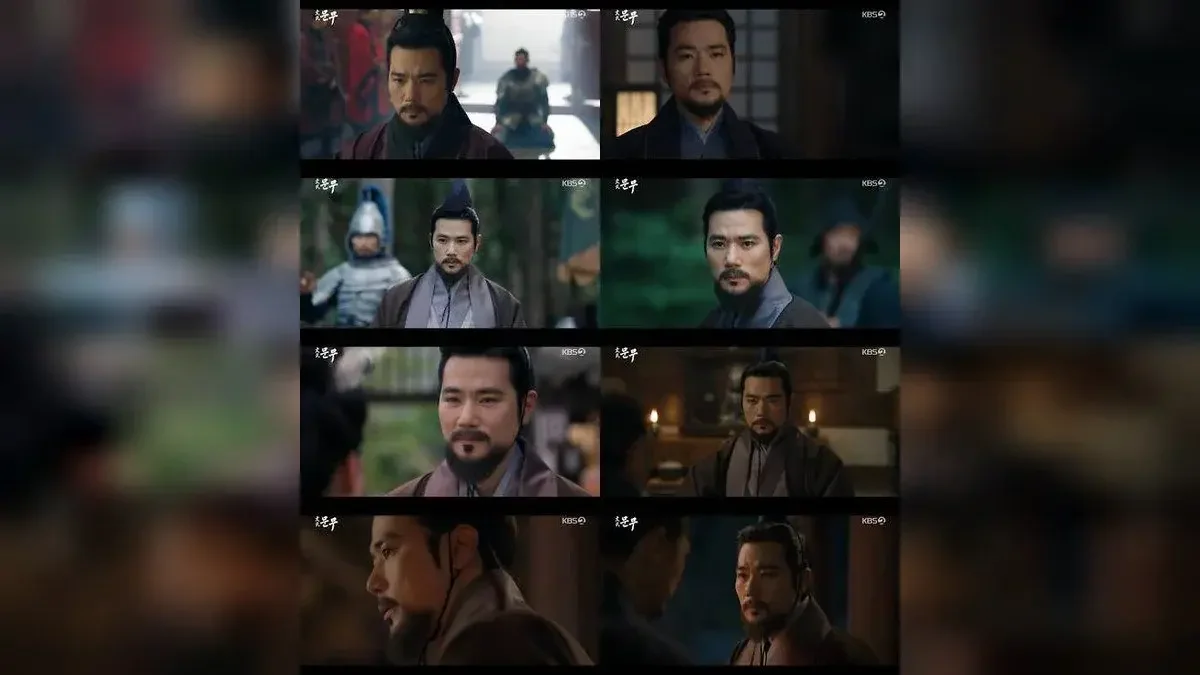
In the second episode of KBS2's 'Sword & Silence' broadcast on the 15th, Kim Kang-woo's character Kim Chun-chu escaped a decapitation threat from ministers by using prior intelligence to predict a conspiracy by Bidam's faction.
Actor Kim Kang-woo has demonstrated a powerful presence in the KBS2 epic drama 'Sword & Silence' by providing a multi-dimensional portrayal of Kim Chun-chu, a character possessing both cold political intellect and warm human inclusivity. He showcased the decisiveness of a leader who overcomes crises with unwavering judgment in the face of rebellion threats, while also revealing a side that lays down force to listen directly to people who have lost their livelihoods to war. Kim anchored the drama by navigating a wide emotional spectrum, acting as a strict politician, a tender father, and a persuader who corrects wrongdoing.
In the second episode of the KBS2 epic drama 'Sword & Silence' broadcast on the 15th, Kim Chun-chu (Kim Kang-woo) predicted the conspiracy of Bidam (Lee Ji-hoon)'s faction and overcame a political crisis. Although his life was threatened by demands for decapitation from ministers, he escaped the danger because he had previously informed Kim Yu-sin (Park Seong-ung) of the movements of Bidam's faction. Even as internal power struggles reached extremes, Kim Chun-chu's strategic sense in reading and responding to the opponent's moves stood out.
After overcoming the crisis, Kim Chun-chu headed toward Daeyaseong Fortress with his son Kim Beop-min (Lee Hyun-wook), where he encountered people who had lost their homes due to war. However, the people were wary of the royalty and those in power who were supposed to protect them. Amidst deep scars of war and distrust toward the ruling class, what Kim Chun-chu faced was not merely a departure of public sentiment, but a crack in trust between the state and its people.
Instead of using force, Kim Chun-chu laid down his sword and entered the forest directly. His action of listening to the people's stories and trying to understand their situation demonstrated a leader's recognition that public sentiment cannot be won through authority and coercion alone. The choice to first relinquish his own power to remove the opponent's fear was a scene that revealed Kim Chun-chu's governing philosophy.
A different intensity of leadership was displayed during his confrontation with his son-in-law Kim Pum-seok (Kim Heung-soo). Having personally confirmed the situation at Daeyaseong Fortress, Kim Chun-chu sternly rebuked Kim Pum-seok's self-righteous rule and harsh treatment of the people. Rather than ignoring the mistakes of a powerful figure or shielding him because of family ties, he directly pointed out issues that a ruler must correct. This highlighted that Kim Chun-chu's strictness stemmed from responsibility toward the state and the people rather than personal emotion.
However, Kim Chun-chu did not push Kim Pum-seok solely through criticism. He handed over a record of victory from when Kim Pum-seok served as a general of Silla, awakening the courage and honor the man originally possessed. It was a method of pointing out wrong actions while simultaneously persuading him to change. His approach of correcting current wrongs without denying the opponent's past highlighted a side that distinguishes him from a purely authoritative ruler.
Kim Kang-woo delicately adjusted the emotional temperature in these scenes. When rebuking Kim Pum-seok's self-righteousness, he showed the dignity of a powerful figure with sharp eyes and a decisive tone, but when soothing him by handing over the victory record, he expressed inclusivity with a much softer voice and expression. He convincingly implemented the complex personality of Kim Chun-chu by naturally moving between strictness and warmth in his attitude toward the same individual.
Another side of Kim Chun-chu was revealed in scenes with his family. Meeting his daughter Kim Go-ta-so (Kang Ji-woo) and his grandchildren for the first time in a while, he expressed joy with a bright smile. The heavy responsibility he carried in the face of political crises and the suffering of the people was briefly set aside before his family. Unlike his image as a grave politician, the warm emotions of a father and grandfather who cherishes his daughter and grandchildren lived naturally.
Thus, the second episode of 'Sword & Silence' did not depict Kim Chun-chu simply as a political hero leading power and war. It captured a leader who responds to crises with strategy, lowers his authority before the people, and is both firm and open to the possibility of change when dealing with those who have committed wrongs. Kim Kang-woo added depth to the character by organically connecting these multi-layered emotions and attitudes.
As political crises, the crack in public sentiment, and affection for family intersect, Kim Chun-chu's leadership has become even more distinct. Kim Kang-woo's acting, which simultaneously showed cold judgment and warm inclusivity, is raising expectations for what choices Kim Chun-chu will make to lead the fate of Silla.
Lee Chang-seok is the CEO and editor of Mediafine and writes for Mediafine Global, mainly covering K-Variety and also writing on K-pop, Celebrity and K-drama.
Comments 0
Comments are currently disabled.