
Lee Seung-gi's three-minute sell-out record questioned over reduced seating
Singer and actor Lee Seung-gi achieved a "3-minute sell-out" for his first solo concert in 13 years, though reports indicate the actual seating was reduced by more than 10% from the venue's official capacity.
Questions have emerged regarding Lee Seung-gi's three-minute sell-out record for his recent solo concert in Seoul after organizers arranged more than 10% fewer seats than the venue's official capacity. While the performer's first solo concert in 13 years saw rapid ticket sales, the discrepancy between the venue size and actual available seats has sparked debate over the true scale of the achievement.
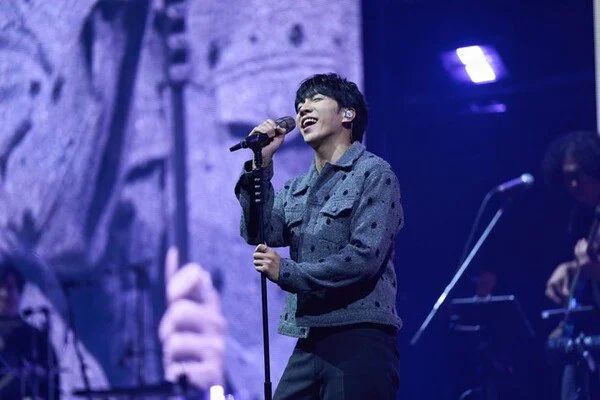
Singer and actor Lee Seung-gi set a record by selling out his solo concert in just three minutes, but it has been reported that the actual number of seats arranged at the venue was more than 10% less than the official seating capacity. As a gap has emerged between the flashy record of tickets being exhausted immediately upon the start of reservations and the actual scale of available seats, attention is focused on how to interpret the sell-out record.
Lee Seung-gi held his solo concert, "2026 Lee Seung-gi Concert Beginning, Development, Turn: Music," from the 23rd to the 25th at the Blue Square Woori WON Banking Hall in Yongsan District, Seoul. This performance drew interest as it was his first formal solo concert in approximately 13 years since 2013. The show held special meaning for fans who had been waiting for Lee Seung-gi's return to the stage as a singer.
In particular, the performances on the 24th and 25th, for which reservations were held this past June, were reported to have sold out just three minutes after tickets opened. This news drew attention as an example demonstrating Lee Seung-gi's unchanging ticket power. As the originally scheduled two-day performance sold out quickly, the concert organizers added a performance on the 23rd, bringing the total to three days of performances.
However, what has newly drawn attention regarding the performance's success is the actual seating capacity. According to a report by Sports Kyunghyang on the 27th, the concert organizers stated that they arranged more than 10% fewer seats than the official seating capacity for this concert. This means the total capacity of the venue and the number of seats used for actual ticket sales were different.
The number of seats is a factor that must be considered when interpreting a sell-out record. Even if the same level of audience demand occurs, if the number of available seats is small, the time taken to sell out can be shorter. Therefore, it is difficult to conclude from the "3-minute sell-out" record alone that tickets were sold according to the total capacity of the venue. However, it cannot be concluded that the sell-out record was intentionally inflated simply because the seats were reduced. Various variables can act upon seat arrangement, such as stage installation, audience movement, and securing sightlines.
To judge the actual scale of sales, one must look at not only the official capacity of the entire venue but also the number of seats prepared for each performance, actual sales volume, and the specific reasons for reducing the seats. With the information currently known, it is difficult to confirm specific figures regarding exactly how many seats were sold or how many seats were reduced during this performance. Since the time taken to sell out and the actual audience scale are different indicators, they need to be viewed separately.
The notice of additional seat sales from the reservation provider is also a point of interest. In September, after the stage setting was finalized, a notice was posted stating that some of the existing performance seats would be sold additionally. This is an instance that suggests the number of available seats may have changed once the venue structure and stage layout were finalized. However, the fact that additional sales took place does not make it possible to conclude the meaning of the initial seat arrangement or the sell-out record.
During this concert, Lee Seung-gi breathed with the audience as a singer for the first time in a long while, performing representative songs such as "Words That Are Hard to Say," "Delete," "Turn Back," and "Don't Forget, Remember, Don't Be Late." On stage, he revived fans' memories with songs that have been loved for a long time and expressed his gratitude to the audience after finishing the performance.
Lee Seung-gi greeted fans, saying, "There are moments in life when you feel exhausted and struggling. In those times, just knowing that someone is by my side can be a great strength." The symbolism of a solo concert after 13 years and the rapid sell-out record are certainly eye-catching achievements. However, for the interest surrounding this to lead to the actual scale of success, specific information such as the number of seats sold and the seat operation methods needs to be disclosed together.
Lee Chang-seok is the CEO and editor of Mediafine and writes for Mediafine Global, mainly covering K-Variety and also writing on K-pop, Celebrity and K-drama.



Comments 0
Comments are currently disabled.