
Rhee Dae-eun and Truedy reveal marital conflict over communication styles
Former baseball player Rhee Dae-eun and rapper Truedy shared the emotional struggles and communication breakdowns they face in their marriage during a recent television broadcast.
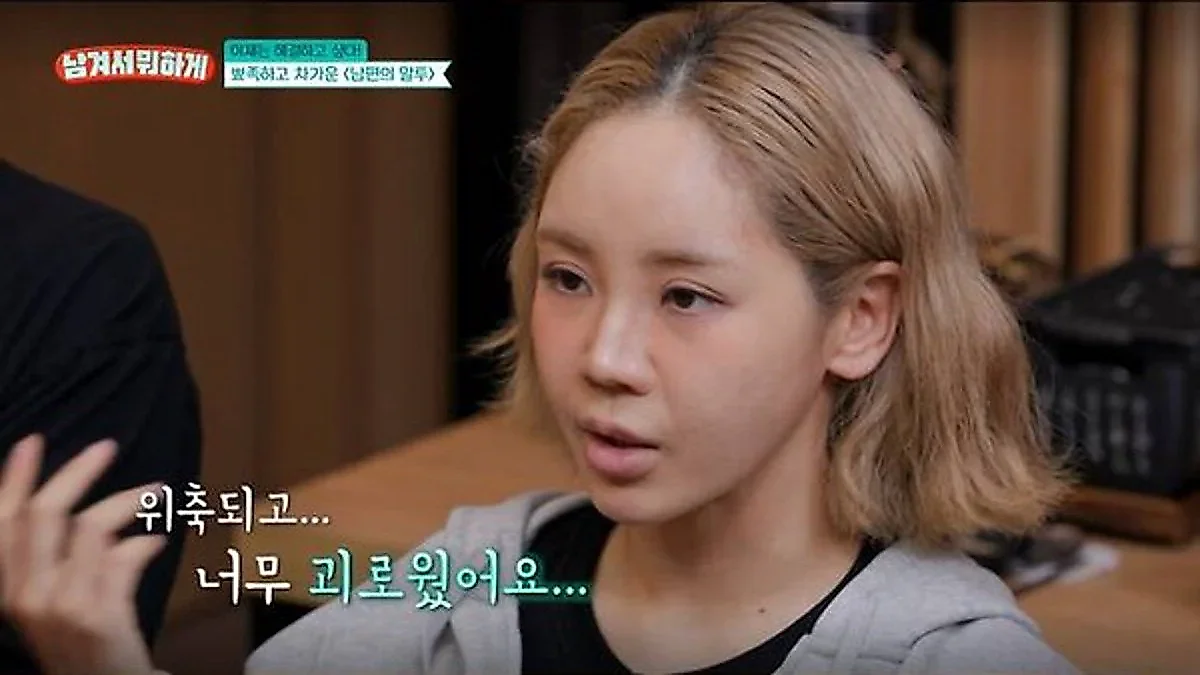
Rhee Dae-eun and Truedy discussed their deep marital struggles during the 64th episode of tvN's 'Table Tales' on the 26th. The couple revealed that repetitive differences in daily speech and emotional expression have led Truedy to avoid conversation altogether.
Former baseball player Rhee Dae-eun and rapper Truedy have revealed a deep conflict surrounding their methods of emotional expression and speech patterns. Rhee confessed that it is difficult to understand his wife's severe mood swings, stating she "appeared not normal," while Truedy admitted to being deeply hurt by her husband's remarks during arguments, such as "Go to the hospital" or "Did you take your medicine?" The couple revealed a distressing situation where words intended to understand one another instead became sparks for conflict, leading them to avoid conversation altogether.
During the 64th episode of tvN's 'Table Tales' broadcast on the 26th, the couple appeared to speak candidly about the concerns they face in their married life. Their conflict stemmed not from grand events, but from repetitive differences in daily speech and emotional expression. While one side considers their words to be thrown out carelessly, the other receives them as a negation or evaluation of themselves.
Truedy, who spoke first, stated that her husband's blunt way of speaking is her greatest concern. "I actually have a concern. My husband's way of speaking is my biggest worry," she said, sharing the hurt she has received in recent conversations with Rhee Dae-eun. According to Truedy, whenever she says something even slightly difficult for him to understand, Rhee responds with remarks like, "You should go to the hospital!" or "Did you take your medicine?"
Truedy explained that although she knows these might be questions asked without particular intent or words spat out in the moment, it was difficult to easily overlook such expressions. "He would just blurt out words like that, and it was so hurtful," she confessed. "My husband might just be asking, but I felt so intimidated and distressed." This highlights how words can leave deep wounds between those in close relationships.
Specifically, Truedy revealed she was hurt by phrases such as "You need to go to the hospital," "This is a disease at this level," and "Here we go again." She expressed that even if she feels there is a problem with her emotions or behavior, she hoped he would first try to understand the reason behind those feelings rather than rebuking her or labeling her as pathological.
Even in moments when she sought validation, her husband's reaction differed from her expectations. "I ask, 'Did I do well?' to receive recognition," Truedy said. However, she noted that whenever she did, Rhee would reply, "That was your job to do anyway." Truedy appealed, "I don't think I would speak that way, so I cannot understand. I just want a little empathy." She explained that she did not need grand praise or special treatment, but rather a short word acknowledging her efforts and emotions.
Rhee Dae-eun also expressed his position upon hearing his wife's grievances. Saying he would "make excuses," he confessed that he also faces many difficult moments due to Truedy's mood swings. "My wife looks bright and gentle. But when she gets angry, she is a 180-degree different person," Rhee said. "I have never seen someone like this before. My wife has severe mood swings." He claimed they experience conflict because there is a large gap between her usual self and her attitude when angry.
He explained that his reactions change depending on Truedy's mood even in the same situation. "When she is in a good mood, everything is permitted, but when she is in a bad mood, she gets angry at even the smallest things," Rhee said. His difficulty lies in the fact that it is hard to predict his wife's emotional changes and that even trivial matters can escalate into conflict.
He also revealed the reason why he told her to go to the hospital. "From my perspective, it did not look normal," Rhee stated. "Of course, I said those things because I was angry, but there was also truth in them." He suggested that while the words came from an inability to suppress momentary anger, his wife's emotional changes were indeed a problem that was difficult for him to understand. However, as mental health cannot be judged solely by one person's emotional expression or marital conflict, this statement is viewed as Rhee's personal perception of the situation at that time.
The conflict between the two was also evident in how they handle anger. Rhee claimed, "I am not the type to get angry or annoyed first," asserting that Truedy is often the one to express emotions first. He further explained, "To be precise, my wife builds things up inside and then suddenly explodes." Conversely, Truedy confessed that she suppresses her emotions for a long time before speaking them all at once, and every time she does, the conversation with her husband leads to another fight.
The problem is that even their way of resolving conflict causes hurt to one another. Truedy explained that when she brings up emotions she has bottled up, Rhee asks back, "Why didn't you say something at the time?" and she responds by suggesting he should have spoken up immediately when he was angry. "Then my husband counters with, 'You should have spoken up immediately when you were angry.' The fighting never ends," Truedy said. Even when bringing up emotions, the debate over the method and timing of expression repeats, causing the original reason for the hurt to be pushed aside.
Ultimately, Truedy confessed that she has come to avoid conversation with her husband altogether. "Because I have never once won an argument against my husband, I keep avoiding things and not addressing them," she revealed. As the burden grows that bringing up a topic to resolve a conflict might lead to even greater hurt, she has chosen to not mention problems at all rather than solving them.
The concerns revealed in this broadcast are less about determining who is unilaterally right or wrong and more about a situation where different methods of emotional expression repeatedly clash. While Truedy desires empathy and emotional support, Rhee Dae-eun appears to want an explanation for the causes of emotional changes that he finds difficult to understand. If one questions the expression before understanding the intent, or if evaluative words are used while explaining emotions, conflict can easily recur.
Ultimately, what may be needed between a couple is not the ability to win an argument, but a process of listening to why the other person was hurt and reflecting on how one's own expressions had an impact. Attention is focused on whether Rhee Dae-eun and Truedy can move beyond the long-repeated conflicts to understand each other's emotions and communication styles.
Oh Seo-yoon reports for Mediafine Global, mainly covering K-Variety and also writing on K-drama, K-pop and K-movie.

Comments 0
Comments are currently disabled.