Nolan's 'The Odyssey' hits 5 million viewers, overtaking 'Hope'
Christopher Nolan's 'The Odyssey' reaches 5 million viewers in just 13 days, overtaking Na Hong-jin's 'Hope' to become the 4th biggest hit of the year.
Christopher Nolan's new film "The Odyssey" has surpassed 5 million viewers just 13 days after its release. It is showing a steep box office curve, adding 1 million viewers just one day after crossing the 4 million mark. Having garnered attention even before its release as a blockbuster combining IMAX filming with Homer's classical epic, the film is proving its overwhelming audience draw in actual theaters, creating a significant variable in this year's Korean box office landscape.
According to the distributor Universal Pictures, "The Odyssey" surpassed a cumulative audience of 5 million on the morning of the 17th. This comes just 13 days after its release on the 5th. Following the milestones of 1 million viewers on day 4, 2 million on day 6, and 3 million on day 10, it has sequentially broken through 4 million and 5 million viewers. Beyond simply increasing in numbers, the temporal compression of its box office success is remarkably high.
What is particularly striking is that it reached 5 million viewers just one day after surpassing 4 million viewers the previous day. Typically, after a blockbuster secures a certain scale of audience, the influx of new viewers tends to slow down, but "The Odyssey" appears to be expanding its audience base toward the latter half of its run as word-of-mouth and demand for re-watching converge.
With this, "The Odyssey" has overtaken director Na Hong-jin's "Hope" to rise to the 4th highest-grossing release of the year. As "Colony," which recorded approximately 5.95 million cumulative viewers, currently holds 3rd place, the next goal is also within sight. If the current rate of audience influx is maintained, surpassing 6 million viewers can be accepted as a realistic prospect rather than a mere possibility.
The background of this success lies, above all, in its clear marketability as a "movie that must be seen in a theater."
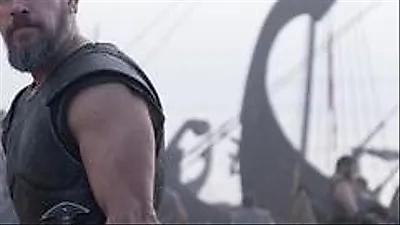
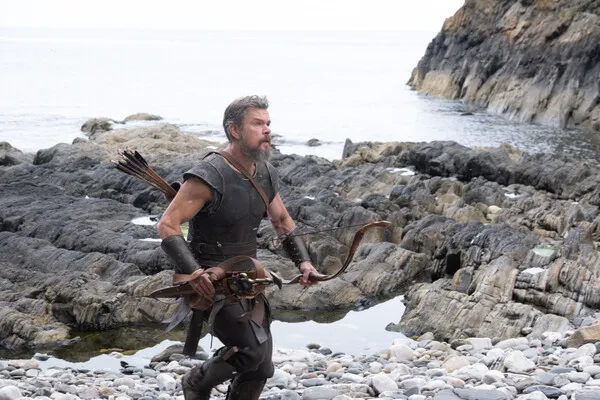
"The Odyssey" uses the epic poem "The Odyssey" left by the ancient Greek poet Homer as its original source. It reconstructs the epic journey of the hero Odysseus, who ended the Trojan War, as a cinematic narrative of his long journey back to his homeland, Ithaca. It essentially combines the universal motifs of the ancient narrative—homecoming, survival, desire, fate, and the clash between gods and humans—with Nolan's unique sense of time and spatial design.
Director Nolan's long-established cinematic methodology is also not unrelated to this success.
In "Memento," he transformed the cognitive system of memory into the narrative structure itself; in "Inception," he layered the boundaries between dreams and reality; and in "Interstellar," he reduced the overwhelming physical space of the universe to issues of human time and emotion. In "Dunkirk," he reconstructed war not as a hero's victory tale, but as a sensory experience of humans having to survive under the pressure of time. In "Oppenheimer," he went beyond a scientist's biography to deal with the massive historical dynamics of science, politics, ethics, and catastrophe.
The fact that Nolan chose the "Odyssey," one of the oldest heroic narratives of Western civilization, was itself a factor that heightened expectations for the work.
Furthermore, the fact that the entire film was shot in IMAX carries more meaning than a simple technical promotional phrase. The audiovisual design, predicated on large screens, high-resolution imagery, and massive sound systems, paradoxically highlights the reason for the existence of the physical space of a theater in an era where streaming platforms have become commonplace. In a situation where content that can be consumed on small screens is overflowing, "The Odyssey" is calling to audiences in a way that actively demands the scale and physicality of a theater.
Actual audience reactions support this. The CGV Egg Index is recording a high satisfaction level of 98%. The structure is such that audience evaluations of the film's quality are driving the sustainability of its box office success.
Currently, "The Odyssey" has not left the top of the daily box office since its release. Even with the release of the competing film "Spider-Man: Brand New Day," it has not yielded the lead, and as of 10:30 AM that day, its reservation rate was also showing an overwhelming advantage at 70.7%. Compared to "Spider-Man 4" at 15.2% and "Detective Conan: The Fallen Angel of the Highway" at 2.7%, the gap is significant.
What is interesting is that the success or failure of blockbuster films in this year's theater scene is not determined simply by production costs or star casting.
Previously, "Hope" boasted a massive production budget of approximately 60 billion won, a gathering of domestic and international star actors including Hwang Jung-min, Zo In Sung, Jung Ho-yeon, Michael Fassbender, and Alicia Vikander, and the powerful brand of director Na Hong-jin, but it did not lead to the long-term success that was expected. On the other hand, "The Odyssey" is pulling in audiences by organically combining classical narrative, grand spectacle, the IMAX theater experience, and the director brand of Nolan.
Ultimately, the success or failure of a blockbuster may depend more on the persuasiveness of "why it must be seen in a theater" rather than "how big it was made."
In this regard, the success of "The Odyssey" carries more meaning than just audience numbers. It is providing an answer to the most fundamental question the theater industry has grappled with since the OTT era: "Why should audiences bother going to a theater?"
In ancient Greek mythology, Odysseus's return was not just a movement. It was a long journey of a human passing through numerous temptations and trials to finally return to his place. Nolan's "The Odyssey" also connects this classical homecoming narrative to the modern theater experience. Audiences are not simply consuming a story, but entering into the unique physical experience of a theater through massive screens, sound, and collective viewing.
The 5 million viewers is therefore not just a number, but a signal.
While "Hope" stopped at 4.47 million viewers in the Korean film market this year, "The Odyssey" surpassed this in just 13 days. Furthermore, the distance remaining to 6 million viewers is less than 1 million. Given the current reservation rates, audience satisfaction, and the gap with competing films, it is unlikely that the box office momentum will drop sharply in the short term.
All eyes are now on whether "The Odyssey" can surpass 6 million viewers and set a new benchmark for this year's box office.
Based on its performance so far, the conclusion is clear. The ancient homecoming narrative created by Nolan is becoming a modern box office phenomenon, consuming audiences at the fastest pace in the current Korean theater scene.
Related articles