
Ahn Sun Young opens up about placing mother with dementia in nursing home
Ahn Sun Young shares the emotional reality of caring for her mother with dementia and why she eventually chose a professional care facility.
“Placing my mother in a nursing home felt like a modern-day version of Goryeojang.” Ahn Sun Young revealed the circumstances behind her decision to move her mother, who suffers from dementia, into a care facility after seven years of direct care. Her story captures the family's pain that could not be understood through outward appearances alone.
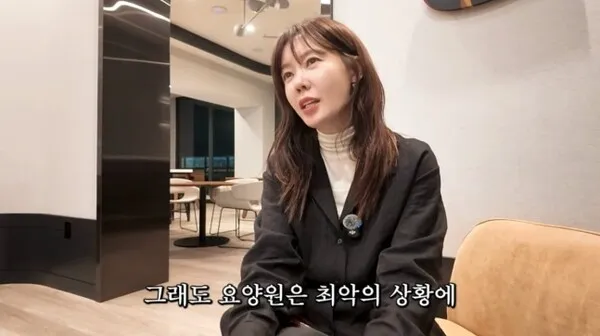
On the 23rd, a video titled 'Perceptions and reality of nursing homes... explaining the reason why I had to move my mother to a nursing home' was released on the YouTube channel 'Ahn Sun Young's Double Life.' Ahn shared updates on her life traveling between South Korea and Canada and revealed that her mother, whose cognitive impairment has worsened, is currently living in a care facility.
Ahn did not view nursing homes positively from the start. She confessed that before experiencing it firsthand, she honestly felt that nursing homes or dementia hospitals felt "somewhat like a modern-day Goryeojang." She explained that the moment one places parents in a facility, it feels as though they are giving up on them, making it difficult to reach a decision.
However, as the dementia progressed, the situation became unmanageable. Her mother underwent personality changes, which led to verbal abuse and even violent behavior. She shared that there were instances where she was physically hurt in front of her young son. Although she sought help from psychiatric services, she said she could not bring herself to agree when told that if medical staff were dispatched, they might have to restrain her mother and transport her to a hospital depending on the situation.
As symptoms like wandering worsened, she repeatedly had to seek police assistance to find her mother and bring her home. Ultimately, Ahn stated, "Home care was too difficult and despairing. After experiencing that fully, I thought I had to look into care facilities." It was not a choice to abandon her mother, but a decision made when the situation could no longer be handled by the family alone.
This did not mean she severed her relationship with her mother. Ahn moved closer to the facility where her mother stays to create an environment where she could provide visiting care and go on outings and walks together. She also prepared daycare services, but after her mother suffered a stroke and underwent surgery and rehabilitation, she began living in the facility.
There was also a surprising change. Ahn revealed that her relationship with her mother actually improved after moving her to the care facility. She said, "Compared to the days when we lived in the same house and I viewed my mother as a curse in my life, I have now forgiven my mother, understood the illness, forgiven myself, and learned to love again." She added that even now, when she returns to South Korea, she visits her mother to eat meals and spend time together on walks.
Ahn advised families undergoing long-term caregiving, saying, "Sacrificing yourself does not necessarily mean you are practicing filial piety," and urged them to seek help from professional institutions and medical staff as early as possible. She further pleaded, "No one should throw stones until they have stood in that person's shoes." Her message emphasizes that more important than society's view of choosing a nursing home is finding a way of life that both the patient and the family can endure.



Comments 0
Comments are currently disabled.