
J.Y. Park Appears in Bold See-Through Fashion at National Audit—Offers Decisive Explanation
Singer J.Y. Park drew significant attention for his unconventional see-through fashion while appearing as a witness at a National Assembly audit to explain allegations of preferential treatment regarding the "FANOMENON" project.
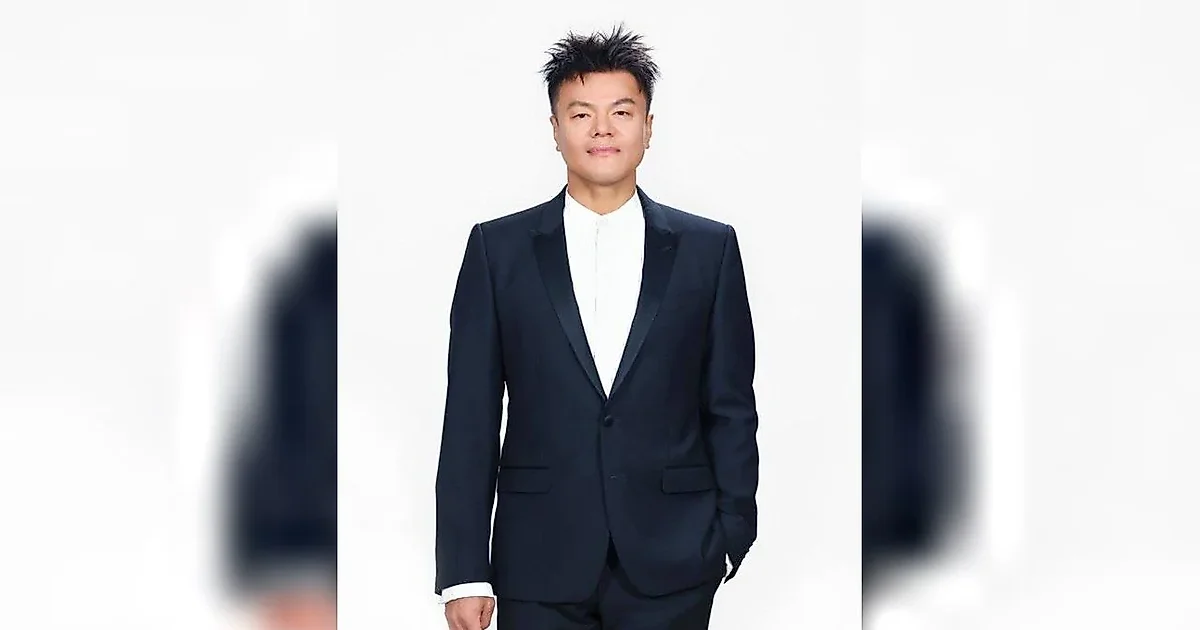
The outfit worn by singer J.Y. Park at the National Audit site has once again become a center of controversy. As J.Y. Park appeared at the National Assembly in his capacity as the co-chairman of the Popular Culture Exchange Committee, he showcased a bold fashion choice rarely seen at a National Audit addressing political and cultural issues, matching a gray jacket and pants with a see-through top. Although the actual reason for J.Y. Park's appearance was to explain allegations of preferential treatment surrounding the "FANOMENON" project, his fashion garnered intense online attention first.
On the 7th, J.Y. Park appeared as a witness at the National Audit of the Ministry of Culture, Sports and Tourism held by the Culture, Sports and Tourism Committee of the National Assembly of the Republic of Korea. Amidst controversies regarding the issue where JYP Entertainment, where he serves as the representative producer, filed for overseas trademark rights for the music festival FANOMENON—a project promoted by the Popular Culture Exchange Committee—it was reported that he requested to appear as a witness to directly explain the related allegations.
However, the first point of interest surrounding J.Y. Park as he appeared at the National Assembly was different from expectations. What spread most rapidly online was his attire rather than his statements at the audit. J.Y. Park wore gray-toned jacket and pants, matching them with a see-through material top underneath. While he wore the jacket to keep the overall atmosphere calm, the design, which revealed the inner material with every movement, left a distinct impression that was markedly different from typical National Audit appearance fashion.
See-through is a fashion style that utilizes thin or transparent materials to make the skin or the clothing worn underneath visible. While it is a familiar style on stages, in photo shoots, or at fashion events, it is a highly unusual choice in the space of the National Assembly's National Audit room. As the solemn and official image of the National Audit collided directly with J.Y. Park's characteristic bold style, it naturally created buzz.
Online reactions were mixed. While some responded with comments such as "The National Audit is a place that should be transparent," "That's so J.Y. Park," or "It's amazing to see see-through at a National Audit," there were also criticisms that the outfit was excessively bold for an official appearance as a witness at a National Audit. Ultimately, a single fashion choice became another subject of debate.
J.Y. Park's unconventional fashion is not an unfamiliar sight. Since his debut, he has built an image with a unique style as much as his music. In particular, his so-called "vinyl pants" fashion shown on stage in the past caused great controversy, going beyond being unconventional to receiving criticism for being "provocative." While it was accepted as shocking fashion at the time, as time passed, it instead became one of the representative images symbolizing J.Y. Park.
This see-through look can be viewed in the same context. Although the space of the National Audit demands significant formality, J.Y. Park did not feel the need to abandon the identity of the style he has maintained for a long time. As composing his appearance in his own way—whether on stage or in official settings—has solidified into a brand, many view this outfit not merely as a provocation, but as a "choice typical of J.Y. Park."
Of course, what J.Y. Park had to prove at the National Audit that day was not the boldness of his fashion, but an explanation regarding the allegations surrounding FANOMENON. FANOMENON is a large-scale music festival project promoted by the Popular Culture Exchange Committee, and questions were raised regarding whether it was preferential treatment for a specific company after it was revealed that JYP Entertainment had filed for overseas trademark rights first.
Regarding the process in which JYP Entertainment filed for the overseas trademark rights first, J.Y. Park explained the essence of his judgment by saying, "Because I was trying so hard to do well for fear that someone might take the trademark rights, I think I ended up using various methods." He admitted that the method was "not a normal way" and emphasized that there would be no case where the trademark rights remain with JYP Entertainment.
He also drew a line against suspicions that FANOMENON is a promotional project for the government or a specific administration. J.Y. Park strongly refuted the allegations, stating that even if someone with higher authority requested it, he would not participate if he judged it was not for the sake of the country. He repeatedly emphasized that his reason for participating in this project is not for the President or a specific political party, but for the overseas expansion of Korean popular culture.
J.Y. Park's appearance that day was contrasting in many ways. At the National Audit, while admitting that his judgment regarding the trademark application process was not appropriate, he actively explained the purpose of the project and its political intentions; visually, he drew attention with see-through fashion that did not match the standardized atmosphere of the National Assembly witness stand.
Ultimately, appearing at the National Audit was not a simple place for testimony for J.Y. Park. It was a place where a person who has long operated in his own way in the pop culture industry stood on the stage of public verification, and in that process, both his words and his attire drew public attention. While allegations surrounding FANOMENON still remain tasks to be resolved, at least J.Y. Park, who stood at the National Audit that day, revealed his presence in a "J.Y. Park-esque way" that was not much different from what he shows on music stages.
Lee Chang-seok is the CEO and editor of Mediafine and writes for Mediafine Global, mainly covering K-Variety and also writing on K-pop, Celebrity and K-drama.

Comments 0
Comments are currently disabled.