
Lee Bo-hee discusses guilt over placing 94-year-old father in nursing home
Actress Lee Bo-hee shared the emotional struggles and guilt she experienced when moving her 94-year-old father into a nursing home, highlighting the generational gap in perceiving elderly care.
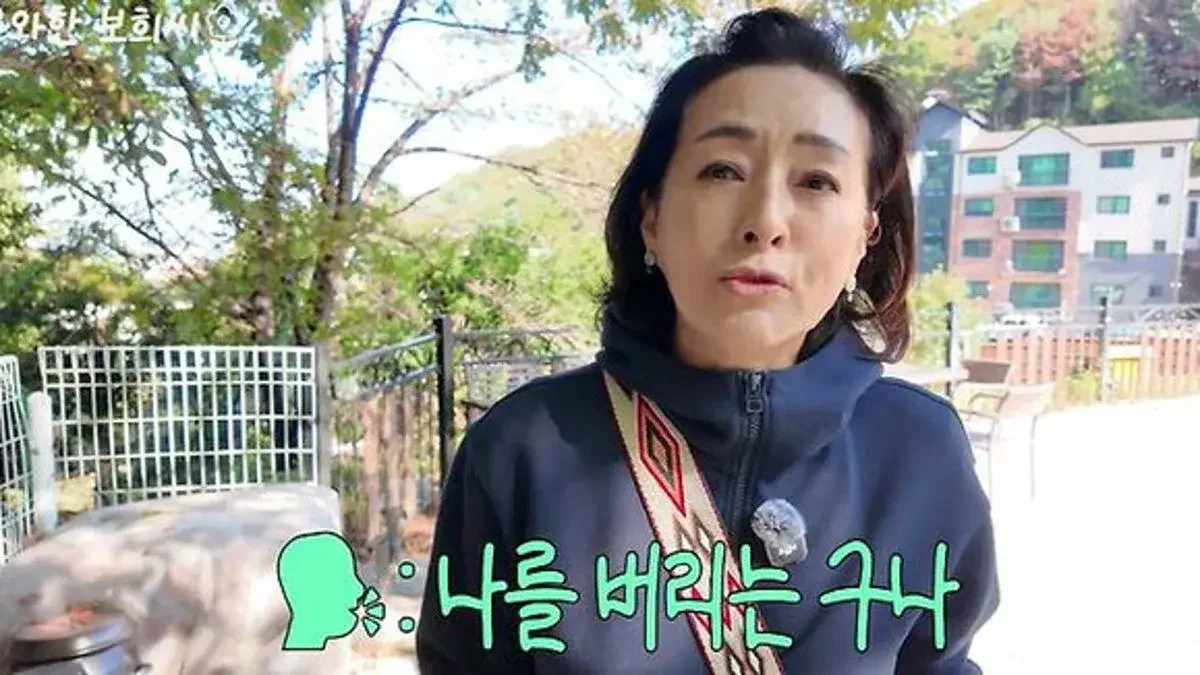
Actress Lee Bo-hee shared her emotional struggle on the YouTube channel Wonderful Ms. Bo-hee on the 4th, revealing how her 94-year-old father initially felt abandoned when moved to a nursing home. Despite his early resentment, Lee noted that her father has become healthier and more settled since transitioning to the facility.
Actress Lee Bo-hee has opened up about the guilt and deep affection she felt while placing her 94-year-old father in a nursing home. She shared the painful reality of caring for elderly parents, from the heartache of hearing her father say, "You are abandoning me," to the relief she felt seeing him finally adapt to life at the facility.
On the 4th, a video titled "Even as I age, I am always a daughter in front of my father" was released on the YouTube channel Wonderful Ms. Bo-hee. In the video, Lee Bo-hee visits the nursing home to meet her father. Touring the space where he lives, she expressed satisfaction, noting, "It feels like coming to my father's house. There are walking paths and they even grow vegetables," adding that the programs are "as good as a kindergarten for children."
Lee Bo-hee, who revealed her father is currently 94 years old, discussed the practical difficulties of caring for elderly parents. "Parents do not want to go to nursing homes, but it is an inevitable change in the times. He seems much healthier than when he was at home," she said, explaining that the care and lifestyle programs provided by the facility have had a positive impact on his health.
However, a significant generational gap remains in how nursing homes are perceived. "Our generation has the perception that coming to a place like this is natural in the future, but for the elderly, that is unacceptable," Lee said. "They seem to think that once they come to a nursing home, they cannot leave and that they will die here. It is understandable for the elderly, and no matter how much you try to make them understand, it doesn't work."
The process of moving her father into the facility was not easy. Recalling her father's resentment at the time of admission, Lee recalled, "While I was bringing him here, my father said, 'You are abandoning me.'" She explained that she tried to persuade him, saying, "Why would I abandon you? I will come to see you often." The fact that a practical choice made for a parent could be perceived as being abandoned was a source of great pain for her.
While her father tried to understand the changing times, living in an unfamiliar environment was difficult. Lee reported that although he seemed to accept it by saying, "Because it is the modern era...", he would also plead, "Please let me out quickly" or "Take me away from here." He even said, "I will go out and earn a living so I won't be a burden to you all." The sight of her elderly father trying not to be a burden to his daughter remained a particularly poignant memory for Lee.
Fortunately, her father is now gradually adapting to life at the nursing home. "He is a bit more settled now. It feels like home, but the elderly still don't seem to like it," Lee explained. She noted that no matter how comfortable and safe a facility is, leaving the home and family where one has lived for a long time is a change that is difficult for elderly parents to accept.
Above all, Lee revealed that the guilt she felt before placing her father in the nursing home has largely disappeared. "Doesn't it feel like you are being unfilial or sinful to place someone in a place like this? Nevertheless, since I moved my father here, that feeling has vanished," she said. "It is so good, safe, and reassuring, and he has become healthier." She has moved past the thought that placing a parent in a facility is unfilial, gaining conviction that it was a choice for her father's health and safety.
On that day, Lee spent quality time with her father, sharing a meal and enjoying a walk. The sight of the father sitting across from his daughter for a meal and walking together added a warm touch to the video. Having confirmed that her father is living in a more stable state, Lee also appeared to let go of some of her worry and regret. Her story suggests that the deeper the affection for a parent, the heavier the emotional weight felt when making practical caregiving decisions.
As a daughter who remains a daughter in front of her father regardless of age, Lee Bo-hee's confession resonated deeply with children struggling with whether placing parents in nursing homes is unfilial or the best choice for the family. Between her father's feeling of being abandoned and her own desire for him to live more healthily and safely, Lee continues to express her love for her father in the most practical way.
Lee Chang-seok is the CEO and editor of Mediafine and writes for Mediafine Global, mainly covering K-Variety and also writing on K-pop, Celebrity and K-drama.


Comments 0
Comments are currently disabled.