
Shim Eun Kyung declines role in Hiroshima atomic bomb film 'Tamako'
Actress Shim Eun Kyung and singer Luizy have officially declined roles in the upcoming Korea-Japan co-production 'Tamako,' set against the Hiroshima bombing.
Actress Shim Eun Kyung has officially declined an offer to appear in a Korea-Japan co-production film centered on the atomic bombing of Hiroshima, Japan. As controversy arises regarding the film's historical subject matter, interest in the production has grown following news that both Shim and singer-actor Luizy have decided not to participate. For Shim, who has expanded her career into Japan, the mere rumors of her casting created significant waves as the project could hold more meaning than a simple acting role.
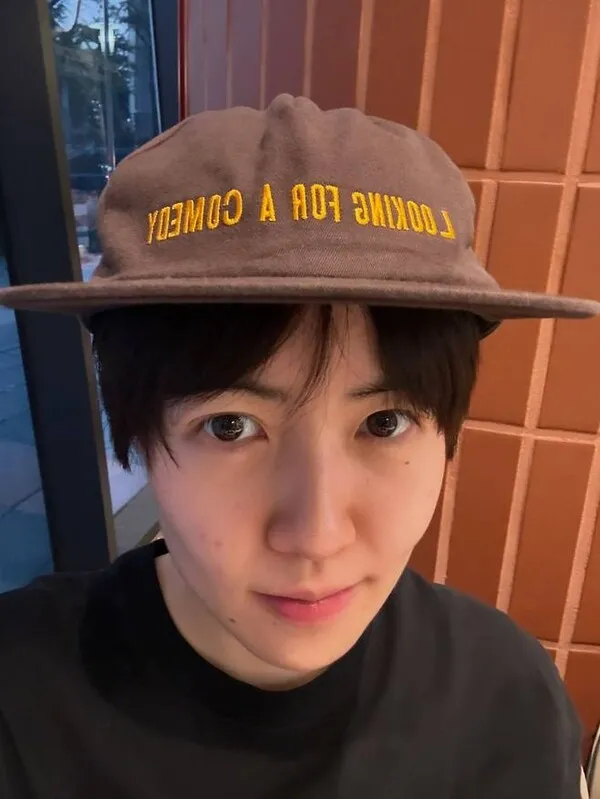
A representative for Shim officially told JTBC Entertainment News on the 28th when asked about her participation, “We received the offer, but we declined to participate.” Recently, as media outlets highlighted the increasing trend of content collaboration between South Korea and Japan, news emerged regarding the production of the film 'Tamako,' which uses the atomic bombing of Hiroshima as its historical backdrop. Controversy began when reports surfaced that Shim and Luizy were set to appear in the film.
'Tamako' is an epic saga depicting a boy who loses his parents to the atomic bomb dropped on Hiroshima in 1945, follows him as he moves to South Korea with a Zainichi Korean, experiences the Korean War, and continues through the lives of his descendants. Given that it begins with an individual tragedy and covers colonial rule, liberation, war, migration, and historical scars that span generations, the subject matter itself is quite heavy.
The issue lies in the significant difference in how the historical event of the atomic bomb is remembered in South Korea and Japan. While the atomic bomb damage in Hiroshima and Nagasaki is deeply etched into Japanese society as a tragic memory, for Koreans, another layer of history—forced mobilization and colonial rule—is superimposed upon that damage. Koreans living in Japan at the time also suffered from the atomic bomb, and even after liberation, their lives were followed by issues of nationality, repatriation, and discrimination. Therefore, a work themed around the atomic bomb cannot be a simple war movie; it is inevitably tied to the question of how to represent the complex memories of modern Korean-Japanese history.
Because of this, critical reactions emerged online regarding the subject matter and the nature of the Korea-Japan co-production, with attention and criticism focusing on the actors mentioned for the roles. However, as the film is still in a stage where it has not been completed, it is necessary to be cautious about judging the overall intention of the work or the decisions of the actors without fully confirming what perspective the production intended to take regarding the historical event, or how the crew intended to represent the victims and historical facts.
Luizy previously drew a line against the casting rumors during a live broadcast on the 27th, stating that it was “already a project he declined.” Shim's side also officially confirmed the same position after the holiday, finalizing that both actors will not participate in the project. It is also necessary to distinguish in this controversy that the fact that an offer was made is entirely different from the decision to actually appear.
In Shim's case, the news naturally drew more attention. She started as a child actress in South Korea, grew into an adult actress, and then expanded her career to Japan, showing her presence in the Japanese film industry through films such as 'The Journalist.' As an actress with extensive experience in the Japanese market, news of her appearing in a Korea-Japan co-production dealing with Japan's historical tragedy was naturally given greater significance.
However, for an actor, choosing a project is not a matter decided solely by nationality or subject matter. Numerous factors such as the quality of the screenplay, directorial intent, character personality, production environment, and one's own acting direction act in a complex manner. Therefore, there is insufficient evidence from the currently released statements to conclude that Shim's refusal was based on a specific political or historical judgment. The confirmed fact is only that she received an offer and ultimately decided not to participate.
Film is an art that reproduces the past and also a device that produces memory. Especially when dealing with events where social memory is still alive, such as war, colonial rule, or the atomic bomb, a single scene on screen can go beyond mere fiction and intersect with real-world historical views. This is why the task of moving a historical tragedy to film is difficult. It is because for someone, it is a memory of being a victim, for another, it is a history of being a perpetrator, and for someone else, it may be a complex wound where those two memories are intertwined.
Ultimately, the controversy surrounding 'Tamako' leaves behind questions of who will represent a historical tragedy, through which lens, and in what language, rather than the film's eventual success. While the trend of expanding Korea-Japan content exchange can broaden cultural touchpoints, the ethics of representation and mutual historical understanding are as important as the exchange itself. The refusal of Shim and Luizy serves as a case study of how much caution is required at the intersection of history and popular culture.


Comments 0
Comments are currently disabled.