
Home › K-movie › 'The Assassin(s)' Stops Even at Busan Film Festival—Actors' Schedules Cancelled
K-movie
'The Assassin(s)' Stops Even at Busan Film Festival—Actors' Schedules Cancelled
The controversy surrounding the historical distortion in the film 'The Assassin(s)' is expanding beyond evaluations of the work to safety issues for actors and production staff. As debates over historical representation intensify among politicians and some audiences, official schedules for lead actors are being cancelled, extending the controversy to the broader environment of expression in the film industry.
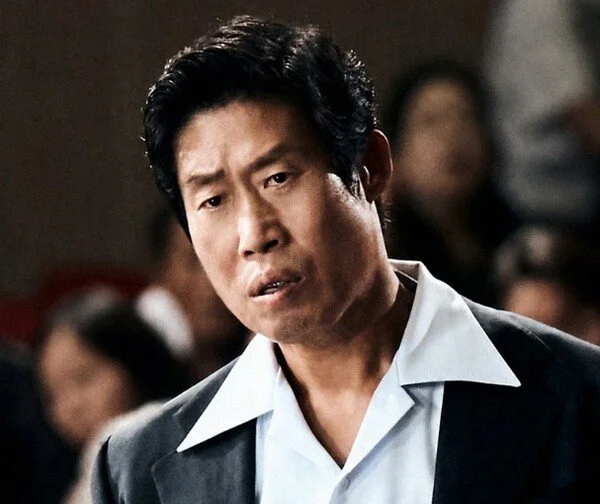 'The Assassin(s)' Stops Even at Busan Film Festival—Actors' Schedules Cancelled
The controversy surrounding the historical distortion in the film 'The Assassin(s)' is expanding beyond evaluations of the work to safety issues for actors and production staff. As debates over the film's method of historical representation intensify among politicians and some audiences following its release, the controversy is taking the form of expanding into an issue surrounding the overall environment of expression in the film industry, as official schedules for lead actors are being cancelled one after another.
The Busan International Film Festival announced on the 2nd that, at the request of the production company for 'The Assassin(s)', it has cancelled its attendance at the opening ceremony of the 31st Busan International Film Festival and the outdoor stage greetings schedule. The production company explained that this decision was made after a comprehensive review of the safety of audiences and attendees, as well as the burden of conducting the event, considering the recent series of circumstances. Previously, the 'Actors House' schedule for lead actor Lee Min-ho was also cancelled. The 49th stage greeting, which was scheduled for the weekend of the second week of release, was also completely cancelled.
The reason 'The Assassin(s)' is at the center of the controversy is that it uses the shooting of First Lady Yuk Young-soo on August 15, 1974, as the core subject of the film. Since historical events already have accumulated socially shared memories and interpretations, the moment they are reconstructed into a feature film, complex issues arise regarding the boundary between fact and fiction, the representation of real people, and historical responsibility. In particular, as interpretations emerged that the film presented a narrative reminiscent of the involvement of former President Park Chung-hee in the process of tracing the possible mastermind behind the incident, criticisms of historical distortion and counterarguments of creative freedom collided head-on.
Director Hur Jin-ho refuted this, stating that the film was not made on the premise that former President Park Chung-hee ordered the shooting of First Lady Yuk Young-soo. He explained that he merely expanded cinematic assumptions based on field records and bullet trajectories covered in past terrestrial documentaries, and had no specific political purpose. The production company also released a position that the work is not intended to confirm a specific historical conclusion or to deny or distort existing facts.
The controversy itself is an area that is fully possible in a democratic society. Criticism regarding how a film dealing with a historical event modified factual relationships, or where the honor of real people and freedom of expression collide, can be directed at the work. In fact, in a recent survey, 58.2% of respondents viewed the historical representation in 'The Assassin(s)' as 'historical distortion,' while 27.6% answered it was 'creative freedom.' However, the survey was conducted by a research institute affiliated with the Reform Party, so it needs to be interpreted considering the conducting entity and the composition of the questions.
The problem arises the moment the target of such controversy shifts from the work to the individual creators. In film production, numerous people participate, not only the director but also the screenplay, production, cinematography, art, editing, and acting. Actors, too, cannot be identified with the entity that decides the historical view or political message of the entire work. Nevertheless, the phenomenon of concluding an individual actor's political inclination or values solely because they appeared in a specific film goes beyond the scope of cultural debate.
In fact, in this situation, not only online criticism toward the actors but also a planned protest in front of Yoo Hae-jin's residence has occurred. As a member of a certain conservative group revealed that they had reported a protest in front of his residence, concerns about invasion of privacy and safety issues were also raised. As criticism of the work penetrates into the daily spaces of individual creators, the question of where to distinguish 'responsibility for the work' from 'individual responsibility' has emerged again.
The Korean Film Producers Association issued a separate statement on the 1st for this reason. While the association premised that it is a natural and necessary process for various evaluations and interpretations to arise in works using historical events or real people as subjects, it expressed concern about situations where excessive criticism is directed at the production company, director, actors, and staff members individually, or where unverified information spreads, simply because they participated in the work. The core intention of the association was that the focus of the debate should be placed on the creative work itself.
This phenomenon is not limited to this film alone. Every time a film or drama using historical figures or political events is released, cases have been repeated where the interpretation of the work combines with current political factional logic, demanding responsibilities outside of the work from actors and directors. Especially in the era of social media, rather than critics or the media mediating and adjusting interpretations as in the past, it has become common for specific images to preempt public opinion as short scenes and lines are cut and distributed rather than the entire context of the work.
From a sociological perspective, this is connected to the process where 'cultural representation' moves beyond the realm of simple entertainment to become a battlefield for competition over collective memory. Who remembers past events and how they are remembered also affects current identity and power relations. Therefore, it is not strange for a historical film to trigger controversy. Rather, controversy is also a process of socially revealing the collision of memories. However, if that collision does not stop at the stage of verifying the work's narrative and historical basis and moves to the stigmatization and threat of individuals, criticism has the possibility of losing its function as a debate and transforming into social pressure at some point.
The essential characteristics of the medium of film also make this issue complex. While a history book explains the past through the arrangement of facts, a feature film imparts emotion and narrative to characters and events. While creating scenes that did not actually happen, it can imprint them on the audience as intensely as actual memories. Therefore, it is also possible to argue that a higher level of accountability is required for historical films than for general fiction. On the contrary, there is also a counterargument that if all imagination is excluded simply because historical facts are used as a subject, the genre of feature film itself would be difficult to establish.
Ultimately, the core goes beyond the simple pro-and-con structure of 'can historical films use fiction.' Discussions should be held together regarding whether certain fictions are likely to be accepted as facts, to what extent the honor of real people and the rights of bereaved families should be considered, how clearly creators should present their interpretations, and how audiences should distinguish and accept the work's narrative from historical facts. In this process, criticism of the work should instead be more meticulous and specific.
In that sense, the current situation surrounding 'The Assassin(s)' is becoming an example that shows how historical memory and cultural expression collide in Korean society, beyond the box office success of a single film. Strong criticism of a work and the guarantee of safety for creators are not opposing values. Rather, for freedom of expression to function substantially, the freedom to criticize the work and the right of creators not to be threatened must be guaranteed simultaneously.
Ultimately, the most fierce rebuttal to history must be other historical interpretations, data, and logic. If it is judged that a film distorted historical facts, one can specifically point out those scenes and grounds and present a counterargument in the public forum. Conversely, if one believes that cinematic imagination should be allowed, one can explain under what principles it is possible. The moment the debate surrounding a work moves to an actor's doorstep or an individual's private life, the film and history that we should actually be debating disappear from view. The most important question posed by the 'The Assassin(s)' situation is ultimately this: is the debate about history for the purpose of understanding the past more accurately, or is it for the purpose of projecting current political conflicts onto the past?
'The Assassin(s)' Stops Even at Busan Film Festival—Actors' Schedules Cancelled
The controversy surrounding the historical distortion in the film 'The Assassin(s)' is expanding beyond evaluations of the work to safety issues for actors and production staff. As debates over the film's method of historical representation intensify among politicians and some audiences following its release, the controversy is taking the form of expanding into an issue surrounding the overall environment of expression in the film industry, as official schedules for lead actors are being cancelled one after another.
The Busan International Film Festival announced on the 2nd that, at the request of the production company for 'The Assassin(s)', it has cancelled its attendance at the opening ceremony of the 31st Busan International Film Festival and the outdoor stage greetings schedule. The production company explained that this decision was made after a comprehensive review of the safety of audiences and attendees, as well as the burden of conducting the event, considering the recent series of circumstances. Previously, the 'Actors House' schedule for lead actor Lee Min-ho was also cancelled. The 49th stage greeting, which was scheduled for the weekend of the second week of release, was also completely cancelled.
The reason 'The Assassin(s)' is at the center of the controversy is that it uses the shooting of First Lady Yuk Young-soo on August 15, 1974, as the core subject of the film. Since historical events already have accumulated socially shared memories and interpretations, the moment they are reconstructed into a feature film, complex issues arise regarding the boundary between fact and fiction, the representation of real people, and historical responsibility. In particular, as interpretations emerged that the film presented a narrative reminiscent of the involvement of former President Park Chung-hee in the process of tracing the possible mastermind behind the incident, criticisms of historical distortion and counterarguments of creative freedom collided head-on.
Director Hur Jin-ho refuted this, stating that the film was not made on the premise that former President Park Chung-hee ordered the shooting of First Lady Yuk Young-soo. He explained that he merely expanded cinematic assumptions based on field records and bullet trajectories covered in past terrestrial documentaries, and had no specific political purpose. The production company also released a position that the work is not intended to confirm a specific historical conclusion or to deny or distort existing facts.
The controversy itself is an area that is fully possible in a democratic society. Criticism regarding how a film dealing with a historical event modified factual relationships, or where the honor of real people and freedom of expression collide, can be directed at the work. In fact, in a recent survey, 58.2% of respondents viewed the historical representation in 'The Assassin(s)' as 'historical distortion,' while 27.6% answered it was 'creative freedom.' However, the survey was conducted by a research institute affiliated with the Reform Party, so it needs to be interpreted considering the conducting entity and the composition of the questions.
The problem arises the moment the target of such controversy shifts from the work to the individual creators. In film production, numerous people participate, not only the director but also the screenplay, production, cinematography, art, editing, and acting. Actors, too, cannot be identified with the entity that decides the historical view or political message of the entire work. Nevertheless, the phenomenon of concluding an individual actor's political inclination or values solely because they appeared in a specific film goes beyond the scope of cultural debate.
In fact, in this situation, not only online criticism toward the actors but also a planned protest in front of Yoo Hae-jin's residence has occurred. As a member of a certain conservative group revealed that they had reported a protest in front of his residence, concerns about invasion of privacy and safety issues were also raised. As criticism of the work penetrates into the daily spaces of individual creators, the question of where to distinguish 'responsibility for the work' from 'individual responsibility' has emerged again.
The Korean Film Producers Association issued a separate statement on the 1st for this reason. While the association premised that it is a natural and necessary process for various evaluations and interpretations to arise in works using historical events or real people as subjects, it expressed concern about situations where excessive criticism is directed at the production company, director, actors, and staff members individually, or where unverified information spreads, simply because they participated in the work. The core intention of the association was that the focus of the debate should be placed on the creative work itself.
This phenomenon is not limited to this film alone. Every time a film or drama using historical figures or political events is released, cases have been repeated where the interpretation of the work combines with current political factional logic, demanding responsibilities outside of the work from actors and directors. Especially in the era of social media, rather than critics or the media mediating and adjusting interpretations as in the past, it has become common for specific images to preempt public opinion as short scenes and lines are cut and distributed rather than the entire context of the work.
From a sociological perspective, this is connected to the process where 'cultural representation' moves beyond the realm of simple entertainment to become a battlefield for competition over collective memory. Who remembers past events and how they are remembered also affects current identity and power relations. Therefore, it is not strange for a historical film to trigger controversy. Rather, controversy is also a process of socially revealing the collision of memories. However, if that collision does not stop at the stage of verifying the work's narrative and historical basis and moves to the stigmatization and threat of individuals, criticism has the possibility of losing its function as a debate and transforming into social pressure at some point.
The essential characteristics of the medium of film also make this issue complex. While a history book explains the past through the arrangement of facts, a feature film imparts emotion and narrative to characters and events. While creating scenes that did not actually happen, it can imprint them on the audience as intensely as actual memories. Therefore, it is also possible to argue that a higher level of accountability is required for historical films than for general fiction. On the contrary, there is also a counterargument that if all imagination is excluded simply because historical facts are used as a subject, the genre of feature film itself would be difficult to establish.
Ultimately, the core goes beyond the simple pro-and-con structure of 'can historical films use fiction.' Discussions should be held together regarding whether certain fictions are likely to be accepted as facts, to what extent the honor of real people and the rights of bereaved families should be considered, how clearly creators should present their interpretations, and how audiences should distinguish and accept the work's narrative from historical facts. In this process, criticism of the work should instead be more meticulous and specific.
In that sense, the current situation surrounding 'The Assassin(s)' is becoming an example that shows how historical memory and cultural expression collide in Korean society, beyond the box office success of a single film. Strong criticism of a work and the guarantee of safety for creators are not opposing values. Rather, for freedom of expression to function substantially, the freedom to criticize the work and the right of creators not to be threatened must be guaranteed simultaneously.
Ultimately, the most fierce rebuttal to history must be other historical interpretations, data, and logic. If it is judged that a film distorted historical facts, one can specifically point out those scenes and grounds and present a counterargument in the public forum. Conversely, if one believes that cinematic imagination should be allowed, one can explain under what principles it is possible. The moment the debate surrounding a work moves to an actor's doorstep or an individual's private life, the film and history that we should actually be debating disappear from view. The most important question posed by the 'The Assassin(s)' situation is ultimately this: is the debate about history for the purpose of understanding the past more accurately, or is it for the purpose of projecting current political conflicts onto the past?
#The Assassin(s)
#Busan International Film Festival
#Lee Min-ho
#Yoo Hae-jin
#Hur Jin-ho
#historical distortion
#freedom of expression
Copyright © Mediafine Global All rights reserved. Unauthorized reproduction, redistribution, and AI training prohibited.
Related Articles
'The Assassin(s)': Promotions Halted Amid Controversy, but Box Office Success Continues Toward 2 Million Viewers
2026.10.03

'The Assassin(s)', Recommendations from 42 People Including Lee Young-ae, Kim Go-eun, and Lee Jung-jae Suddenly Deleted
2026.10.02

Defector Han Song Yi questions historical accuracy of 'The Assassin(s)'
2026.09.30
Comments 0
Comments are currently disabled.