
Production team denies political intent amid 'The Assassins' controversy
As 'The Assassins' reaches 1.56 million viewers, director Hur Jin Ho and producers address historical distortion claims regarding the 1974 Yook Young Soo…
The controversy is spreading as fast as the film's box office success. While 'The Assassins' has become the center of the Chuseok holiday box office, surpassing 1.56 million viewers just five days after its release, it has now faced a 'historical distortion' controversy. As the film is based on the 1974 shooting of First Lady Yook Young Soo, the boundary between historical fact and dramatic imagination has emerged as a key issue. Following concerns raised by political circles and the Park Chung Hee Presidential Memorial Foundation, the production team has stepped forward to address the allegations.
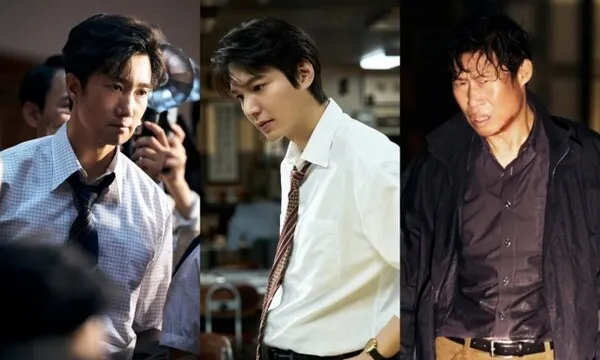
On the 28th, the production team of 'The Assassins' released an official statement: "This is a feature film reconstructed by adding cinematic imagination to various records regarding the 1974 historical event." They explained that while they investigated released records, materials, books, and documentaries to use real people and events as motives, they combined them with fictional characters and situations. In particular, they emphasized that they did not designate a specific individual as the mastermind behind the incident, nor did they present hypotheses from the film as historical facts. They further stressed that there was no intention to confirm a specific historical conclusion or to deny or distort existing facts.
The core of the controversy lies in this very distinction. The film takes the form of a mystery drama tracing the mastermind behind the shooting of First Lady Yook Young Soo, which occurred during the National Liberation Day of Korea celebration ceremony on August 15, 1974. While the incident itself is a historical fact, the film draws the suspicions and hypotheses surrounding that event into its dramatic narrative. As certain scenes suggest the possibility that President Park Chung Hee's side or the Korean Central Intelligence Agency was involved, a debate has flared up regarding where the boundary between historical fact and fiction lies.
The moment a historical event is adapted for film, the relationship between fact and interpretation becomes complex. While historiography verifies layers of fact through historical records and testimonies, film reconstructs the past through the emotions of characters and narrative probability. The problem lies in the fact that in feature films dealing with real people and actual events, audiences may accept fictional devices as historical facts. Conversely, an argument can be made that if a film's ability to pose questions regarding doubts in historical records is restricted, the realm of creation could become excessively narrow. Ultimately, the controversy surrounding 'The Assassins' goes beyond the accuracy of specific scenes and touches upon the long-standing question of how film should represent historical memory.
Criticism has also come from political circles. Jang Dong Hyeok of the People Power Party and Representative Yoo Young Ha criticized the film's setting as historical distortion, and the Park Chung Hee Presidential Memorial Foundation demanded an official apology and a halt to screenings from the production company. Meanwhile, the production team acknowledged that various interpretations and criticisms could arise but made it clear that the film does not serve a specific political purpose. As political criticism and the production team's explanation clash, the gap in interpretation surrounding the work continues to widen.
Interestingly, the controversy has not hindered the film's commercial success. After its release on the 23rd, 'The Assassins' topped the holiday box office, drawing approximately 1,407,000 viewers from the 24th to the 27th during the Chuseok holiday. On the 26th, it surpassed 1 million viewers just four days after its release, and the cumulative audience reached approximately 1,566,000 by the 27th. As viewer evaluations and online ratings differ significantly, the response to the work remains divided.
Director Hur Jin Ho had previously explained before the release that he did not approach this work as a film intended to uncover the truth or identify the mastermind. Rather than concluding a hidden truth, he intended to examine the doubts surrounding the incident and the emotions of those who lived through that era. There is always a gap between creative intentions and how an audience perceives them, as a director's intent and an audience's interpretation are not always identical.
This is precisely why the controversy surrounding 'The Assassins' is significant. While the film reproduces the past, the audience recalls current political and social memories through it. While the historical event is over, the social conflict regarding how to remember it remains ongoing. When a film based on a historical tragedy functions as a space for public memory rather than mere entertainment, creators face the dual challenge of creative freedom and the responsibility of representation. Whether 'The Assassins' will ultimately be judged by its box office success or the historical debate remains to be seen.


Comments 0
Comments are currently disabled.