“Did he become a Yakuza?” Former 'Abnormal Assembly' Japanese Representative Takuya undergoes dramatic transformation
Broadcaster Takuya, known for his gentle image on JTBC's 'Abnormal Assembly', reveals his shocking transformation into a Yakuza member for a recent Korea-Japan co-produced film.
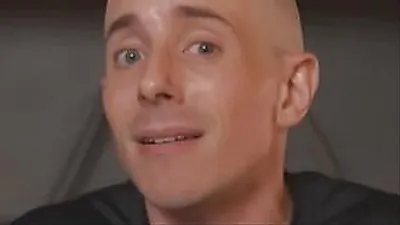
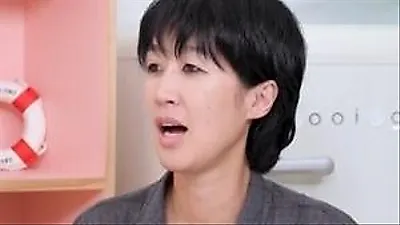
“Did he become a Yakuza?” The studio was left in shock by a single comment from comedian Kim Sook directed at broadcaster Takuya, who appeared on screen after a long hiatus. Takuya, who was beloved for his soft and rational image on the JTBC variety show 'Abnormal Assembly', has recently undergone a transformation that evokes the image of a Yakuza gang member in Japan. However, the reality is not an entry into a criminal organization, but rather a role in a film.
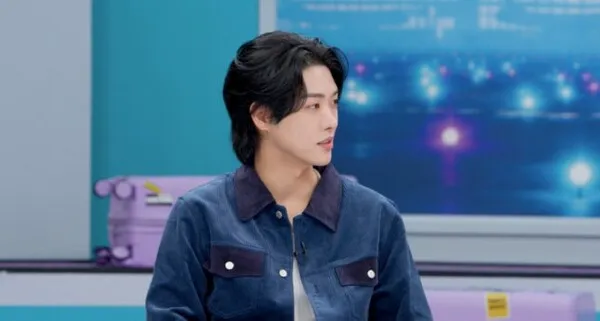
Appearing on the JTBC program 'Talkpawon 25 Hours', Takuya shared his recent activities filming a movie in Japan. He explained that he changed his appearance from head to toe for his character, playing a member of a Yakuza organization in the production.
The work Takuya starred in is the Korea-Japan co-produced film '009: Civil Complaint Processing Department'. He revealed that he played a character affiliated with the Yakuza in a story set in a secret department existing within an ordinary district office, performing all his lines in Japanese. This transformation shows a significant gap from the image he previously showed in variety shows, as he is expanding his professional spectrum into Japan as an actor beyond mere broadcast appearances.
Born in 1992, Takuya's activities in South Korea began as an idol. Under his real name, Terada Takuya, he debuted in the Korean entertainment industry in 2012 and secured mainstream recognition after joining JTBC's 'Abnormal Assembly' as the representative from Japan in 2014. In the format where foreign panelists logically discuss the culture and social phenomena of their respective countries, he built a unique presence with his explanations of Japanese society and his calm manner of speech.
This is also why 'Abnormal Assembly' holds a meaning for Takuya that goes beyond a simple variety program. While placing his position as a Japanese person active in Korea at the forefront, he did not consume his nationality as his entire character; instead, he converted his linguistic ability to move between Korean and Japanese and his cultural experiences into his own content assets. He has since continued his activities through 'Talkpawon 25 Hours', naturally taking on the role of explaining the cultural contact points between Korea and Japan.
Recently, his steps as an actor have also increased noticeably. By participating in the short film 'Grandpa Ichang', the independent film 'Dokchin', and 'Daechi-dong Scandal' alongside Ahn So-hee, he is layering the identity of an actor over his existing title as a broadcaster. This year, he is also expanding his field of activity by joining KBS2's 'Mr. House Husband 2', challenging himself with the new format of observational variety shows.
This Yakuza role is the most dramatic example of such change. Unlike his friendly and soft image in variety shows, he chose a strong character in the film that required changing his physical appearance. For Takuya, this work is read not just as a 'surprise transformation,' but as an attempt to broaden his image spectrum in the process of shifting his center of gravity from a broadcaster to an actor.
The phenomenon of 'Hanbon-eo' (a mix of Korean and Japanese) in Japan, which Takuya introduced on the program, is also interesting in connection with his career trajectory. He shared that expressions combining Korean and Japanese are actually being used in the daily lives of the younger generation in Japan. Representative examples include 'Daebai', a combination of the Japanese 'Yabai' and the Korean 'Daebak', and 'Ohaseyo', a mix of the Japanese 'Ohayou' and the Korean 'Annyeonghaseyo'.
This linguistic hybridity demonstrates a cultural phenomenon that goes beyond simple buzzwords. It signifies that Korean pop culture has permeated into the daily language and consumption culture of the Japanese youth, making the cultural boundaries between the two countries looser than before. In particular, the explanation that these expressions are naturally utilized by the general youth, rather than just those who have studied Korean, provides an interesting cross-section of the current state of Korea-Japan cultural exchange.
It is also paradoxical that Takuya himself stands at the center of this phenomenon. Having debuted in Korea as a Japanese person, broadcasting in Korean and gaining fame through Korean variety shows, he is now performing in Japanese in a Korea-Japan co-produced film. His career itself was formed at the intersection where the popular cultures of both countries cross.
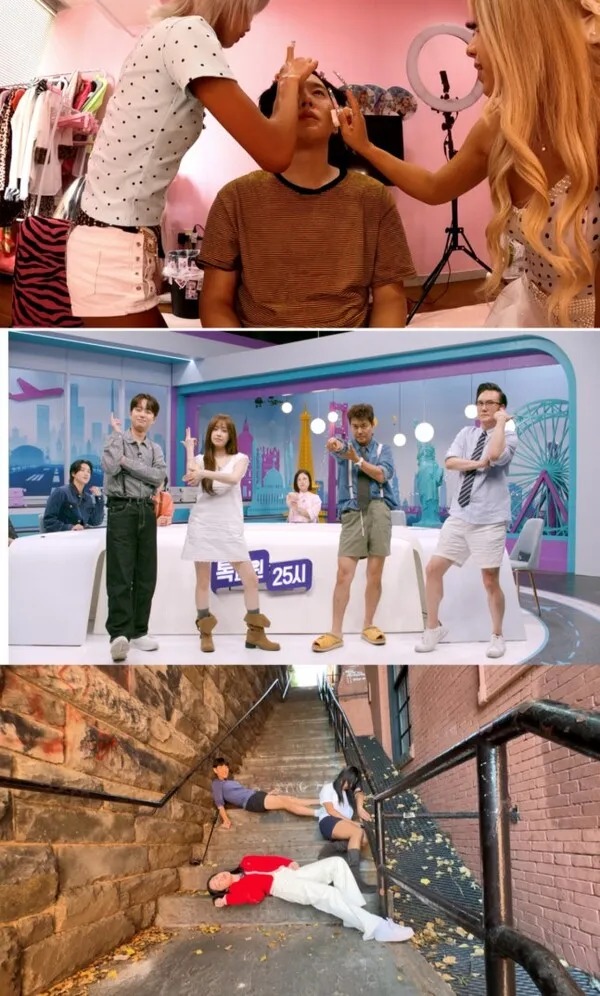
The fact that 'Talkpawon 25 Hours' also highlighted Japanese Gal culture on this day can be seen in the same context. The Japanese 'Talkpawon' directly challenged 'Gyaru-o' (male Gal culture) and explored fashion and accessories at Shibuya 109, before exploring the social background of Gal culture at a cafe recreating the rooms of high school girls from the Heisei era. At the Shibuya crossing, they also attempted the Para Para dance, which was popular alongside Gal culture at the time.
The program approached Japan not as a simple tourist destination, but in a way that experienced the evolution of popular culture. By placing the Gal culture, which was a symbol of the Japanese youth in the past, and the currently spreading Hanbon-eo within a single program, it showed how Japan's cultural landscape changes according to generations and eras.
In Washington D.C., USA, they visited Georgetown University, where local college students introduced the campus themselves. They examined campus life, where a single meal at the student cafeteria costs about 20,000 won and dormitory fees reach about 14 million won per semester, and visited the stairs near the school known as the actual filming location of the movie 'The Exorcist'.
However, the person who created the strongest buzz on the broadcast that day was undoubtedly Takuya. This is because the fact that the image of the upright Japanese representative shown on 'Abnormal Assembly' has suddenly transformed into a Yakuza in a film is quite a twist for viewers.
More importantly, this twist is not merely a variety-show makeup job. Having taken his first steps in Korea as an idol in 2012, Takuya established himself as a broadcaster through 'Abnormal Assembly' and has steadily expanded his fields of activity through 'Talkpawon 25 Hours', films, observational variety shows, and publishing. This year, he even presented his first emotional transcription book, 'Pieces of Tenderness', which contains his daily life and experiences, building his own language even outside of broadcasting.
Ultimately, Takuya's remark about 'becoming a Yakuza' is not a shocking statement exaggerating his current status, but a paradoxical scene showing how far the person once imprinted as the 'Japanese representative of Abnormal Assembly' is expanding his scope of activities.
Takuya, who is no longer staying behind his soft speech and friendly image but has begun to digest intense film characters. The cultural experiences he has built while moving between Korea and Japan are now being translated into a new language of acting, moving beyond variety shows.
Bài viết liên quan