Kwon Yuri leaves Jeju for 'Hyoryesu' debut with Girls' Generation members
Girls' Generation's Kwon Yuri heads to Seoul to prepare for her new unit group Hyoryesu alongside Hyoyeon and Sooyoung.
Girls' Generation's Kwon Yuri is temporarily leaving Jeju, where she has resided for over three years. The reason is an unexpected transformation. While she was once caught in speculation that her Jeju lifestyle mimicked that of Lee Hyori, the time Kwon Yuri spent in Jeju was not a temporary concept, but a genuine part of her long-term life. She has now chosen to head back to Seoul for a new project involving broadcasting and music activities: the debut of 'Hyoryesu.'

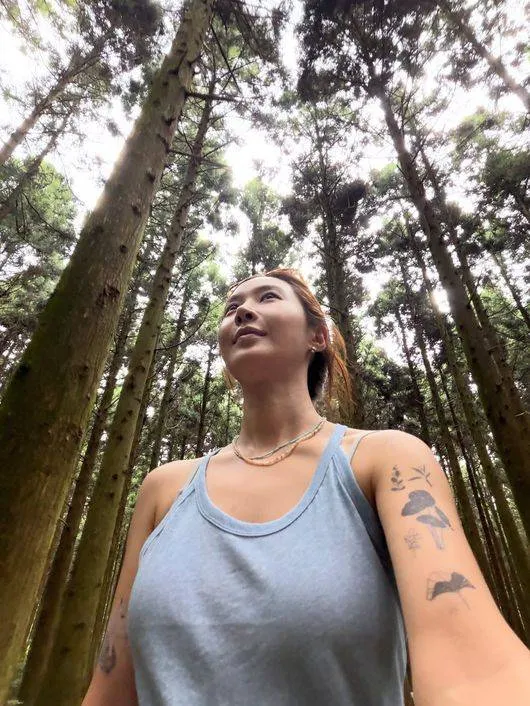
On the 19th, Kwon Yuri posted photos of her daily life in Jeju on her channel, writing, "Jeju, I'll debut with Hyoryesu and then come right back." In the photos, Kwon Yuri is seen enjoying leisure time walking along the beach and the sea, dressed naturally—a far cry from her glamorous star image. Her moments spent with her pets reflect the daily life of an individual who has fully adapted to living in Jeju, rather than the tension of a celebrity being consumed by the public.
For Kwon Yuri, Jeju Island was not merely a travel destination. Having lived there for more than three years, it was closer to a base for her daily life than a temporary vacation spot. For celebrities, Jeju holds a particularly unique meaning. It allows them to secure physical and psychological distance from the center of the entertainment industry, characterized by dense filming schedules, broadcast commitments, events, and fandom activities in Seoul.
A star's life becomes content the moment it is revealed to the public. What they eat, where they live, what they wear, and who they spend time with are all interpreted as part of their image. Kwon Yuri's life in Jeju was no exception. As her simple daily life in nature was repeatedly revealed, some criticized it as being 'for show,' and even claims were made that she was imitating the lifestyle of Lee Hyori, who has lived in Jeju for a long time.
However, critics pointed out that such views were an interpretation that missed the actual time Kwon Yuri spent in Jeju.
Kwon Yuri's residence in Jeju has already exceeded three years, and with acquaintances mentioning they frequently saw her there, the online suspicions were being viewed as a so-called 'unjust criticism' controversy that expanded without sufficient verification of the facts.
What is most interesting is that rather than explicitly denying or exaggeratedly explaining the situation where she is compared to Lee Hyori, Kwon Yuri simply continued her life as it was. In popular culture, 'similarity' can sometimes be a blessing, but it can also be a shackle. In particular, Lee Hyori is a figure who has built an inseparable symbolic connection with the space of Jeju. Her case of escaping the Seoul-centric star system to live in Jeju, revealing a life with nature, animals, and simple daily routines to reconstruct her existing celebrity image, was quite exceptional in Korean popular culture.
As a result, it is inevitable that Lee Hyori's name is summoned whenever a famous female celebrity lives in Jeju, almost like a form of cultural inertia.
However, viewing Kwon Yuri's life in Jeju as a replica of Lee Hyori's overly simplifies the lives and paths of the two women. While Lee Hyori built an independent lifestyle in Jeju, Kwon Yuri embraced life in nature in her own way. While the public eye surrounding a celebrity's life constantly attempts to compare and categorize, actual human life cannot be reduced to such simple equations.
And now, Kwon Yuri is temporarily leaving Jeju.
The direct reason for her decision to head to Seoul is her musical activities. Kwon Yuri is preparing to debut with the unit group 'Hyoryesu,' formed alongside Hyoyeon and Sooyoung. The group name was taken from the names of the three members. The three members, who worked together for a long time within the massive brand of Girls' Generation, are now reuniting in the new format of a unit.
Hyoryesu is known to be a project that materialized based on Hyoyeon's YouTube channel. While Hyoyeon takes on the role of main vocalist, Yuri and Sooyoung joined to complete the new combination. Although they are core members of Girls' Generation, the fact that these three, who have quite different areas of activity and personalities, are gathered as one team promises a different kind of fun compared to their previous group activities.
In particular, Girls' Generation is a representative girl group that grew alongside the industrial expansion of K-pop since their debut in 2007. Moving beyond the common notion that the lifespan of idol groups is relatively short, the individual members have built long-term careers by expanding into fields such as acting, solo singing, variety shows, and musical theater.
From that perspective, the formation of Hyoryesu holds more meaning than a simple one-time project. As second-generation idol members, who have built their individual careers after their group activities ended, gather again to create new content, it serves as an example of the changing structure of the idol industry alongside the generational shift in K-pop.
Specifically for Kwon Yuri, Hyoryesu serves as a catalyst to return to a space that is the polar opposite of her life in Jeju. While Jeju symbolizes a slow pace and private daily life, Seoul is the heart of the entertainment industry, densely packed with broadcasting stations, production companies, practice rooms, and studios.
Ultimately, the 'Hyoryesu debut' is an event that allows Kwon Yuri to temporarily depart from her daily routine and return to the stage.
Currently, Hyoryesu is accelerating preparations for their debut. It has been reported that they have begun choreography practice for their debut song 'Skibidi' under the guidance of We Dem Boyz.
While the members have accumulated extensive stage experience, a different performance strategy is required to showcase this new unit combination compared to their previous Girls' Generation activities.
Hyoyeon, Yuri, and Sooyoung have each established distinct characters and career paths. Hyoyeon, as the performance-centered member of Girls' Generation, expanded her musical territory through dance and DJ activities, while Yuri expanded her presence in front of the camera as an actress and variety star. Sooyoung has also built an independent filmography as an actress and broadcaster.
Their reunion as a single team is different from recreating the past Girls' Generation. Rather, it is closer to a new form of 'reunion' created after their individual paths have matured.
In that sense, Kwon Yuri's departure from Jeju carries a symbolic weight beyond a simple change of location. A star who had surrendered herself to nature and daily life is returning to the high-intensity industrial field of music and the stage.
If life in Jeju was a time of rest and self-recovery for Kwon Yuri, Hyoryesu is the gateway back to the public. The 'imitation of Lee Hyori' controversy that occurred in the interim ultimately remains a minor incident, illustrating how easily the public eye can image and consume a celebrity's actual lifestyle.
Kwon Yuri said, "Jeju, I'll debut with Hyoryesu and then come right back." Her current situation is captured perfectly in that short sentence. She is not leaving Jeju permanently, but returning to Seoul for a moment, continuing a dual life that oscillates between a star's career and an ordinary daily existence.
Leaving behind the Jeju she called home for over three years, Kwon Yuri is returning to the stage. More important than the external perceptions of 'imitating Lee Hyori' is how she has built her own time and how she will translate those experiences into music and performance.
This is why the first stage of 'Hyoryesu' is so highly anticipated. Whether they will simply call upon the past glory of Girls' Generation or create a new narrative built upon their individual present experiences is now up to the three of them. Kwon Yuri may be leaving Jeju temporarily, but she is not leaving behind the time she accumulated there. Rather, the most interesting point of interest for this project will be how that time manifests through new expressions on the Seoul stage.
Related articles