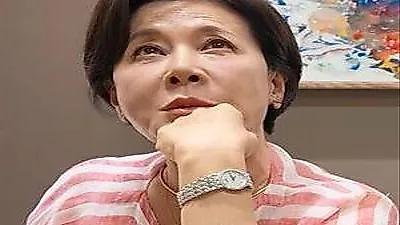
Seo Jeong-hee reveals 50-year struggle with same symptoms as Lee Sang-soon
Broadcaster Seo Jeong-hee shares her lifelong battle with vasovagal dysfunction, mirroring singer Lee Sang-soon's recent health issues.
Broadcaster Seo Jeong-hee revealed that she has finally discovered the cause of the fainting spells she has experienced repeatedly for approximately 50 years. As singer Lee Sang-soon recently suspended his radio hosting due to "vasovagal dysfunction," attention is being drawn to the two cases as Seo confessed she is suffering from the same neurological condition.

On the 7th, Seo posted a long message on her SNS, stating, "50 years until I knew the name. For 50 years, my body had no name." She recalled that during her middle school years, she suffered from severe anemia and frequently collapsed on her way to school. Even after the anemia symptoms disappeared as she grew up, she would lose consciousness once or twice a year, or even multiple times at once, for no particular reason.
The fainting occurred without warning even during daily life. She mentioned that she once collapsed while taking a bath and broke her teeth, and there were times when she would wake up, walk a few steps, and then collapse on the floor accompanied by vomiting and heavy sweating. She explained that during the moments she lost consciousness, 1 to 2 minutes of memory would vanish, sometimes leaving her not even knowing why she was lying on the floor after opening her eyes.
In particular, she revealed that she recently faced great danger when symptoms appeared while driving. Seo said that while driving home, her vision blurred, she felt nausea, broke out in a cold sweat, and lost strength in her hands, leading her to sense that she was on the verge of fainting. Ultimately, she pulled her vehicle over to the shoulder, lay down inside the car, and regained consciousness about 5 minutes later.
She said that this experience prompted her to pay closer attention to the warning signs sent by her body. When her vision blurs, she stops walking; when she suddenly breaks into a sweat, she stops moving; and when nausea or weakness appears, she makes sure to lie down in a safe place before falling. In essence, she has learned to identify her own danger signals and response methods to avoid secondary injuries caused by repeated fainting over a long period.
The person who played a crucial role in Seo finding the name of her symptoms was her daughter, Seo Dong-ju. According to Seo, Dong-ju did not simply brush off the long-repeated symptoms as trivial, but instead searched for related materials and continuously asked when the symptoms started, what appeared first, and in what situations the fainting occurred. Through that process, Seo explained that she was able to give her symptoms the name "vasovagal dysfunction."
Seo stated that she only truly realized there were others experiencing similar symptoms after coming across an article about Lee Sang-soon sent by her daughter. She said, "I wasn't the only one," noting that she could now view the physical experiences she could not explain for the past 50 years from a new perspective.
This confession is a separate health issue from the battle with breast cancer that Seo has previously disclosed publicly. She said that unlike breast cancer, the time spent feeling that something was wrong with her body for a long time without knowing the cause or the name was even more frustrating. She added that it wasn't that her body betrayed her, but rather that it had been sending repeated signals for a long time, and she simply didn't know how to interpret those signals.
The term "vasovagal dysfunction" has also become known to the public through Lee Sang-soon's recent health issues. Lee directly revealed that after his condition suddenly deteriorated on August 26, he underwent various tests and consultations, and was advised by medical staff to rest due to neurological symptoms related to vasovagal dysfunction, leading him to suspend his hosting of MBC FM4U's "A Perfect Day with Lee Sang-soon." He conveyed that he is still waiting for additional detailed examinations and intends to return after recovering his health following sufficient rest.
Lee's absence from broadcasting began in earnest on the 27th of last month. Aside from pre-recorded broadcasts, he did not appear on live radio, and MBC subsequently announced that the program would be operated under a special DJ system. While rumors of health issues were raised because specific reasons were initially unknown, the background of his absence was confirmed when Lee explained his condition himself.
Since the vagus nerve is related to various autonomic nervous system functions such as heart rate, blood pressure, and digestion, related abnormalities can manifest in various forms such as dizziness, cold sweats, nausea, and fainting. However, the expression "vasovagal dysfunction" cannot be uniformly equated with a specific fainting disorder, and the actual cause and diagnosis depend on individual tests and medical judgment. As Lee is still awaiting further testing, it is not necessary to overinterpret his condition based on isolated symptoms.
Seo's case is particularly noteworthy because a personal experience of repeated fainting, which was once dismissed as simple anemia or temporary fatigue, has finally been connected to a medical term. Her experience of pulling a vehicle over during a vision-blurring episode highlights how vital it is to recognize pre-fainting symptoms to avoid secondary risks like falls or traffic accidents.
"For 50 years, I did not understand my body. But now, I am slowly learning," Seo said, adding that she will continue to listen to the small signals her body sends. Her confession, finally giving a name to a long-unexplained ailment, underscores the anxiety and frustration experienced by those living with "unexplainable symptoms."
Related articles