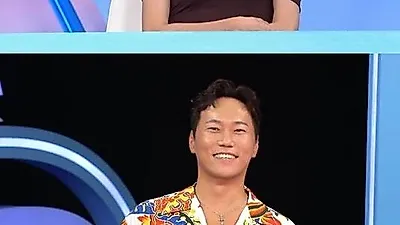
"Made 100 Million Won With 600-Won Toys": Cho Joong-gyu, Entrepreneur With 100 Billion Won in Annual Sales, Was Seo Jang-hoon's School Senior
Serial entrepreneur Cho Joong-gyu shared how a 600-won toy idea led to 100 million won in profit and later 100 billion won in annual sales.
Serial entrepreneur Cho Joong-gyu revealed the business instincts and success formula that took him from selling toys bought for 600 won apiece to building ventures that once recorded annual sales of more than 100 billion won.

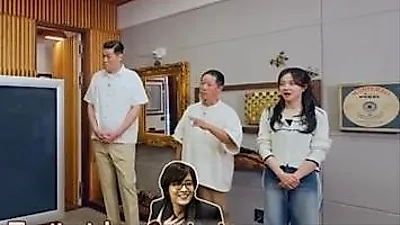
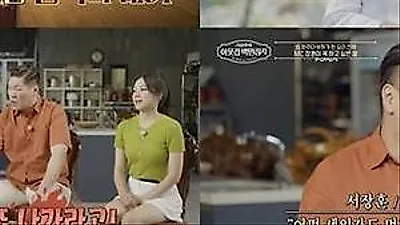
On the July 1 broadcast of EBS's "Seo Jang-hoon's Neighborhood Millionaire," broadcaster Seo Jang-hoon and Jang Ye-won met Cho, looked back on his start-up story and business philosophy, and toured his home in Pyeongchang-dong.
Cho introduced himself on the program as "a serial entrepreneur who does anything that makes money, except bad things." He said he currently operates seven businesses, including restaurants, events, marketing, design, rentals and a konjac factory. He surprised the hosts by revealing that, at the height of his business success, his annual sales exceeded 100 billion won.
Cho also said he has personally launched more than 10 businesses so far. Starting with restaurant operations, he moved into event planning, design, marketing and other fields. He explained that he built his standing in the industry by handling major projects such as events connected to the 2002 Korea-Japan World Cup, a drone show for BTS's comeback, and large-scale automobile fairs.
He expressed confidence in his position in the event business, saying, "There was a time when I generated about 2 billion won in sales from a single event," and adding, "I think I am among the top five in the event industry."
The broadcast also revealed Cho's home in Pyeongchang-dong. Seeing the house, with its high walls, spacious terrace and open view, Jang Ye-won said in surprise, "I think this house has the highest wall among the homes here." After taking in the size of the property, she added admiringly, "It feels like a children's playground."
Seo Jang-hoon was also impressed by the setting. "The view is really good," he said. "Because it is in Pyeongchang-dong, it feels close to nature."
A special connection between Seo and Cho was also revealed during the visit. Cho asked Seo, "Have you never seen me before?" It turned out that Cho had attended the same middle school as Seo and was one year ahead of him.
Seo recalled the period, saying, "I transferred schools, so we probably went to the same school for about nine or 10 months." Cho then said, "I was on the student guidance team at the time. I saw him at the school gate every morning," and added with a laugh, "Because he was on the baseball team and had a big build, I did not mess with him." The exchange drew laughter on the show.
As Seo toured the inside of the house, he continued to marvel at how neatly the space was arranged. "It feels like a real rich person's house that you would see in a drama," he said. "The living room is about as large as the kitchen. Every detail gives off the feeling of a wealthy home."
The refrigerator and pantry, in particular, were organized with storage containers and labels for ingredients and daily necessities. Even Seo, who is widely known for his own neatness, was impressed, saying, "The level of organization is different. Everything has been arranged with absolute precision."
Cho's success story began in 1993, when he was 20 years old. At the time, ahead of the release of the film "Jurassic Park," he spotted the potential of dinosaur character merchandise.
He said, "I saw the movie poster and contacted a toy importer," and revealed, "I invested all the money I had, 26 million won."
Cho then sold dinosaur toys to moviegoers in front of theaters. He said he bought the products for 600 won each and sold them for 3,000 won, earning about 100 million won in profit.
After hearing the story, Seo said, "In today's terms, that means you were selling movie-related goods," and expressed admiration for Cho's business sense, which was ahead of its time.
Cho Joong-gyu's path to success, built by turning a small idea into an opportunity and constantly challenging himself in new fields, showed more than a simple story of wealth. It underscored the importance of reading a changing market and having the execution power to act on what one sees.
Related articles