Park Wi faces potential legal action over KTX accident video
YouTuber Park Wi faces backlash and potential legal penalties for violating privacy laws after releasing CCTV footage that identified a public service worker.
YouTuber Park Wi is facing intense backlash after releasing CCTV footage of a fall that occurred while he was disembarking a KTX train. Although he has since deleted the video and issued an apology, the controversy has escalated beyond a simple debate over attitude to include potential violations of the Personal Information Protection Act. In particular, the fact that the identity of the public service worker who was assisting during the accident could be identified in the video has emerged as a key legal issue.

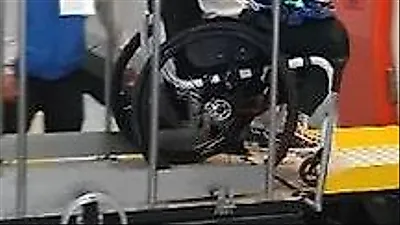
On the 21st, Park Wi shared CCTV footage on his YouTube channel 'Wreacle,' stating that an accident occurred while he was getting off a KTX train when his wheelchair wheel caught on the foot of a public service worker, causing him to fall. While Park Wi intended to explain the circumstances of the accident and the reason for releasing the CCTV, an unexpected controversy began as the worker's appearance was exposed in the video.
Some viewers reacted by saying it was excessive to publicly call out the scene given that the public service worker was busy securing the ramp to help Park Wi in a situation lacking any intent to cause harm. Subsequently, criticism spread, with some questioning whether he had "publicly blamed the worker who provided help."
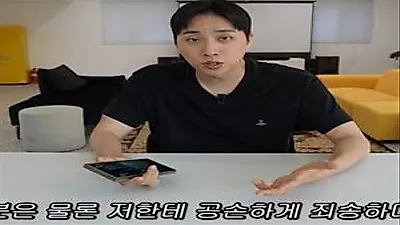
As the controversy grew, Park Wi deleted the video and apologized. He stated that he had only viewed the worker's mistake in a negative light during the process of helping him, saying, "I failed to consider the worker's position." He continued by apologizing to the staff members who worked hard on-site, admitting that his method of delivery was immature and his thinking was short-sighted.
However, legal issues remain separate.
According to an analysis by a legal expert released on the 25th, while it is possible for Park Wi, the party involved in the accident, to view the CCTV footage containing his own image, the issue of releasing that video to the public requires a separate judgment. Specifically, it was explained that if a third party's image is included in the video, protective measures such as mosaic or masking must be taken so that their identity cannot be recognized.
Lawyer Lee Seung-jae pointed out that a distinction must be made between viewing CCTV and the external disclosure of copies. He explained that if a video capable of identifying the identity of a third party, such as the public service worker, is disclosed for purposes other than intended, there is a possibility of violating the Personal Information Protection Act. However, whether actual punishment occurs must be judged by comprehensively examining specific facts, such as the circumstances of how the video was obtained, the purpose of disclosure, and the identifiability of the personal information in the video.
As the controversy spread, Park Wi's public image, which he had built up over time, suffered a significant blow. The number of subscribers to 'Wreacle,' which had exceeded 1,000,000, fell below 1,000,000 following the controversy, and it was reported that the number had decreased to approximately 979,000 as of the afternoon of the 25th. Scheduled official events, such as a special lecture at Seoul City Hall and a talk concert at the Kangnam Cultural Foundation, were also canceled in succession.
Furthermore, as civil complaints are being filed calling for a review or dismissal of his role as a Seoul City promotional ambassador, the repercussions are expanding beyond his personal YouTube channel into the realm of public activities.
Another point of contention is that Park Wi has received significant assistance while using the KTX in the past. Related reports included stories from field officials stating that Park Wi has used the KTX approximately 300 times, receiving support from staff and understanding from passengers during the boarding and disembarking process.
This matter demonstrates that raising issues regarding the mobility rights and safety of persons with disabilities is a separate issue from how to protect the personal information and reputation of third parties in that process. While the fear and anger felt by the party involved in the accident can be fully explained, if that raising of issues leads to the release of video that can identify a third party's identity, other legal and ethical problems can arise.
In particular, for a content creator holding nearly 1,000,000 subscribers, the act of disclosing personal experiences itself carries significant social impact. Unlike typical disputes between individuals, disclosure through a large-scale platform has the potential to form public opinion criticizing a specific individual before a judgment on the facts is even made.
Park Wi has already deleted the video and apologized. However, the possibility of legal judgment surrounding the process of obtaining and providing the CCTV, the identifiability of the third party's personal information, and the purpose and method of disclosure remains. At this stage, it is more accurate to say that legal liability is a possibility rather than concluding that punishment has been confirmed.
Ultimately, the core of this controversy does not stop at "who was at fault." It is expanding into a question of how much a creator with significant public influence can disclose when raising public interest issues conflict with the protection of individual rights. Attention is now focused on how Park Wi will redefine the boundaries of his content creation in the wake of this controversy.
Related articles