Swings' "Get Slaughtered" outburst: The 12 billion won debt behind the profanity
Rapper Swings opens up on 'Radio Star' about the massive 12 billion won debt and financial struggles faced while managing his label.
Rapper Swings unleashed harsh profanity toward core artists who left his company around the same time. While he quickly smoothed things over by saying "I love you," creating a moment of laughter, those brief insults masked the struggles of a businessman who had to take a 12 billion won advance and borrow approximately 3 billion won to save his label during the COVID-19 era.

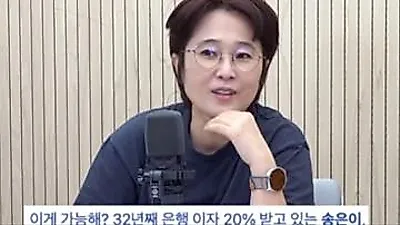
The September 9 broadcast of MBC's 'Radio Star' featured a special titled 'Feeling Full~ Let's Go! Artists,' with guests Kim Chang-ok, Chang Kiha, Swings, and Soyeon. During the show, Swings spoke relatively candidly about his life as both an artist and a label manager, based on his roughly 20 years of rap career and 18 years of music business experience.
Swings revealed that his company had once grown to the size of having 100 employees. However, due to the structural nature of the entertainment industry, costs and responsibilities grew alongside the company, and at decisive moments, the departure of core personnel acted as a variable that shook the very existence of the entire company.
What he expressed as particularly difficult was the expiration of contracts for so-called 'cash cow' artists who were responsible for the company's main revenue. Swings stated that about eight people left the company all at once during a similar period, noting that "in the entertainment industry, people are the assets."
This statement carries more meaning than a simple emotional outburst. In the content industry—encompassing music releases, performances, and advertisements—an artist's brand, fandom, and creative ability function as the core assets of a company rather than physical assets. This is why the expiration of a signed artist's contract differs from the resignation of one or two employees.
To make matters worse, the COVID-19 pandemic struck. The hip-hop industry, which relied heavily on offline activities such as performances and festivals, took a direct hit, and the decrease in artist activities inevitably led to a deterioration in the label's cash flow.
The solution Swings chose was a massive advance. He revealed that he received a 12 billion won advance from a music company to save the business. While this was a method of pulling forward future earnings by using the rights to music releases as collateral, securing such a large sum did not mean the company's crisis was over.
In fact, repayments began the following month. According to Swings, 100% of the monthly music release revenue went toward repayments, leading to a situation where no actual cash entered his own bank account.
On top of this, the settlement issues for the artists who left the company remained. Swings stated that he borrowed approximately 3 billion won from acquaintances to fulfill his settlement promises. Ultimately, to maintain the company, he had to pull forward future music release revenue and then secure funds from external sources again to fulfill settlement obligations with existing artists, enduring complex financial pressure.
In the process, Swings also chose to fill the void left by existing artists with rookies. Having increased his number of rookies from about 15 to a maximum of 100, he recalled his management decisions at the time as being "extremely ignorant."
This reveals both Swings' unique ambition and his business scalability. He attempted to link his individual success as a rapper to the growth of the entire label, but the speed of increasing manpower does not necessarily correlate with the stability of the revenue structure. In the content industry, outward expansion can lead directly to an increase in fixed costs and management expenses.
Ultimately, Swings' outburst of "Get slaughtered. You bastards" was less a simple insult and more a scene where his complex emotions at the time were comedically exaggerated. This was because the moment core artists left, the company's revenue base shook, and he was left burdened with massive advances and loans.
Of course, the departure of artists whose contracts have ended is a natural management process in the entertainment industry. Since contract expiration and renewal are matters decided by individual interests, Swings' feelings of resentment and the choices made by those artists need to be viewed on separate levels.
Perhaps that is why his words immediately following the insult were actually quite honest. Swings quickly followed up with, "I love you, I love you. I hope you return someday," adding, "I'm having a hard time." As profanity and expressions of affection crossed paths within just a few seconds, laughter erupted in the studio.
Reflecting on his business failures recently, Swings revealed that he is still in the process of paying off the 12 billion won debt. He also confessed that last month, the business collapsed after eight people left the company all at once, and he experienced failure even in the process of nurturing rookies.
Despite these setbacks, his career is expanding once again. Moving beyond the music business, he has taken on acting roles, appearing in the film 'Tazza: Song of Belzebub' as he builds a new career as an actor. He is even attempting an image change by removing tattoos and is expanding his business reach into film production by establishing a production company.
Swings' experience illustrates the immense responsibility an artist faces the moment they become a business owner. While an artist on stage only needs to be responsible for their own success or failure, a label CEO must manage artists, employees, investments, settlements, and future revenue all on a single balance sheet.
Ultimately, the phrase "I'm having a hard time" may carry more weight than his "Get slaughtered" outburst. Hidden behind the harsh language were the costs of his chosen business expansion and the cold reality of an entertainment industry driven by people.
Related articles