Yun Ju Mo: The traditional liquor expert washing rice 300 times
Traditional liquor researcher Yun Ju Mo shares her meticulous brewing philosophy and research on MBC's The Manager following recent lunchbox controversy.
Yun Ju Mo (Yun Na-ra), a traditional liquor researcher who gained public recognition through 'Culinary Class Wars 2', showcased her extraordinary research into fermented pastes (jang) and her brewing philosophy on television, revealing her true craftsmanship. Recently at the center of attention due to a 'poor lunchbox' controversy surrounding a collaborative product, she demonstrated a deep affection for traditional food culture through research notes accumulated over many years and original brewing methods, despite never receiving formal culinary training.
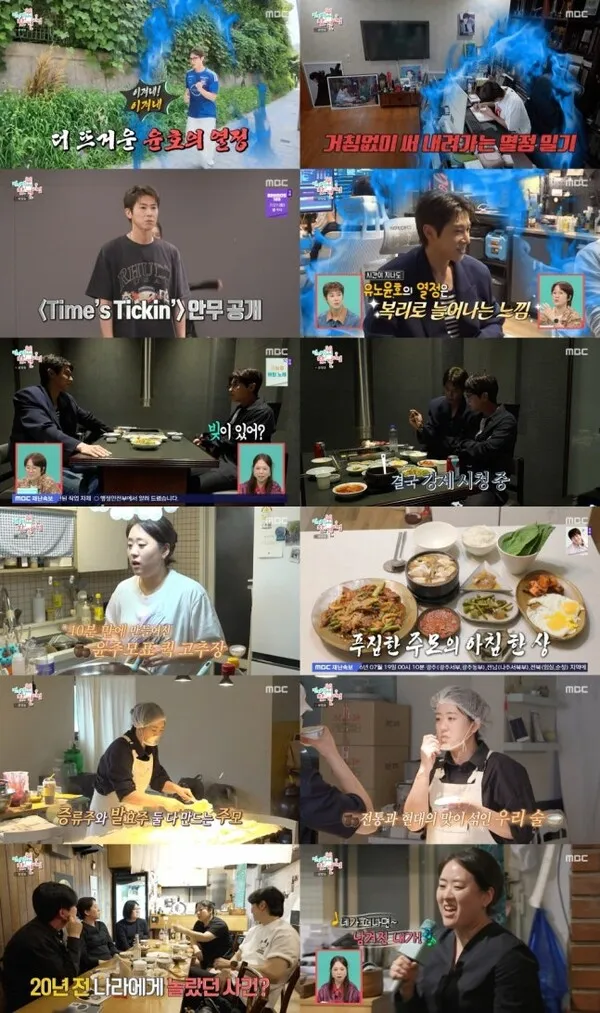
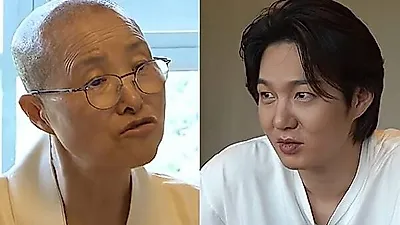
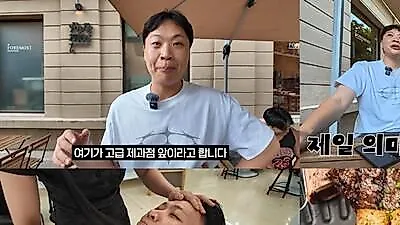
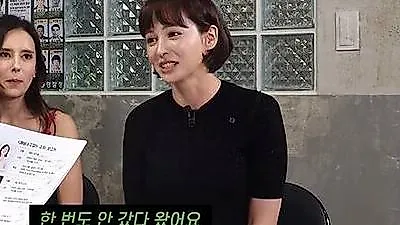
In episode 407 of the MBC variety show 'The Manager', which aired on the 18th, the daily life of Yun Ju Mo, a TOP5 finalist from 'Culinary Class Wars 2', was revealed alongside the daily routine of TVXQ's U-KNOW, who is in his 24th year since debut.
The broadcast focused on her daily life, which is closer to that of a researcher rather than the glamorous life of a chef.
Yun Ju Mo inspected the fermentation status of each jar filling her apartment veranda and prepared meals using the pastes and salted seafood (jeotgal) she made herself. She completed a spicy stir-fried pork dish using her homemade quick gochujang and boiled stews using broth simmered for a long time and handmade makjang (fermented soybean paste). She naturally revealed her philosophy on traditional fermented food culture by presenting her own table, combining egg rice with hairtail salted seafood, makjang stew, and wrap vegetables.
Most eye-catching was her confession, "I have never formally learned how to cook."
Even though she did not go through professional culinary schools or formal training courses, the fact that she built her own recipes by making pastes and salted seafood and researching ingredients drew admiration from the cast.
Yun Ju Mo's true colors were even more clearly revealed at the brewery.
She adhered to extraordinary principles starting from the selection of rice, which is the most fundamental part of traditional liquor. After personally selecting good rice, she washed it meticulously so it wouldn't break, revealing that she practices the 'Sambaekse' (300 washes) method—going far beyond the 'Baekse' (100 washes) recorded in ancient texts.
Afterward, she immersed herself in developing new traditional liquors by steaming rice in a traditional steamer (jilsiru) and blending various ingredients such as pine shoots and bokbunja (black raspberry).
The laboratory was filled with professional books related to traditional liquor and densely written research notes. She was also shown contemplating not just the alcohol itself but the cultural elements that hold it, as she even handcrafted liquor glasses and bottles.
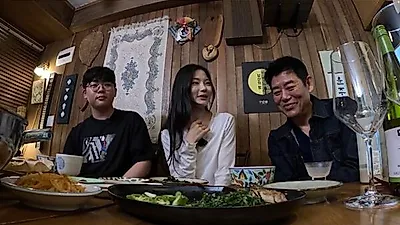
In the field, her pairing philosophy, which emphasizes the harmony between food and alcohol, was also evident. She drew attention by recommending traditional liquors on the spot to match each menu item, such as tangpyeongchae, boiled meat (suyuk), potato pancakes, and tteokbokki, suggesting an overall food culture rather than simple alcohol sales.
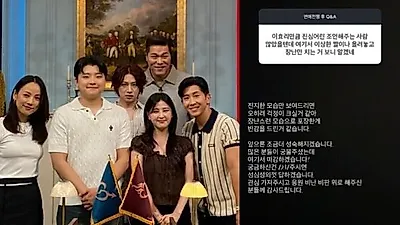
At the end of the broadcast, she met with her classmates from the Department of Film at Seoul Institute of the Arts and shared stories from their school days. Yun Ju Mo, who was active in a hip-hop club during her college years, even showed an unexpected charm by engaging in an impromptu rap battle with U-KNOW.
This broadcast drew interest as it was the first look into her daily life following the recent 'poor lunchbox' controversy.
After 'Culinary Class Wars 2' ended, Yun Ju Mo collaborated with a food company to release a rice bowl product, but she became embroiled in a quality controversy when some consumers shared photos online that made the contents appear meager.
At the time, she explained via her social media (SNS), "It seems a misunderstanding regarding quantity and quality arose as a single photo, which I also think looks unappetizing, spread online."
She further explained the product development process in detail, stating, "To reduce the processed food taste of existing cup rice, we used domestic ingredients and focused on increasing the completeness of the flavor by using brisket broth and anchovy/kelp seasoned soy sauce."
This broadcast was meaningful in that it highlighted the research and creative processes Yun Ju Mo has accumulated over a long time, independent of the controversy.
In food culture research, traditional liquor is evaluated not just as an alcoholic beverage, but as a cultural heritage that complexly combines agriculture, fermentation science, microbiology, and regional culture. In particular, the fermentation process is a field that requires highly advanced empirical skills, as temperature, humidity, characteristics of raw materials, and microbial activity must be precisely managed.
French sociologist Pierre Bourdieu explained that food and taste are not mere consumption, but a process of accumulating cultural capital. Yun Ju Mo's dedication—washing rice hundreds of times, recording years of research, and even crafting her own glassware—is seen as an attempt to expand traditional food culture into a form of cultural practice.
Following the controversy, her first public glimpse into her daily life revealed a life closer to that of a dedicated researcher than a glamorous media personality. Although she never formally studied cooking, Yun Ju Mo's continuous recording and exploration have built a unique fermentation philosophy, leaving a deep impression on viewers as a researcher striving to modernize the value of traditional liquor.
Related articles