
"I'm Going to Molest You": A Line in KBS Drama "A Love Other Than Yours" Draws Backlash Over Public Broadcaster's Script
A line in KBS 2TV's "A Love Other Than Yours" in which a character threatens to molest and strip a rival has drawn sharp criticism from viewers. The backlash has widened to the script, the production team's judgment and the drama as a whole.
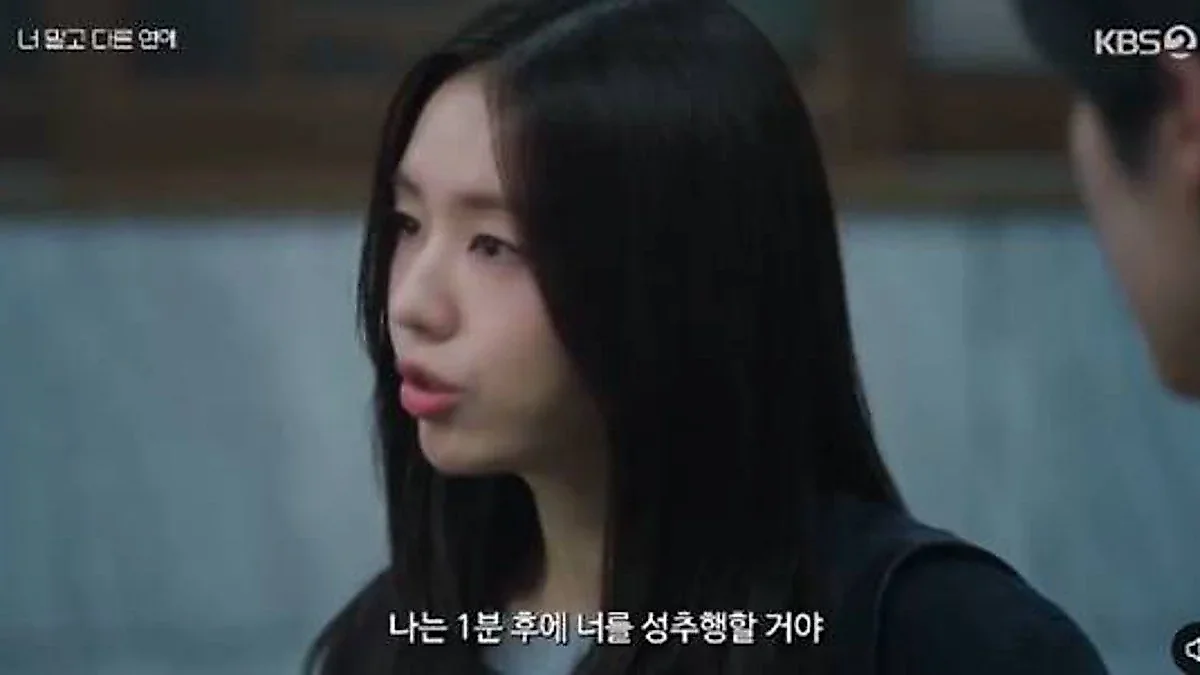
"I'm going to molest you in one minute," Lee Mi-do, played by Ahn Eun-jin, warns a rival lawyer in KBS 2TV's weekend drama "A Love Other Than Yours". The line, meant as a satisfying comeback, has instead drawn fierce criticism from viewers for treating sexual harassment and forced undressing as a tool for winning an argument. Debate has spread over the script's appropriateness and the production team's judgment, separate from the actors' performances.
A courtroom feud that turned ugly
In the episode that aired on the 18th, Han Tae-seung (played by Lee Joo-ahn), a lawyer at Jaegang Law Firm, clashed fiercely with a colleague. A conflict over professional ethics and success escalated into a shouting match.
The colleague told him, "Stop ruining the dignity of lawyers. Stop living off drinking sessions and lobbying. Honestly, I'm ashamed to be the same kind of lawyer as you." Han Tae-seung hit back: "Shame is losing a case. I don't have parents who are judges or prosecutors like you, so to avoid losing I have to grit my teeth and do whatever it takes." The colleague then sneered, "Well, you've even killed a person, so a dirty trick like that must have been easy for you," and the situation grew worse.
When an enraged Han Tae-seung tried to lunge at the colleague, Lee Mi-do stepped between them. She told the colleague: "In one minute I'm going to molest you. If you don't get lost right now, no matter what, I'll pull down your pants and humiliate you here. If I grit my teeth and go at it, stripping a guy like you down to his underwear is nothing. It's true, I'm strong."
Why viewers objected to the method
Within the flow of the story, the scene shows Lee Mi-do pressuring the colleague to prevent a physical clash. Viewers, however, focused less on the character's intensity than on the means itself. The question raised was whether it is appropriate to use a threat of sexual harassment and forced undressing as a line to subdue an opponent, and to stage it as a satisfying counterattack.
Online, critics asked whether it was right to use sexual harassment as a "cider line", a Korean slang term for a cathartic one-liner. Sexual harassment is violence that can leave victims with serious physical and psychological pain in real life, and the concern is that using it to make an opponent submit could trivialise the seriousness of sexual violence. Even if the line was meant to frighten the other person, critics said, it is hard to justify consuming sexual harassment as the language of threats.
Questions for KBS and the script
The fact that the scene aired on public broadcaster KBS added to the controversy. Some viewers questioned whether the production team had sufficiently weighed the appropriateness of the expression when reviewing the script, and some even reacted that a complaint should be filed with the Korea Communications Standards Commission. The criticism so far, however, reflects viewers' objections and public opinion, and should be distinguished from whether any actual review procedure has begun or any official judgment has been made.
The controversy did not stop at one line but spread into dissatisfaction with the drama as a whole. On the premise that the acting of cast members including Ahn Eun-jin and Seo Kang-joon and the quality of the work are separate matters, criticism continued that the characters' actions and dialogue lack persuasiveness. Some netizens targeted the script, saying "I feel sorry for the actors" and "the script is practically a scam," and expressed disappointment over the plausibility of relationships and plot development. Alongside reactions such as "Good thing I bailed" and "a total mess," some said they would stop watching.
Where the line falls
Dramas often compress emotions and conflicts that are hard to voice in real life into bold lines to build tension. Provocative wording, however, does not automatically guarantee catharsis. When dealing with issues tied directly to real-world harm, such as sexual violence, the character's intent is not the only consideration; how the expression is consumed must be weighed as well. What viewers object to is not simply that the line is harsh, but that a threat of sexual harassment was used to subdue someone without any evident awareness of the problem.
"A Love Other Than Yours" is a realistic melodrama about a couple entering their tenth year together who face unfamiliar feelings amid familiarity. Regardless of the empathy-driven intent the drama advertises, the controversy showed how an expression chosen for dramatic effect can be received by viewers. Strong performances alone cannot guarantee a script's persuasiveness. As viewers' discomfort turns into broader distrust of the drama, the episode leaves open questions about the responsibility of production teams who use provocative lines and about the limits of expression.
Lee Chang-seok is the CEO and editor of Mediafine and writes for Mediafine Global, mainly covering K-Variety and also writing on K-pop, Celebrity and K-drama.
Related Articles

Kim You-jung's Spy Quits Her Own Side After a Staged Interrogation in 100 Days of Deception

Doctor X Peaks at 20.8% as Kim Ji-won's Surgeon Finds Mysterious "D.N" Carved in a Patient's Liver

Comments 0
Comments are currently disabled.