
Choi Siwon: “Winning Interviews Should Be Like Son Heung-min”—Targeting Military Exemption Controversy?
Super Junior's Choi Siwon shared a past interview of Son Heung-min, sparking interpretations that his message targets the recent controversial remarks made by certain members of the Asian Games football team regarding military service exemptions.
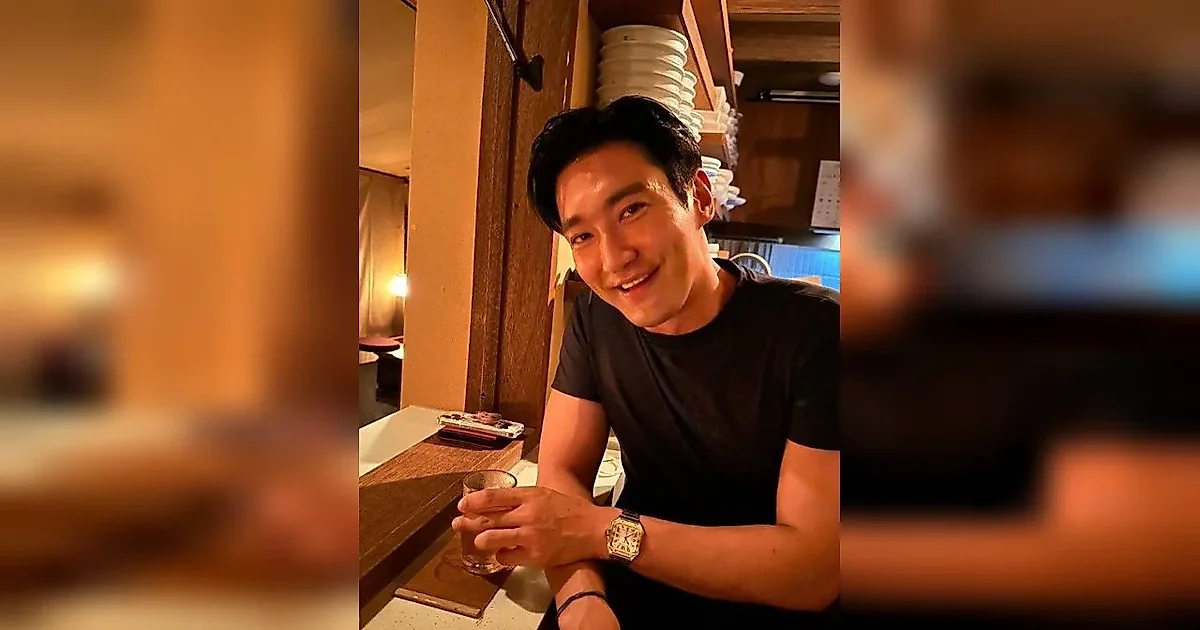
Amid growing controversy over the "military exemption" remarks made by the Asian Games football national team, Super Junior's Choi Siwon has revealed a past winning interview by Son Heung-min. While he did not directly criticize any specific player, his message "Winning interviews should be like this" is being interpreted as a target toward the attitude of some members of the national team. In particular, his post drew even more attention as Choi Siwon is also a celebrity who has fulfilled his military service obligations in the past.
On the 5th, Choi Siwon shared a video on his SNS of an interview conducted immediately after Son Heung-min won a gold medal during the 2018 Jakarta-Palembang Asian Games. At that time, after winning the final against Japan, Son Heung-min was able to resolve his military service issue, but he expressed gratitude to the people before his personal joy.
At the time, Son Heung-min expressed his sentiments to the effect of, "Many citizens worried about and cheered for me as if it were their own matter," adding, "Thanks to the citizens, I won the gold medal. Although I am wearing it now, it is not mine, but the citizens' gold medal." Despite the realistic issue of military service being at stake, he did not consume it merely as a personal reward but linked it to his responsibility as a national representative and gratitude for the citizens' support. While sharing this video, Choi Siwon left a message meaning "Winning interviews should be like this."
Choi Siwon's post gained attention because it coincidentally occurred right after the remarks and actions of some players of the 2026 Aichi-Nagoya 2026 Asian Games football national team became controversial. The South Korea U-23 national football team set a record of winning gold medals for the fourth consecutive Asian Games by winning 1-0 against Japan in the final on the 3rd. As they reached the top by defeating football powerhouse Japan, praise for the players' fighting spirit and achievements should have poured in, but several remarks made after the match turned into unexpected controversy.
Yang Min-hyuk expressed honest feelings to the effect that he played looking forward to the realistic reward of military benefits, and captain Lee Ki-hyuk also expressed his joy with the expression "I'm not going to the military" in a situation where he is facing enlistment. Park Seung-soo even posted a photo on SNS in the locker room wearing so-called "discharge caps." From the players' perspective, they may have been honestly expressing the joy that the military issue, which can determine their athletic careers, was resolved, but there were many who felt uncomfortable seeing players who appeared on the international stage wearing the national flag frontally promoting military service benefits immediately after winning.
The core of the controversy is not simply that the players were happy about the military service benefits. It is a matter of how one expresses the connection between the achievements gained from the position of a national representative and their personal military service issues. While military service exemption can be a very realistic reward for players, for the citizens, a national team match is a symbolic stage where they compete representing the country, beyond just an individual's career. Ultimately, even for the same gold medal, the meaning received by the public inevitably changes depending on the language used to explain it.
Furthermore, this controversy is spreading to the issue of equity in military service exemptions between athletes and pop culture artists. While winning an Asian Games gold medal allows for enlistment as an art/sports personnel, pop culture artists who have achieved world-class results are not subject to the same criteria. This is also why the case where all members of BTS, who promoted Korea on the world stage, fulfilled their military duties is being brought up again. Ultimately, beyond whether specific players made slips of the tongue, the old question of to whom and how the justification of "enhancing national prestige" should be applied has resurfaced.
Of course, it is also inaccurate to define the benefits following an Asian Games gold medal simply as "military exemption." Under the current system, the players in question undergo basic military training and are then incorporated as art/sports personnel, fulfilling their military service obligations by working in their respective fields and performing duties such as volunteer work for a set period. Nevertheless, because the perception of "military exemption" remains strong among the public, every word and action of national team players is bound to be received sensitively.
In the end, Choi Siwon's bringing up Son Heung-min's past interview is being read as having a meaning beyond simple video sharing. Instead of direct criticism, he has posed the question of "how to speak of a victory as a national representative" by showing a scene from the past. Son Heung-min also had clear personal interests regarding military service at the time, but he spoke of the citizens' support and the meaning of being a national representative first. Attention is focused on whether this controversy will end as a simple happening surrounding the remark "I'm not going to the military," or whether it will lead to a social debate questioning the military service exemption system, the responsibility of national representatives, and the standards for enhancing national prestige.
Lee Chang-seok is the CEO and editor of Mediafine and writes for Mediafine Global, mainly covering K-Variety and also writing on K-pop, Celebrity and K-drama.
Related Articles

'Single' Lee So-ra, regarding breakup rumors: "Was with Choi Dong-hwan last week"
Ahn Jae-hyun, Weight Loss After 17kg Gain—Local Elder "Should I give you food?" Triggers Protective Instincts

Comments 0
Comments are currently disabled.