
Harisu: “I Received Questions About My Sex Life and Demands to Undress”
Broadcaster Harisu recalled unpleasant memories of being asked inappropriate questions about her sex life during a past marriage announcement press conference and facing demands for sexual acts and nudity due to being transgender.
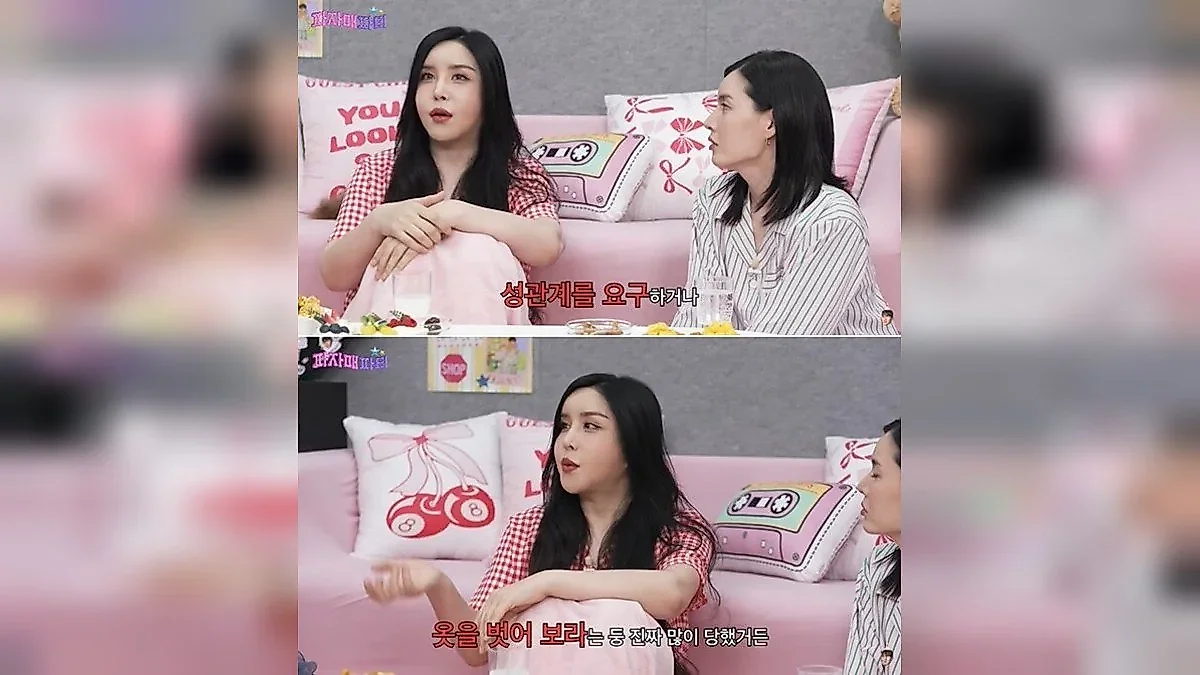
Broadcaster Harisu recalled unpleasant memories, revealing the rude questions she faced during a past marriage announcement press conference. She stated that she was asked questions regarding her sex life with her husband at an official announcement venue. Her past confessions that she was demanded to have sex or told to undress during her career in the entertainment industry due to being transgender are also drawing renewed attention. This is an example showing how questions that invade personal privacy and prejudices surrounding gender identity can leave wounds on the individual.
Harisu shared an anecdote from her past marriage announcement in a video released on the YouTube channel ‘Studio 830’ on the 10th. She stated, “The truly rude thing was what a reporter said at the announcement venue when I announced my marriage in the past,” revealing, “They asked, ‘How is your sex life with your husband?’” She explained that she received an unexpected private question in an official setting where congratulations and questions were being exchanged.
Harisu emphasized that the question was beyond being merely unpleasant and was an action difficult to understand by common sense. She said, “The fact that they even brought up such a topic is nonsense. We weren't even that close,” and “Even if we were close, it is a rude question, but suddenly they asked such a question at a press conference.” Her point was that regardless of intimacy with the other party, sex life is a private domain that the individual decides whether to disclose, and the act of asking this simply because it was an official setting dealing with the media was inappropriate.
She did not hide the anger she felt at the time. Harisu revealed that she once spoke sharply to the reporter to tell them to get a grip, saying, “I wondered what was in that person's head. I thought about how someone could live to say such dirty things.” The fact that she remembers the specific situation even after a long time suggests how unpleasant an experience that question remained for her.
Along with this confession, another experience she reportedly went through during her past entertainment activities is also drawing attention. Harisu revealed that after disclosing she is transgender on the web variety show ‘Pa Sisters Party’ released last September, she received unfair demands. She stated, “I was often told to have sex to ‘check if she is a woman,’ or told to undress.” She explained that views suggesting she must explain or prove her gender identity led to actual pressure and demands.
She shared that she experienced difficulties in her entertainment activities because of these experiences. Harisu said, “So there are numerous instances where I gave up roles or could not sign contracts.” This part shows that the act of demanding sex or nudity does not end as simple curiosity or a joke, but can act as a burden to the individual in situations surrounding appearances and contracts. However, since it is difficult to confirm the specific circumstances and related individuals of each incident through the disclosed statements alone, it is necessary to focus on conveying her experience.
Harisu's case shows what kind of problems arise when prejudices surrounding sexual minorities combine with invasions of privacy. In particular, the attitude of asking about a transgender person's body or sex life without their consent, or demanding physical exposure under the pretext of verifying gender identity, can violate an individual's dignity and boundaries. Being a celebrity does not mean one must answer every question. Questions from the media require legitimacy regarding public interest and investigative purposes, and an attitude of respecting the other person's privacy is also an important standard of journalistic ethics.
Harisu became known to the public through a cosmetics advertisement in 2001 and has since worked as a singer, actress, and broadcaster. Given that she disclosed her identity and stood before the public at a time when social perception of transgender celebrities was more limited than now, she is considered one of the symbolic figures in the Korean entertainment industry. However, gaining public recognition did not mean she was free from prejudice. The past experiences she disclosed this time reveal a facet of the gaze and discrimination she had to endure behind the glamorous stages and broadcasts.
Harisu married singer Mickey Jung in 2007, and the two mutually agreed to divorce in 2017. She stated in a YouTube broadcast last August that while she and her ex-husband are still in a position to support each other, she is refraining from contacting him out of consideration for his family since Mickey Jung has remarried. Regarding the possibility of remarriage, she said, “At this moment, I have no intention of marrying.” She has also honestly conveyed her position regarding her past marriage and current relationship.
The core of this statement is not the marital status or the specific details of her sex life. What Harisu took issue with was the attitude of unilaterally prying into private matters that the other party did not want to disclose and attempting to verify her body and sex life due to her gender identity. While it is impossible to conclude why she brought up that memory again even after a long time has passed, her confession serves as a reminder that even celebrities have the right to protect their privacy and dignity, and that sexual minorities should also be respected as equal human beings rather than objects of curiosity.
Oh Seo-yoon reports for Mediafine Global, mainly covering K-Variety and also writing on K-drama, K-pop and K-movie.

Comments 0
Comments are currently disabled.