
Star math instructor Hyun Woo-jin calls for postponement of College Scholastic Ability Test over AI cheating fears
Star math instructor Hyun Woo-jin has publicly called for the postponement of the College Scholastic Ability Test (CSAT) due to concerns that advanced AI technology, such as smart glasses and micro-cameras, could enable new forms of cheating.
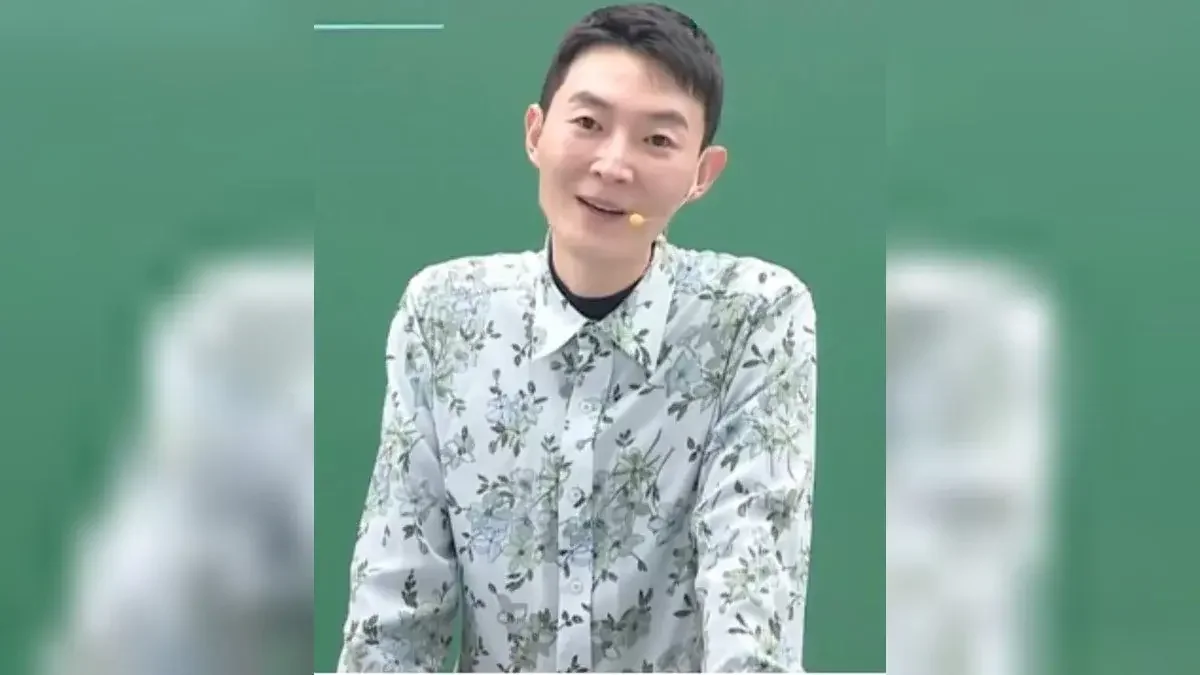
With only two days remaining before the 2027 College Scholastic Ability Test (CSAT), concerns over new types of cheating utilizing artificial intelligence (AI) have emerged as a central issue in the education sector. Hyun Woo-jin, a star math instructor, has publicly called for the postponement of the exam, arguing that if advanced devices such as micro-cameras and smart glasses cannot be perfectly blocked on-site, a decisive move to delay the schedule is necessary. As anxiety grows that the efforts of students who have prepared honestly could be undermined by cheating exploiting technology, controversy is spreading regarding the response of educational authorities.
On the 17th, Hyun Woo-jin expressed serious concern through his Instagram, revealing direct messages received from students. "I received DMs from numerous students saying, 'It feels like all the effort we have put in is being invalidated,'" he stated, adding, "As an educator, I understand that feeling and I am also indignant." He emphasized that the anxiety felt by students facing the exam is not mere paranoia but stems from fundamental questions regarding fairness itself.
Hyun evaluated that for the past 30 years, the CSAT has functioned as a social ladder and the first gateway to dreams that anyone could climb. However, he diagnosed that the rapid advancement of AI technology is exposing loopholes in the existing examination system, which could shake the very foundation of the CSAT. "The CSAT, which for the past 30 years has been a ladder anyone could climb and a first gateway toward dreams, now stands at a crossroads of existence as it meets its nemesis, AI," he lamented. "Regrettably, it seems the CSAT we once knew is now over."
The solution he proposed is the postponement of the exam. He maintains that delaying the test until systems, equipment, and management frameworks capable of reliably blocking cheating on-site are established is the way to protect fairness. His reasoning is rooted in the awareness that simply increasing proctoring personnel or adding detection equipment will struggle to keep pace with the speed of technological advancement. Given that CSAT results have a significant impact on university admissions and future career paths, he argues that the schedule should not be forced forward while the possibility of cheating is left unaddressed.
Hyun did not limit the scope of his discussion to just the CSAT schedule. Considering the severity of the situation, he suggested considering a restructuring of the academic calendar to move the entire semester back by one. His intention is that even if it means enduring confusion in university admissions and academic operations, prioritizing the construction of an evaluation system suited to the new technological environment is paramount.
He demanded swift and responsible decision-making from the government. "Of course, postponing the CSAT comes with a price, but someone must make the decision now, explain the reason to the students, and take responsibility for the results," Hyun emphasized. He further appealed for the government to form an emergency response team and for the President to personally oversee the matter to make a decision before the exam papers are opened. He judged that the social distrust and damage caused by undermining fairness could be greater than the burden of postponing the exam.
In particular, Hyun pointed out the practical difficulties faced by proctors responsible for the exam sites. He noted that even if cheating using AI devices or special equipment is suspected at a testing site, proctors could become embroiled in complaints or legal disputes during the process of detecting and stopping it. He pointed out that without clear standards and legal or institutional protections for frontline proctors who must judge whether cheating has occurred, it is difficult to expect active responses on-site. He noted that a system must be established not only to prevent cheating using technology but also to protect those who detect it.
Hyun repeatedly urged the educational authorities for a responsible answer and called for the President's direct review and decision. At the end of his post, he left the message, "Karma has a time lag, but there is no error," delivering a strong warning regarding cheating and the resulting responsibility. While these remarks represent the anxiety of examinees and the concerns of the educational field, whether this demand for postponement will lead to actual policy decisions remains a separate issue, given that the request came only two days before the exam.
On the other hand, educational authorities are leaning toward maintaining the current schedule, citing the confusion that a postponement of the CSAT would cause. Choi Kyo-jin, the Ministry of Education of the Republic of Korea, stated at a plenary meeting of the Education Committee of the National Assembly the previous day, "It is difficult to consider postponing the CSAT as it could cause even greater confusion." This is a practical judgment that changing the exam schedule could cause significant disruptions across the entire educational spectrum, including university admissions processes, high school academic operations, and the students and parents themselves.
Countermeasures against the possibility of cheating using micro-cameras and smart glasses are also being discussed. However, it has been pointed out that there are difficulties in preparing effective enforcement measures, as practical constraints such as the need for student consent during physical examinations are being mentioned. The Ministry of Education plans to consult with the Ministry of Science and ICT to review the possibility of blocking radio waves within exam sites and to deploy dedicated personnel to identify smart glasses. However, questions remain as to whether these measures alone can perfectly block cheating given the rapidly evolving forms and functions of advanced devices.
Prior to Hyun, Lee Ji-young, a leading instructor for the Social Studies section, also raised concerns about AI cheating and advocated for the postponement of the CSAT the previous day. As famous instructors who closely observe the admissions field successively demand changes to the exam schedule, the controversy appears to be spreading both within and outside the education sector.
The core of this debate lies not merely in whether to hold the CSAT as scheduled or to postpone it. If the existing proctoring and detection systems are facing limits due to the advancement of AI and wearable devices, fundamental questions are being raised about how the national evaluation system should respond to technological changes. Since the CSAT is a decisive opportunity for students to have their years of effort evaluated, if trust in fairness is shaken, it could damage not only the exam results but the legitimacy of the entire system. Attention is focused on what solution the educational authorities, facing the exam, will present between the anxiety of the students and the practical constraints of the field.
Oh Seo-yoon reports for Mediafine Global, mainly covering K-Variety and also writing on K-drama, K-pop and K-movie.



Comments 0
Comments are currently disabled.