
Netizens debate religious freedom as comedian Jo Hye-ryun's past affiliation with Nam-myoho-renge-kyo resurfaces
A debate over religious identity and the definition of cults has ignited online following discussions regarding comedian Jo Hye-ryun's transition from Nam-myoho-renge-kyo to Christianity.
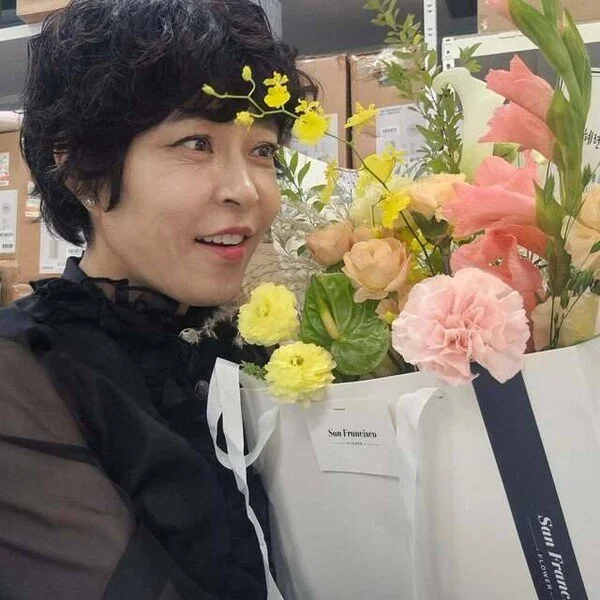
A debate regarding religion has erupted online as comedian Jo Hye-ryun's past religious activities have come back into the spotlight. Having previously been a member of the Japanese-derived religious group Nam-myoho-renge-kyo along with her family, she later converted to Christianity and continues her life of faith. As Jo's past and present were mentioned during a recent religious-themed broadcast, netizens showed mixed reactions, with some arguing that religious choices must be distinguished from cults.
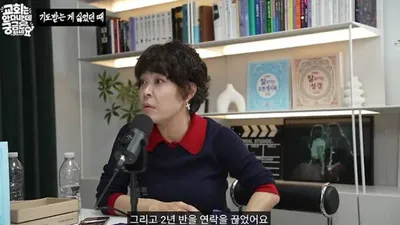
On the YouTube channel 'Lee Sung-mi's Can't Go, which aired on the 9th, Tak Ji-won, director of Hyundai Religion and an expert on heretical and cult religions, appeared. The cast discussed topics such as the proselytizing methods and membership scales of major religious organizations in Korea. When Lee Seong-mi asked about religious groups with large numbers of followers, Tak mentioned the World Mission Society Church of God and Shincheonji, before bringing up Jo Hye-ryun's past religious activities.
Regarding Jo, Tak stated, "Through the prayer and interest of the deacon, the whole family came out from Nam-myoho-renge-kyo and is having a very wonderful life of faith." Lee Seong-mi also shared an anecdote from a recent phone call with Jo, conveying her interest in religious issues. Lee revealed, "I spoke with Jo Hye-ryun yesterday, and she said, 'I hope this gets widely known, to help catch cults.'" This suggests that Jo, having experienced different religious activities in the past, is now raising her voice regarding religious issues.
Tak highly praised Jo's transformation. "When talking about cults, one cannot help but mention Deacon Jo Hye-ryun," Tak said, adding, "While others were said to never be able to return even if they fell, didn't they say Deacon Jo Hye-ryun would never be able to return? In the end, she returned and is praying for and helping us." This was a positive assessment of Jo's journey of moving away from her past faith to continue her current Christian faith.
Regarding the scale of Nam-myoho-renge-kyo, Tak mentioned it is "about 1 million" and evaluated the group as a "scary cult." As these remarks became known, a debate surfaced regarding the nature of religion and the criteria for evaluation. Nam-myoho-renge-kyo is a faith originating from the Buddhist thoughts of the 13th-century Japanese monk Nichiren, with the Lotus Sutra as its fundamental scripture, centered on the practice of repeatedly chanting "Nam-myoho-renge-kyo," a phrase meaning to devote oneself to the teachings of the Lotus Sutra.
The Soka Gakkai is a representative organization that modernized this faith. Founded in 1930 by the Japanese educator Tsunesaburo Makiguchi and his disciple Josei Toda, it initially began as an educator's group called Soka Kyoiku Gakkai before evolving into a religious organization based on Nichiren Buddhism. Operating through local member organizations, followers keep the object of devotion in their homes and practice through chanting and reciting the Lotus Sutra. They study doctrines and share faith experiences through local meetings and conduct proselytizing activities.
However, regardless of the evaluation of the group, counterarguments were raised stating that religious diversity should be respected. Some netizens criticized the attitude of judging other faiths solely from a specific religious perspective, posting comments such as, "That religion is a new religion based on Buddhism," and "The mindset that anything not Protestant is a cult should be corrected." The intent is to distinguish the issue of reviewing the doctrines, operations, and social controversies of religious groups from the issue of respecting an individual's religious choice.
It is known that Jo Hye-ryun converted to Christianity after remarrying in 2014. She reportedly began attending church at the suggestion of her husband and was also influenced by her senior, Lee Seong-mi. It is further reported that she devoted herself to theological studies and obtained a doctorate from the Pierson Graduate School of Theology, Pyeongtaek University. This represents a journey where she moved away from the religious activities she shared with her family and pursued academic inquiry after choosing a new faith.
She continues her activities in the entertainment industry steadily. After her retirement ceremony as a player on the SBS variety show 'Shooting Stars' last year, Jo has been active as the president of the players' association representing each team. In March this year, she appeared on KBS2's 'Immortal Songs' to support Lee Hwi-jae's return to broadcasting, showcasing her characteristic cheerful energy. She is also actively moving between broadcasting and the stage, including participating in the musical 'Educating Rita.'
This controversy goes beyond Jo Hye-ryun's religious change, prompting a reconsideration of the boundaries of social perception and evaluation of religion. While criticism of the doctrines or activities of specific religious groups is possible, points have been made that such judgments should not lead to the stigmatization of individuals who have chosen different faiths. As Jo Hye-ryun's history of settling her past faith and choosing a new religious life receives renewed attention, discussions continue on how to distinguish religious conviction from social criticism.
Lee Chang-seok is the CEO and editor of Mediafine and writes for Mediafine Global, mainly covering K-Variety and also writing on K-pop, Celebrity and K-drama.
Comments 0
Comments are currently disabled.