
Kim Ji-won delivers a refreshing blow to hospital corruption—a "cider" action without fists
In the second episode of the SBS drama "Doctor X," actress Kim Ji-won's character, Gye Su-jeong, confronts hospital power struggles and irrational practices with blunt honesty and overwhelming medical skill.
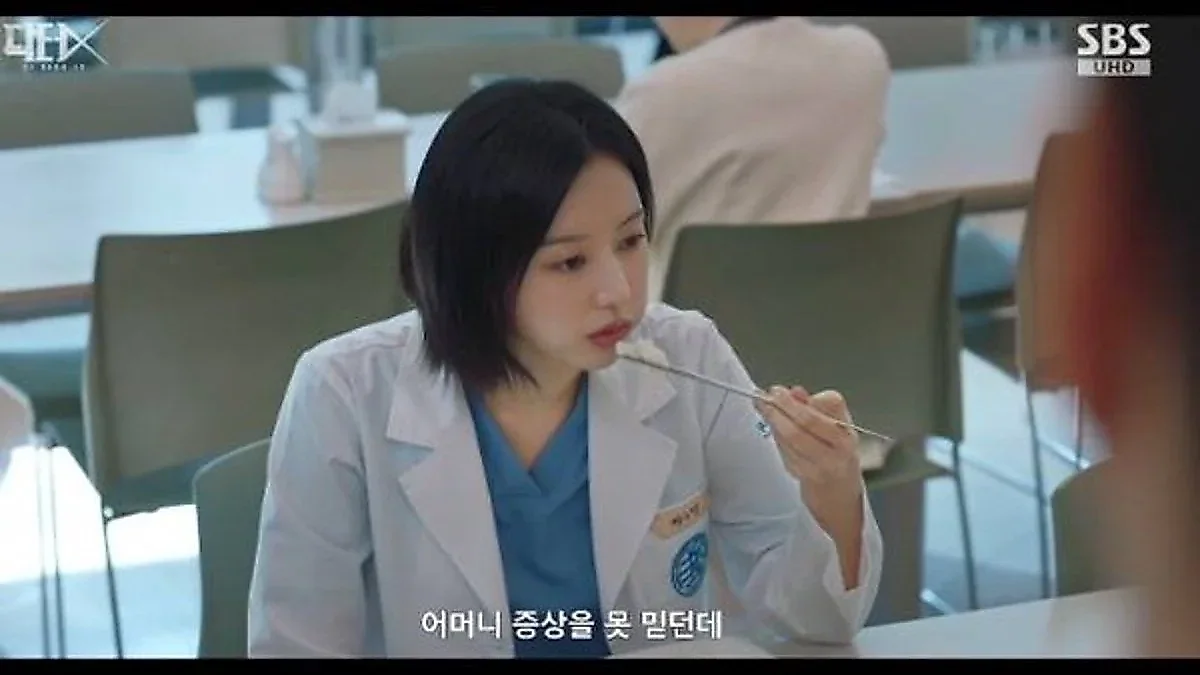
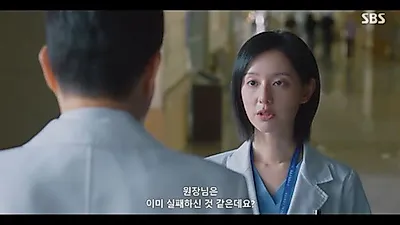
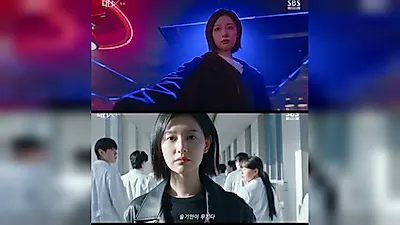
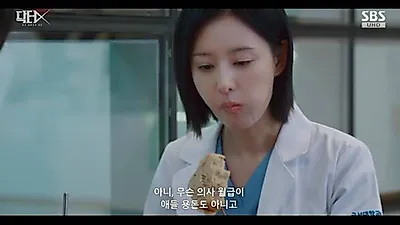
In "Doctor X," actress Kim Ji-won confronts the power and irrationality within the hospital head-on with unrestrained directness and overwhelming skill. She delivers sharp rebukes to medical staff who prioritize superiors over patients while walking on eggshells around those in power, and she is the first to reach out to patients marginalized by the hospital. In particular, she provided viewers with a refreshing sense of catharsis by directly calling irrational personnel decisions and surgical determinations "trash" and even going as far as pulling the chairman's wheelchair to the parking lot.
In the second episode of the SBS Friday-Saturday drama "Doctor X," which aired on the night of the 10th, the activities of Gye Su-jeong (Kim Ji-won), who does not yield to the irrational practices and corruption within the hospital, were fully unfolded. As the true face of the hospital organization, which prioritizes power and interests over patients' lives, was revealed, Gye Su-jeong created cracks in the existing order with her characteristic cool judgment and unrestrained words and actions.
On this day, as news spread that Do Yun-sik (Kim Yeong-min) had been put in charge of the surgery for the group chairman Park Gwang-cheol, the power dynamics within the hospital surfaced. Bae Heung-gon instructed Ma Seong-gyu to assist Professor Do Yun-sik's surgery, saying, "If I go in, it will be obvious because they'll know my surgical skills are lacking. Someone like you is appropriate." While it appeared to be a division of roles among medical staff on the surface, underneath lay a calculation that prioritized the hospital's internal reputation and interests over the perfection of the surgery.
What was even more absurd was the background of why Do Yun-sik was chosen as the chairman's attending physician. Bae Heung-gon explained that he obtained the position of attending physician because he had treated the chairman well during drinking sessions, revealing that the person most likely to follow orders submissively was chosen in a situation where every doctor in the hospital was eager to perform the surgery. With the addition of the story that Do Yun-sik himself could not refuse, it was revealed how easily the medical field can be shaken by the whims of those in power.
Upon hearing this inside story, Gye Su-jeong snapped, "That's trash," without hesitation. As people around her looked on with surprised eyes, she bypassed the situation with a sly action of throwing actual trash sitting on the desk into a trash can. Her wit, which seemed to target the opponent directly while still leaving a way out, drew laughter. Beyond simply throwing stinging words, the character of Gye Su-jeong was clearly highlighted in that she clearly expressed her judgment regarding the absurdity.
Gye Su-jeong's principles continued in the clinical field. When criticized for encroaching on the territory of another department, she explained that she suspected Ménière's disease after examining the symptoms of a patient complaining of dizziness and sent them to the otorhinolaryngology department. She did not bend her judgment even at the criticism that the patient was lying on a sofa in the otorhinolaryngology department after waiting for internal medicine treatment. Rather than making the patient wait again by prioritizing the boundaries between departments, she took measures so they could receive treatment appropriate for their symptoms.
She refuted the criticism by pointing out the patient's specific circumstances. Her point was whether there was a need to make a patient repeat unnecessary procedures due to departmental reasons—a patient who had wandered through several local clinics in the countryside, was told only that their strength had faded, took strong medicine and received IV fluids for several years, and was finally brought to a hospital in Seoul by their child's hand.
Even in a meeting attended by dozens of medical staff, Gye Su-jeong was not intimidated. She raised an objection to the decision to treat pancreatic cancer occurring in the head of the pancreas with a pancreaticoduodenectomy, pointing out the possibility that the cancer might have invaded the blood vessels. She argued that if the blood vessels are left, the cancer may remain even after surgery, and that the blood vessels must be resected together. She showed confidence, saying, "It's fine when I touch it. I do not fail." This part clearly revealed her attitude of prioritizing the patient's condition and the surgical outcome over the authority of medical staff and the hierarchy within the organization.
Of course, to decide on a surgical method in an actual medical field, one must comprehensively review the patient's condition, test results, surgical risks, etc. The drama compresses these complex medical judgments to highlight Gye Su-jeong's extraordinary ability and strong convictions. Nevertheless, the question posed by the scene is clear: a doctor's authority should stem from expertise and responsibility to save patients, not from rank or position within an organization.
The highlight of this broadcast came from the commotion surrounding Chairman Park Gwang-cheol. When a patient, enraged by the issue of unpaid wages, rushed at the chairman, Gye Su-jeong quickly handled the situation. She then personally pulled the wheelchair Chairman Park Gwang-cheol was riding toward the parking lot. Returning a moment later, she said nonchalantly, "I went to park it," which burst into laughter. It was a moment where Gye Su-jeong's attitude of not giving special treatment even to a person in power was expressed in the most direct and pleasant way.
Kim Ji-won brought out the multi-dimensional charm of Gye Su-jeong by moving between cold medical judgment, direct dialogue, and sly humor. The character's personality, which fulfills its responsibility before patients with skill, does not walk on eggshells before power, and fights against irrational organizational culture with words and actions, was clearly established in just two episodes. In particular, while dealing with heavy medical corruption and power issues, she simultaneously raised the tension and fun of the drama by appropriately placing comic scenes.
The hospital depicted in "Doctor X" does not remain merely a space for treating diseases. Within it, power and money, organizational hierarchy, and the conscience of medical staff are complexly intertwined. In this structure, Gye Su-jeong's actions are read as both a delightful character play and a criticism of a system that prioritizes those in power over patients. This is why her activities, ranging from the single phrase "That's trash" to parking the wheelchair, have drawn responses from viewers. Attention is focused on how far Gye Su-jeong, who possesses excellent skills but does not conform to the logic of the organization, can shake the hospital's solid power structure in the future.
Lee Chang-seok is the CEO and editor of Mediafine and writes for Mediafine Global, mainly covering K-Variety and also writing on K-pop, Celebrity and K-drama.
Comments 0
Comments are currently disabled.