
Lee Kyung-kyu Fumes Over National Football Team Players' Comments Regarding Military Service Exemptions
Comedian Lee Kyung-kyu has issued a sharp critique regarding comments made by some national football players concerning military service exemptions following their Asian Games gold medal win. He emphasized that players representing the nation must handle sensitive social issues like military service with a proper attitude, rather than focusing on personal benefits.
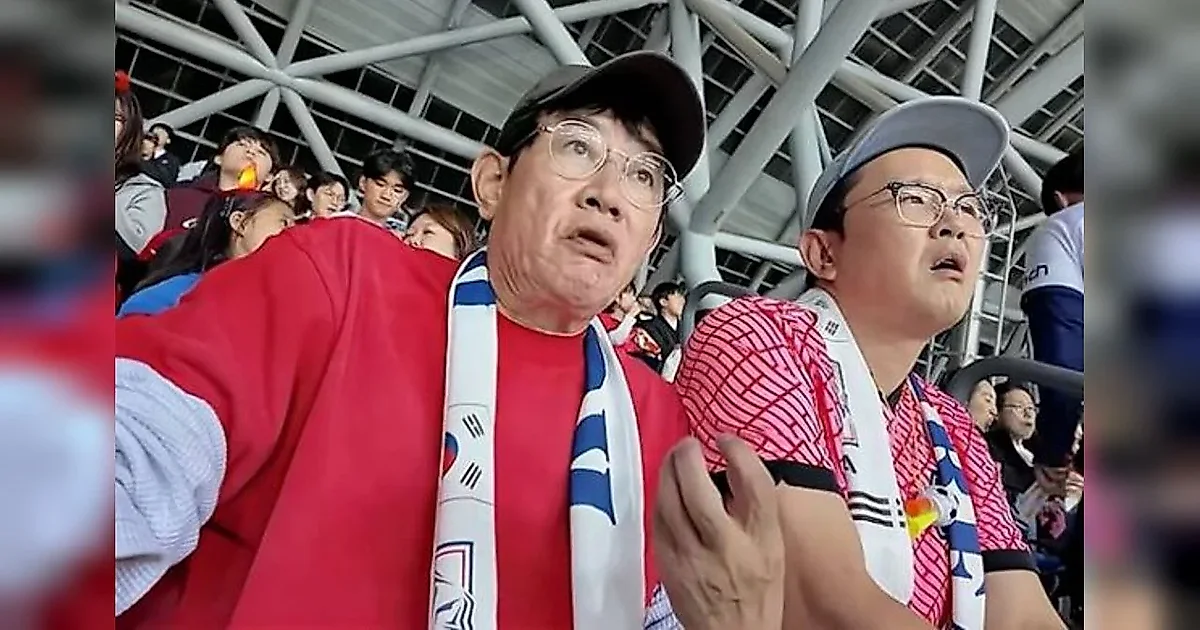
Comedian Lee Kyung-kyu has poured out intense criticism regarding the remarks made by some national football players surrounding military service exemptions following their Asian Games gold medal. He did not merely point out issues of expression, but highlighted how players who compete in international competitions under the name of "national representatives" should approach sensitive social agendas such as military service. In particular, based on his own experience of having completed military service, he emphasized that "the military is an area you should not touch" and expressed strong regret over the controversial interviews.
On the 7th, a video titled "What Lee Kyung-kyu wants to say to national representative players" was released on Lee Kyung-kyu's YouTube channel 'Gatgyeonggyu'. The video was accompanied by the description "Military-veteran Lee Kyung-kyu, furious after watching the military service exemption interview." While watching the friendly match between Uzbekistan and South Korea held on the 6th with Yoon Hyung-bin, Lee Kyung-kyu shared his thoughts on the recent controversy regarding military service related to the Asian Games.
When the production team mentioned the "military-related interview during this Asian Games" during the match, Lee Kyung-kyu first asked Yoon Hyung-bin if he had completed his military service. After introducing himself as "someone who has also been to the military," he said, "That is something for the players to discuss among themselves. Even if they feel that way, they shouldn't talk about it in an interview."
What he took issue with was not how the players themselves felt about military service benefits. According to Lee Kyung-kyu, the bigger issue is what kind of language they chose in an official capacity as national representatives. Using his own broadcasting activities as an example, he questioned how viewers would feel if he simply said, "They pay me, so I do it." He went on to emphasize, "You shouldn't say it like that; you should say, 'I ran for the sake of honor, for the sake of the country.'"
The player Lee Kyung-kyu specifically mentioned was Lee Young-jun, who served in Gimcheon Sangmu FC. He discussed the meaning of military service and being a national representative, saying, "There is a player named Lee Young-jun. That friend was discharged from Gimcheon Sangmu. He was discharged, and then he rushed from Europe. To win a gold medal." He continued, "The flower of sports is the medal," adding, "To say that players won such medals so they wouldn't have to go to the military is..."
At this point, Lee Kyung-kyu's anger expanded from the military service exemption system itself to the issue of fairness surrounding it. He pointed out, "Many people understand because the players are young, but it doesn't matter whether they are young or old. It is very wrong." His intention was that since the title of national representative is a position where individual glory is combined with national interest and institutional benefits, conduct appropriate to that position is required.
The reason he directly mentioned the Gimcheon Sangmu players is within the same context. Lee Kyung-kyu said, "What would the Gimcheon Sangmu players watching that think?" and "They are playing in the military right now while receiving a monthly salary of 1.5 million won. How much would they envy them?" He suggested that a sense of relative deprivation may exist between those who continue their athletic careers while fulfilling their actual military duties and those who receive military service benefits based on their performance in international competitions.
In South Korea, military service is an area that has constantly been at the center of debate, moving beyond a simple individual duty to issues of fairness and preferential treatment. Especially for sports players with high public recognition, military service exemption is accepted as a reward for performance as well as an institutional benefit predicated on social consensus. Therefore, if the remarks of the beneficiaries are interpreted as prioritizing "individual interest" over "honor as a national representative," backlash is inevitable regardless of the actual intention of the remarks.
Lee Kyung-kyu also emphasized this point. He said, "There are a few areas in our country that you should not touch. You must absolutely not touch them. The military is sensitive." While the expression itself is somewhat rough, it can be seen as pointing out the reality that social sensitivity surrounding military service is much higher than other issues. This is especially why a single word from a national representative player does not end as a simple slip of the tongue in South Korean society, where military service is linked to debates on fairness across generations and classes.
When Yoon Hyung-bin said, "It seems like I might have to receive speech education from Lee Kyung-kyu someday," Lee Kyung-kyu replied, "If it could be solved by education, everyone would already be done." This means it is not a problem that can be solved just by teaching the skill of speaking. Ultimately, what is important is the attitude of recognizing one's position and the weight of one's words in official settings.
Lee Kyung-kyu left some room for leeway in that the parties involved in the controversy are still young players. He said, "Overall, I think it is a matter of attitude," and "They don't have the right to speak, but attitude is most important." He added, "The young players in this Asian Games made mistakes, but I hope it becomes a medicine that makes them think, 'I should be careful,'" and "They are probably reflecting a lot." It contains the perspective of an older generation who, while criticizing, hopes they do not repeat the same mistakes in the future.
Previously, the South Korea U-23 national football team set a record of winning four consecutive gold medals in men's football history by winning the '2026 Asian Games' led by Eom Ji-sung's winning goal. While the match itself was a moment showing the achievement of South Korean football, the meaning of the gold medal spread in an unintended direction as the remarks of some players regarding military service exemptions turned into a controversy.
The captain Lee Ki-hyuk, who participated as a wildcard, made remarks related to military service during the process of lifting the gold medal, and Yang Min-hyuk also made remarks to the effect that he played with the goal of receiving military service benefits. Park Seung-soo received criticism for posting a photo on SNS wearing a "discharge cap." Although all three players apologized afterward, the controversy did not subside easily, and arguments even emerged that the military service exemption system itself should be revised.
Ultimately, this controversy became an example showing how "preferential treatment" and "fairness" function as sensitive values in South Korean society, going beyond the one or two words of the players. In sports, victory and medals are the most direct achievements, but for national representatives, the process of creating those achievements and the attitude following them also become subjects of public evaluation. This is exactly the point Lee Kyung-kyu made when he said, "They don't have the right to speak, but attitude is most important."
What is required of a national representative is not to become a perfect human being. Young players may make mistakes, and they may rejoice in military service benefits. However, there is a clear gap between individual joy and the language that must be expressed in a public position. It remains to be seen whether this controversy will serve as an opportunity to look back on what the name of a national representative requires of an individual and to what extent the social responsibility accompanying achievement in sports extends, beyond the simple question of "who is right."
Lee Chang-seok is the CEO and editor of Mediafine and writes for Mediafine Global, mainly covering K-Variety and also writing on K-pop, Celebrity and K-drama.
Related Articles

Choi Siwon: “Winning Interviews Should Be Like Son Heung-min”—Targeting Military Exemption Controversy?
Kang Won-rae on Military Service Exemptions: "Is the Military a Place You Are Dragged to Like a Prison?"
Comments 0
Comments are currently disabled.