
Sam Okyere reflects on life after 10-year hiatus
Broadcaster Sam Okyere shares side-by-side photos from 10 years ago and today, reflecting on his journey through fame and controversy in South Korea.
A face that could once be seen whenever the TV was turned on suddenly disappeared from the screen. Now, after more than five years have passed, Sam Okyere has shared a side-by-side comparison of his photos from 10 years ago and his current appearance, leaving a profound impression with a single remark: “I have definitely become better.” Given that these words come from someone who has navigated both a glamorous peak and a long hiatus, this short sentence carries a meaning far deeper than a simple comparison of looks.
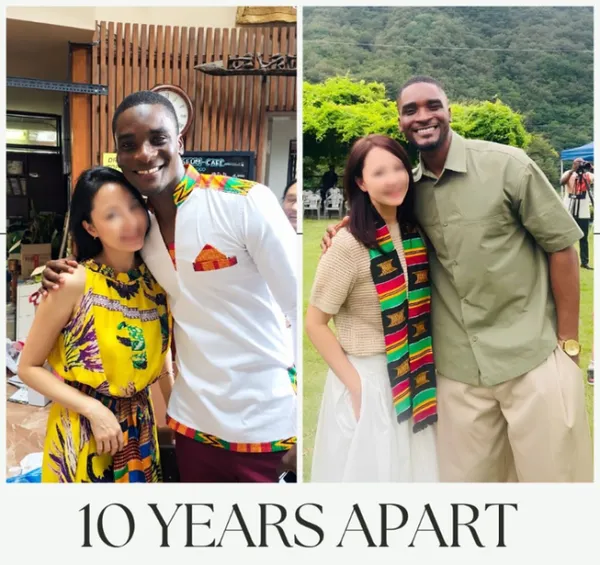
On the 29th, Ghanaian broadcaster Sam Okyere posted photos from 10 years ago alongside current photos on his SNS. Along with a message to the effect of, “Sometimes it is necessary to look back and reflect on life,” he mentioned that 10 years had passed between the two photos and wrote, “I have definitely become better.” This was his first post in 121 days since May 31. The photos show Okyere smiling with the same woman in both the past and the present. While it may look like a typical 'before and after' showing the traces of time, the years he has passed through were by no means ordinary.
Around 2016, ten years ago, Okyere established a unique position in the Korean broadcasting industry, appearing extensively in various variety shows, centered around JTBC's 'Abnormal Summit.' By appearing in shows like 'Real Men,' he turned the rarity of being a foreign broadcaster familiar with the Korean language and culture into public friendliness. At that time, Okyere was close to the archetype of a new type of broadcaster created by Korean society in the era of multiculturalism. The differences in nationality and skin color actually became material for variety shows, and his Korean language skills and uninhibited wit allowed him to form stardom beyond the limited framework of a 'foreign panelist.'
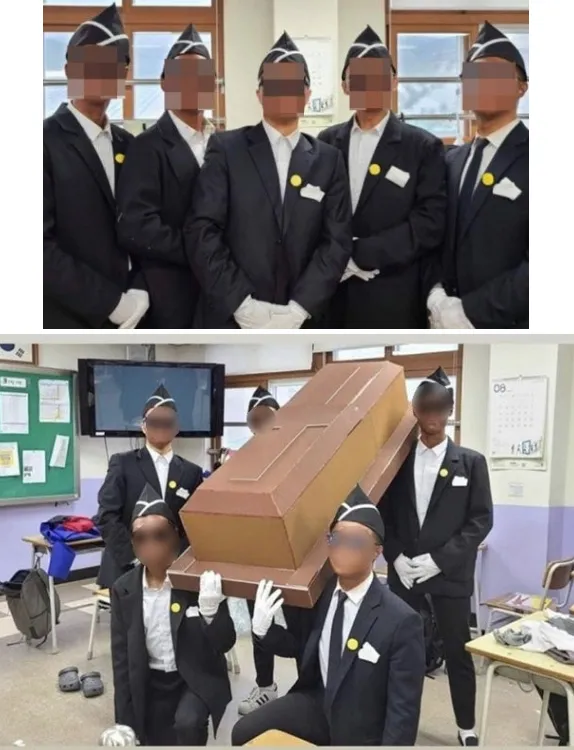
However, in 2020, the flow of public opinion shifted abruptly after he raised issues of racism regarding the so-called 'Coffin Dance Crew' parody by students of Uijeongbu High School. Regardless of the intent behind his concerns, criticism regarding his method of response intensified, leading to accusations that he had made gestures in past broadcasts that could be interpreted as disparaging Asians, as well as other controversies surrounding his SNS. Following this, his broadcasting activities effectively ceased. In the world of popular culture, popularity accumulates, but a fall happens in an instant. Especially for stars in the SNS era, they live in a 'permanent present' where not only the content they produce but also their past remarks and actions are constantly summoned.
This process demonstrates the unique structure of moral visibility in modern mass society. In the star system of the past, there was a possibility that scenes edited out or disappeared from broadcasts would fade from public memory over time. However, in the era of digital archives, the past is not deleted. A single remark from a long time ago redefines a person's current image, and the past and present selves collide within a single screen. Okyere's case has become an example that goes beyond individual mistakes and controversy, illustrating the characteristics of a digital society that continuously summons all past actions of a human being.
After being pushed out of broadcasting, his life flowed in a completely different direction. In an interview this March, Okyere revealed that during his hiatus, he earned his living by providing interpretation related to immigration, participating in events for the Embassy of Ghana in Seoul, and providing interpretation and meeting support for Korean companies expanding into Ghana. He also expressed regret over losing his stage in broadcasting during the time he should have been most active. However, the emotion he repeatedly mentioned was 'regret' rather than anger. He reflected on his response, stating that the results might have been different if he had approached the students' parody in a different way, and apologized with the sentiment that "my thinking was too short and I am sorry."
This is also why it is difficult to explain his hiatus simply as 'being ousted from broadcasting.' The fall of a celebrity is often consumed as a dramatic narrative in the public memory, but the time that follows is rarely spotlighted. This is because how the person involved lives after the cameras are turned off does not become news. Earlier this year, Okyere confessed that during his hiatus, "there were many moments so difficult they couldn't be expressed in words," and that there were moments he wanted to give up. A significant gap exists between consuming a star's downfall as a spectacle and the matter of a human being enduring the time that follows.
Nevertheless, Okyere did not leave South Korea. He expressed that he came to South Korea at age 19 and grew and learned much here after becoming an adult, describing South Korea as "my home." His words, "If I am told to leave home and go somewhere else, where would I go? I have nowhere to go," carry a weight that goes beyond mere broadcaster rhetoric. That a person who started as an outsider and entered the heart of Korean popular culture defines this place as his home even after the controversy serves as a reminder that the relationship between nationality and identity cannot be explained by bloodline or a passport alone.
Historically, there have been many individuals in popular culture who reconstructed their lives after a long hiatus following their peak. Because broadcasters operate based on the intangible assets of public favor and trust, a controversy can easily lead to a professional blow that results in a severance of social relationships. However, human life is not clearly divided into appearances and exits like a broadcast schedule. Just because someone disappears from the screen does not mean their life stops. Rather, how they live after the cameras are turned off can become an even more important narrative in understanding a human being.
In that sense, these photos are not merely about nostalgia. In Okyere's post, which places his face from 10 years ago alongside his current self, his peak as a star, controversy, apology, regret, livelihood, and the reconstruction of his identity are all compressed. In particular, the expression "I have definitely become better" can be read as a declaration of self-narrative, affirming his current self over his past. This does not mean public perception has completely changed. However, at the very least, rather than longing for the version of himself in the photo from 10 years ago, he is looking at the person he has become through that time.
The way popular culture consumes humans is often dramatic. They rise to become stars, fall to become controversial figures, and are summoned again under the name of 'comeback.' But human time is not that simple. For Okyere, the last 10 years were a time of falling from a peak into a hiatus, but also a time to reflect on his language and actions, earn a living outside of broadcasting, and reconfirm where he belongs. Ultimately, his remark that he is better now than 10 years ago seems less like a self-assessment of his looks and more like an evaluation of his own time—a person who refuses to deny his current self even after passing through countless gazes and judgments.



Comments 0
Comments are currently disabled.