
Song So-hee evolves from 'Gugak girl' to mature musician with 'Arirang'
Singer-songwriter Song So-hee showcases her evolution from a traditional Gugak prodigy to a mature artist at the 2026 Jeonju Ultimate Music Festival.
Song So-hee, once etched into the public consciousness as the 'Gugak girl,' has returned to the stage as a singer-songwriter with a fully realized musical identity. Alongside her more mature appearance and deepened vocal tone, there is a distinct evolution in how she modernizes and reinterprets traditional music. Through her voice, the familiar 'Arirang' was transformed with a new texture, leaving a profound resonance with the audience.

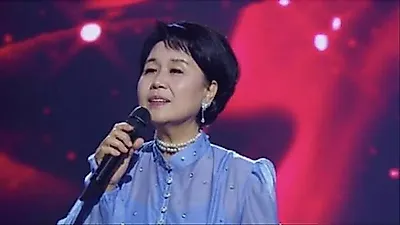
On the 28th, Song released a performance video on her SNS with the caption, "'Arirang + NANSEN'. live from 2026 JUMF." The video captures Song performing on stage at the '2026 Jeonju Ultimate Music Festival (JUMF)'.
The first thing that catches the eye is her current appearance, which is markedly different from her childhood image. With long, straight hair, makeup that highlights her clear eyes, and relatively restrained styling, she has distanced herself from the youthful 'Gugak girl' persona frequently seen in past broadcasts. Appearing in a gray T-shirt instead of flamboyant stage costumes, she dominated the stage through her voice and music rather than outward ornamentation.
In particular, Song's transformation extends beyond mere physical maturity. By expanding the Gyeonggi Minyo she has honed since childhood into her own musical language, she is breaking free from the existing frame of being a 'talented young Gugak singer.' This performance served as a testament to her current position, situated between traditional folk songs and the modern music she is creating.
The centerpiece of the performance was a mashup combining 'Arirang' with her unreleased song 'NANSEN.' 'Arirang' is a representative folk song that encapsulates the emotions and historical experiences of the Korean people, undergoing numerous variations across different regions and eras. Song combined her unique tone with modern arrangements, pulling the familiar melody into a new musical context rather than simply reproducing it.
As the melody of 'Arirang' flowed at the start of the set, the audience was naturally drawn in. During the transition to 'NANSEN,' Song's unique musical identity was revealed as traditional vocal breathing meshed with modern sounds. The performance captured her refusal to be confined by specific genre boundaries while remaining firmly grounded in the traditional music she has embodied since childhood.
Song's strength lies in her refusal to treat tradition as a preserved relic. Folk songs are, by nature, music that evolves alongside their communities. Even the same 'Arirang' acquires entirely different emotions depending on the singer, era, and place. In this sense, Song's attempt to connect 'Arirang' with her original music is less a simple fusion of tradition and modernity and more an act of translating her musical roots into a contemporary language.
The video also captured Song's immersion in the music. She occasionally closed her eyes to focus on every note, at other times breathing with the audience with a bright smile. The audience remained captivated throughout. Some fans left glowing reviews, commenting, "I tear up because this song is so moving," and "I really want to hear Song So-hee live."
On this day, Song expanded her genre spectrum by performing her own music alongside 'Arirang,' 'NANSEN,' and 'PARADE (生).' Her journey is particularly meaningful as she expands her territory as a creator who composes and performs her own work, rather than being consumed merely as a fusion or crossover act based on Gugak.
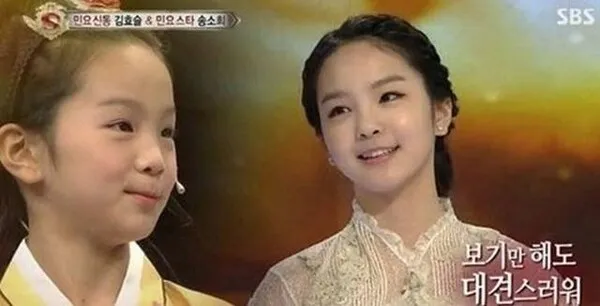
Song first gained widespread recognition due to the Gugak skills she began learning at age 5. In 2004, she appeared on KBS1's 'National Singing Contest,' showcasing exceptional Gyeonggi Minyo skills despite her young age, and subsequently built a following as the 'Gugak girl.' She also played a key role in making Gugak more accessible through programs such as 'Immortal Songs' and 'King of Mask Singer.'
However, the intense image from her childhood carries a paradoxical limitation. While the 'Gugak girl' moniker provides familiarity, it can become an outdated label when explaining her musical evolution as an adult. This is precisely why Song is now expanding her domain as a creator by composing and performing her own music.
This 'Arirang' stage ultimately showcased personal growth. If the Song So-hee of the past was a young master singer accurately delivering tradition, the current Song is an artist who uses that tradition as raw material to create her own music. The time that began with the name 'Gugak girl' is now culminating in the unique musical identity of Song So-hee.
'Arirang' is a song known to many, but a great musician finds new emotions even in familiar melodies. The change Song demonstrated on this stage lies in that exact point. It is not that her childhood voice has disappeared, but rather that time and experience have been added to it. Rather than remaining anchored to a childhood nickname, she is moving forward as a musician who connects tradition and the present through her own language.


Comments 0
Comments are currently disabled.