
Controversy over 'The Assassin(s)' reaches actor Yoo Hae Jin
Claims of historical distortion in the film 'The Assassin(s)' have sparked criticism against actor Yoo Hae Jin regarding his choice of roles.
The moment history is moved to film, an invisible line is drawn between fact and imagination. The problem lies in the fact that this line is rarely visible to the audience. As director Hur Jin Ho's film 'The Assassin(s)', which deals with the 1974 shooting of First Lady Yuk Young Soo, became embroiled in a historical distortion controversy immediately upon release, the arrows of criticism are spreading beyond the work itself to the participating actors. In particular, as reactions such as "I trusted him, but I am disappointed" emerge toward Yoo Hae Jin, the debate is expanding into an evaluation of the individual actor's choices.
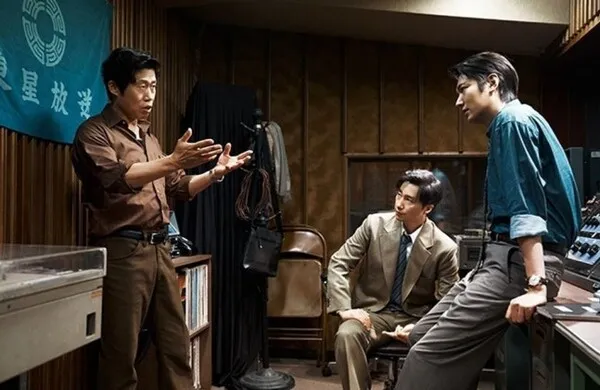
Released on the 23rd, 'The Assassin(s)' is a feature film that uses the actual incident as a starting point to trace the questions and potential masterminds surrounding the event at that time. The production team stated that they combined fictional characters and situations based on released records, materials, books, and documentaries, and that the film does not designate any specific individual as a mastermind or present dramatic hypotheses as historical facts anywhere in the movie. However, groups such as the People Power Party and the Park Chung Hee Presidential Memorial Foundation raised criticisms of historical distortion, claiming the film reconstructed the incident in a way that implies the involvement of the Park Chung Hee regime or contemporary power institutions. On the 29th, former Seoul City Council member Lee Jong Bae filed a police complaint against director Hur Jin Ho and the production team on charges of defamation by stating false facts.
Interestingly, the core of the debate does not merely stop at whether "the movie is different from the facts." To what extent fiction is allowed in a feature film based on historical facts is a long-standing cultural issue. In the case of 'The Assassin(s)', the filmmakers chose to overlay questions and hypotheses onto the relatively clear historical framework of the 1974 incident. On the other hand, works like '12.12: The Day', where the main line of the historical event is relatively clear, use the historical facts already known to the audience as the foundation of the narrative while dramatically reconstructing actual people and events. Recent reports have analyzed the difference between the two works as a factor in the debate surrounding the boundary between historical fact and cinematic imagination. Ultimately, the issue lies not in the fiction itself, but in the possibility of that fiction being remembered as fact.
At this point, the criticism directed at Yoo Hae Jin reveals a problem of a different dimension. An actor chooses a script, but they are not a historian. Nevertheless, the public demands an ethical responsibility from famous actors that goes beyond being mere performers. Especially for an actor like Yoo Hae Jin, who has accumulated public trust over a long period, the choice of work is accepted as a kind of cultural letter of credit. He has starred in numerous hits such as 'King and the Clown', 'Tazza: The High Rollers', 'A Taxi Driver', and 'Confidential Assignment', and is an actor whose name itself creates expectations and trust for a work, such as winning the Grand Prize in the film category at the 62nd Baeksang Arts Awards for his recent work 'The King's Warden'. As such, when a controversy arises surrounding a work, the demand that "shouldn't an actor have verified the content more thoroughly before appearing?" is connected to the outsourcing of responsibility inherent in today's star system.
One week before its release, Yoo Hae Jin appeared on 'You Quiz on the Block' and mentioned 'The Assassin(s)' as his next project, expressing anticipation for the work. When Yoo Jae Suk asked about the pressure following his previous hit, he replied that the "pressure is divided by N" because several actors, including Park Hae Il and Lee Min Ho, are participating together, and he also spoke of his reunion with Park Hae Il and his trust in director Hur Jin Ho. Paradoxically, after these remarks became known, the focus of the controversy shifted from the director's intention to the actor's choice of work. The fact that some online users are leaving critical comments on the actors' social media accounts and even moving to boycott shows that a structure of moral judgment by fandoms and consumers is operating beyond simple film criticism. In fact, the controversy has expanded to the entire cast, with images targeting the actors being shared online to call for boycotts.
In the past, works that filmed historical events have constantly clashed between authenticity and creative freedom. 'The Man Standing Next' reconstructed the turbulence of modern history, specifically the October 26 incident, using the grammar of a political thriller, and '12.12: The Day' brought historical memory into the realm of popular culture by compressing the December 12 military coup into cinematic tension. 'The Assassin(s)' also belongs to that lineage. However, while previous works relatively reproduced the progression and results of known events through dramatic narratives, this film enters a much more sensitive territory by using the remaining questions of the historical event itself as the driving force of the narrative. The Kyunghyang Shinmun also noted that the film differs from existing modern history films in that it reconstructs unclear suspicions through fictional characters.
There is also an old question of historical philosophy hidden here. History is a set of events that actually occurred in the past, but the history we remember is always constructed through records and interpretations. Film makes that form of memory even more powerful. This is because images penetrate the public memory much faster than text, narratives faster than papers, and characters faster than records. If we apply the problem of representation, which Walter Benjamin pointed out while looking at the relationship between art and mass media, to today's platform era, film is not simply a medium that 'shows' the past, but a cultural device that determines how the past will be remembered. Therefore, the freedom of films dealing with historical subject matter is inevitably accompanied by the shadow of historical responsibility.
However, shifting the entire historical interpretation of a film onto an actor could also be another form of simplification. A single film involves a complex interplay of directors, writers, producers, investors, distributors, actors, and editing and promotion systems. The moment an actor's appearance is equated with agreement to all the claims of a work, the structure of artistic collaboration disappears, and only the individual star becomes a shield for the controversy. Conversely, it is difficult to conclude that a famous actor is someone who does not need to consider the social impact of a work at all. Ultimately, what is needed is not moral condemnation of the individual actor, but an attitude of viewing the layers of facts, hypotheses, and fiction raised by the work separately.
Interestingly, the controversy is not necessarily acting as a disadvantage for the film. Since its release, 'The Assassin(s)' has led the box office, and some analyses suggested that curiosity about the film actually increased reservation demand after the historical distortion controversy surfaced. As of the 29th, the cumulative audience surpassed 1.63 million, and reports indicated that reservation rates rose following the controversy. This shows the paradox in today's media environment where controversy itself is converted into capital of interest. The act of seeking out the film to criticize it, or visiting the theater to verify its truth, ultimately expands the film's presence.
Ultimately, the debate surrounding 'The Assassin(s)' goes beyond the appropriateness of Yoo Hae Jin's appearance. On one side is the ethics of memory, which dictates that historical facts should not be arbitrarily reconstructed, and on the other is the freedom of creation, which allows for questioning and re-examining existing narratives. To settle such a complex issue with only one side's language is difficult, as the memory of modern history is too heavy and the power of the medium of film is too strong. What is needed now is not merely asking an actor "why they appeared" or asking the production team "why they imagined," but continuing to distinguish between what is recorded fact, what is a cinematic hypothesis, and what is the audience's interpretation. That is the most basic intellectual ethics required where history and popular culture collide.



Comments 0
Comments are currently disabled.