'Kim Bu-jang' Rides So Ji-sub's Action Surge to 23%: How High Can It Go?
The SBS Friday-Saturday drama 'Kim Bu-jang' hit a new ratings high with episode 3, powered by So Ji-sub's emotional performance and action-driven story.
SBS Friday-Saturday drama 'Kim Bu-jang' is rapidly changing the competitive landscape for dramas in its time slot, only three episodes into its run. Led by star So Ji-sub, the series has pushed ahead with an unusually forceful combination of overwhelming emotional performance and a high-intensity action narrative, turning its early broadcast stretch into a clear ratings surge.
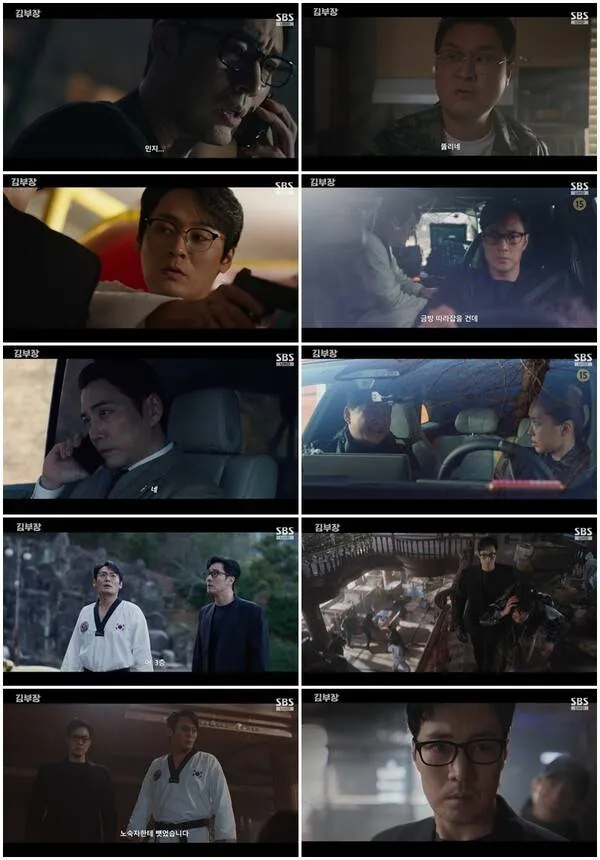
The third episode, broadcast on the 3rd, set a new personal ratings record for the series. According to Nielsen Korea, the episode posted an average rating of 19.6 percent in the Seoul metropolitan area and 18.8 percent nationwide, while its peak real-time rating climbed as high as 23 percent. For a drama to exceed 19 percent in the metropolitan area this early, at the third-episode stage, is being viewed as an exceptional result. The figures also place 'Kim Bu-jang' among the strongest ratings performers of any miniseries aired across all channels in 2026. Its 2049 target rating also rose to a peak of 7.5 percent, showing that the drama is driving both buzz and measurable viewership.
At the center of the story is Kim Bu-jang, played by So Ji-sub, and the extreme emotional pressure created by the disappearance of his daughter Min-ji, played by Seo Su-min. In this episode, the drama brings its fatherhood-driven pursuit narrative fully to the foreground. The result is a layered structure in which Kim Bu-jang's personal trauma overlaps with forces operating at the level of state-scale covert action. Rather than remaining a simple revenge plot of the kind often seen in genre dramas, the series expands into a hybrid thriller where family, the state and secret organizations intersect.
The early part of the episode establishes the emotional bond between father and daughter through scenes of recollection. Everyday details, including a mobile phone gift for the daughter and heart-shaped decorations, stand in deliberate contrast to the present disappearance case. That contrast heightens the emotional effect of the story and gives psychological justification to the protagonist's actions. It also becomes the emotional foundation for the runaway-style action that follows later in the episode.
As the plot develops, the conflict among multiple forces begins in earnest. The pursuit centered on Kim Bu-jang, the Special Mission Bureau, and the intervention of North Korea-born operative Park Kang-sung, played by Kim Sung-kyu, unfold at the same time. Through that structure, the narrative shifts from a single chase into a multilayered contest for power. In the process, the action sequences expand beyond simple physical clashes and take on the shape of confrontations that combine intelligence warfare with psychological warfare.
The latter part of the episode concentrates several twists into the narrative. Bank employee Jung Sang-ah, played by Son Na-eun, and the laundry owner are each revealed to be undercover agents. With those revelations, the trust system that had previously defined the relationships among the characters is completely reorganized. The use of undercover-story mechanics is familiar genre grammar, but in 'Kim Bu-jang' it works through multiple reversals that keep increasing the tension.
As a result, 'Kim Bu-jang' is taking shape as a complex genre drama that combines an emotion-based story with political and military genre elements. From the very beginning of its broadcast run, the series has secured both ratings and topical momentum, and it is now moving toward a position as one of the representative hit dramas of its moment.
Related articles