Lee Tae-gon's Journey: Proving His Worth Beyond Casting Rumors
Actor Lee Tae-gon opens up about the 'nepotism' rumors surrounding his debut in 'Dear Heaven' and how he fought to prove his talent.
Actor Lee Tae-gon has candidly shared his feelings regarding the various rumors that surrounded him during his rookie days, such as the so-called 'parachute theory' and 'CEO's nephew theory.' For an actor who secured a leading role right from his debut, the public eye was filled with both expectation and suspicion. However, looking back, his path shows that his actions were not mere preferential treatment, but a fierce struggle to prove his own potential.
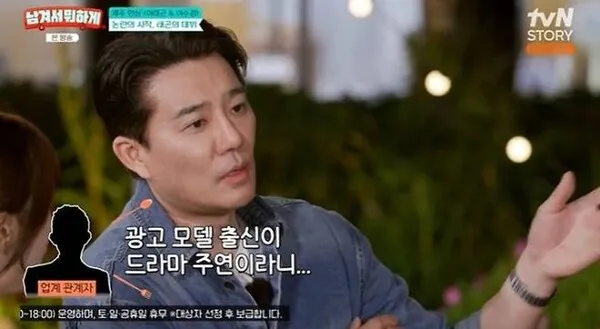
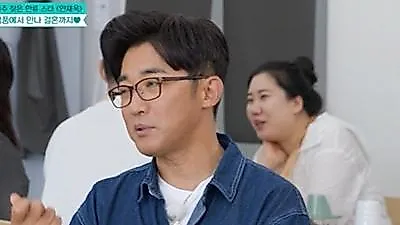
Appearing on tvN STORY's 'Namgyeoseo Mwohage,' Lee Tae-gon recalled the time he was cast as the lead in the 2005 hit drama 'Dear Heaven' by writer Lim Sung-han. At the time, he was a rookie coming from a commercial modeling background and was an unfamiliar face to the public. The fact that such an actor would stand at the center of a 50-episode epic raised questions of doubt rather than freshness.
Rumors like "Isn't he a parachute?" or "Isn't he the CEO's nephew?" were not stories a rookie actor could easily brush off. While acting is a profession that exists within the evaluation of the public, that evaluation sometimes functions in a way that denies a person's effort and potential.
Sociologist Pierre Bourdieu explained that for an individual to be recognized within society, they need not only simple ability but also 'symbolic capital.' In other words, invisible assets such as name, career, reputation, and trust determine one's social position. What rookie actors lack most is this symbolic capital. No matter how much potential they have, if they lack a proven track record, the public easily doubts them.
Lee Tae-gon also experienced that wall. However, he stated, "I did it while grinding my teeth to make it work somehow." He turned external suspicion and prejudice into energy. This was more than a simple desire for success; it was a survival method for an actor trying to justify the opportunity given to him.
In particular, 'Dear Heaven' was by no means an easy set for a rookie actor. Co-star Lee Soo-kyung recalled that the requirements for dialogue accuracy and emotional expression were extremely strict at the time. Lee Tae-gon also revealed the reality of drama acting created under extreme calculation, saying, "Even the timing for shedding tears was written down. It was like, 'You must shed a drop here.'"
This shows that an actor's emotions are not simply natural outbursts, but the result of thorough training and technique. The public sees the actor's tears, but they do not see the agony and repetition required to produce those tears.
The most difficult moment for an actor is when their own emotions clash with the emotions of the character. Lee Tae-gon confessed, "It was a love story between a man and a woman, so why should I cry? I didn't understand why I had to be sad." This connects to the fundamental problem faced by performers.
Russian theater theorist Konstantin Stanislavski emphasized that for an actor to express a character truthfully, they need internal understanding rather than simple external imitation. An actor must live the life of another, but if they fail to understand that person, the emotion becomes hollow acting.
Lee Tae-gon's expression, "It is a chaos between me and Gu Wang-mo. It is a fight," reveals that exact point. An actor fights with themselves while simultaneously acting the character. How to express an emotion I do not understand as if it were real, and how to make a person different from myself convincing—that process is the growth of an actor.
Ultimately, his success in 'Dear Heaven' was not merely a lucky opportunity. Rather, for Lee Tae-gon, it was a testing ground where he had to prove his reason for existence. Since then, he has established his position as an actor by playing leading roles in works such as 'Yeon Gaesomun,' 'Winter Bird,' 'Assorted Gems,' and 'Gwanggaeto the Great.'
An interesting point is his starting point. Lee Tae-gon was not someone who followed an elite course from the entertainment industry. After majoring in Social Physical Education at Kyonggi University, he worked as a swimming instructor and later became an actor through modeling and commercial activities. In other words, he was a figure who emerged outside the standardized growth path of an actor.
This is why his debut caused even greater controversy. It was because an unfamiliar person suddenly appeared at the center. However, the history of art and popular culture has always expanded through new faces and unfamiliar possibilities.
In the end, what matters is not how one started, but how one made that opportunity their own. Lee Tae-gon started amidst doubt but answered with results. And that process shows that an actor is not simply someone who is chosen, but an entity that must prove their value from the moment they are chosen.
Behind the glamorous description of being 'a lead from debut,' there was not preferential treatment, but the time of an actor who endlessly agonized between himself and his characters through burdens and battles.
Related articles