
"New Employee Chairman Kang": What Its Comeback From 3% to 12% Means
JTBC's "New Employee Chairman Kang" has risen from a modest 3% start to a peak 12.0%, turning its chaebol fantasy premise into a cultural talking point.
JTBC's Saturday-Sunday drama "New Employee Chairman Kang" is making an unexpectedly sharp upward climb, establishing a powerful presence in the drama market. Its modest start in the 3% range at the time of its first broadcast looked almost like the quiet before a huge storm. But within eight episodes, the series produced the reversal of a double-digit rating, moving beyond the category of a simple hit drama to become a cultural phenomenon that shows what today's public is drawn to.
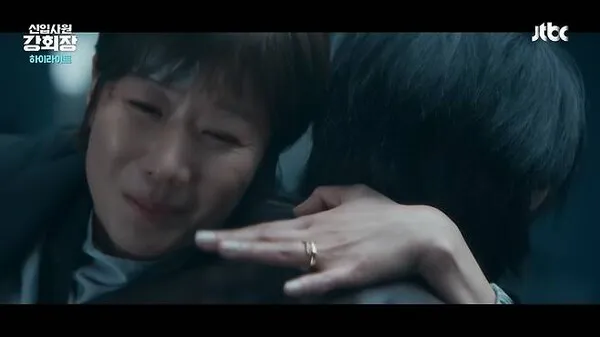
The way audiences consume content has changed rapidly. The era when an entire family sat down at the same hour to watch the same drama is over. As OTT platforms and short-form content divide the public's time, double-digit ratings for terrestrial and cable dramas have become a far higher barrier than they were in the past. In that environment, the fact that a JTBC drama recorded a peak of 12.0% after opening in the 3% range is not merely a numerical rise. It is an event that proves the power of narrative can still move the public's senses.
The success of this work begins above all with its direct confrontation with desire as a part of human nature. On the surface, "New Employee Chairman Kang" is an entertainment drama that combines a chaebol family succession battle with the fantasy setup of a soul switch. Beneath that, however, it places sharp questions about class structure, the transfer of power, and bloodline-centered capitalism, issues Korean society has long faced.
The premise that the soul of Kang Yong-ho, a corporate chairman in his 70s, enters the body of the young soccer player Hwang Jun-hyun is not merely fantasy. It expands into a philosophical question: "What determines a human being: the body, memory, or power?" If the French philosopher Rene Descartes viewed human existence as a thinking subject, this work goes one step further and asks whether what makes a person human is the mind, or the identity granted by social status and power.
The moment the chaebol chairman's soul inhabits a young body, he is no longer simply a corporate chief. He becomes someone pushed outside the world he built himself. When money, status, and honor disappear, by what can a human being prove who he is? That question is the philosophical axis running through the entire drama.
The succession competition within Choi Sung Group in the drama also functions like a miniature version of Korean society. The power struggle carried out under the name of family is, in effect, a metaphor for the survival competition repeatedly seen in capitalist society.
The duality shown by the character Na Eun-se is especially interesting. He says he will protect his family, yet at the same time he stands on the side of greater power. This is not simply the face of a villain. Rather, it shows the tragedy of a human being who must constantly calculate in order to survive inside a structure of power.
If the German philosopher Friedrich Nietzsche spoke of the "will to power" as the fundamental force that moves human beings, then the characters in "New Employee Chairman Kang" all stand on that same orbit of desire. For them, family is both a community of love and a political alliance for maintaining power.
At this point, the work moves beyond a simple chaebol drama. It is not just the story of a particular class called the chaebol, but a modern fable showing how easily human beings become slaves to desire within relationships.
Another core reason for its box-office success is its balance of genres. Recent Korean dramas have tended to split between overly heavy social accusation dramas and provocative revenge dramas. This work, however, combines corporate political drama, coming-of-age drama, fantasy, and family drama, creating a new narrative combination.
In particular, the setup of a "soul switch" rather than a "return to the past" is what sets it apart. Unlike stories in which a person goes back to their past self and changes the future, this drama naturally draws out modern issues of class mobility and generational conflict because the soul enters the body of someone from an entirely different generation and social class.
Above all, the actors' performances hold this complex worldview in a convincing reality. Lee Jun-young anchors the drama by containing the cool-headedness and charisma of a seasoned corporate figure inside a youthful exterior. The presence of veteran actors such as Son Hyun-joo, Jeon Hye-jin, and Jin Goo adds weight to the power drama.
In the end, the success of "New Employee Chairman Kang" goes beyond the simple idea that "an entertaining drama did well." This work shows what kind of narrative today's public wants. People no longer respond only to simple myths of success. Instead, they respond to stories that look into the desire hidden behind success, the unmasked face of power, and the contradictions of human existence.
The journey from a quiet start in the 3% range to an explosive rise to 12% may resemble the fate of the protagonist within the drama. It is the narrative of an ordinary existence moving to the center of a vast world, a story that starts from a low position and enters the very middle of power.
That is precisely the timely appeal of "New Employee Chairman Kang." The drama depicts a fight surrounding the throne of a chaebol family, but ultimately it asks one question.
"Is it money and power that rule human beings, or the memories and choices that remain until the end?"
That question captured viewers' hearts and turned a 3% drama into a 12% myth.



Comments 0
Comments are currently disabled.