Court rules in favor of director Jang Hang Jun in 'The King's Warden' plagiarism case
A court has dismissed a preliminary injunction against the hit film 'The King's Warden,' ruling there is no copyright infringement.
The plagiarism controversy surrounding director Jang Hang Jun's hit film 'The King's Warden' has concluded in favor of the production company in the court's first ruling. The court rejected the plaintiffs' request for a preliminary injunction to ban screenings, determining there are no legal restrictions on the film's theatrical release, OTT distribution, or overseas sales.
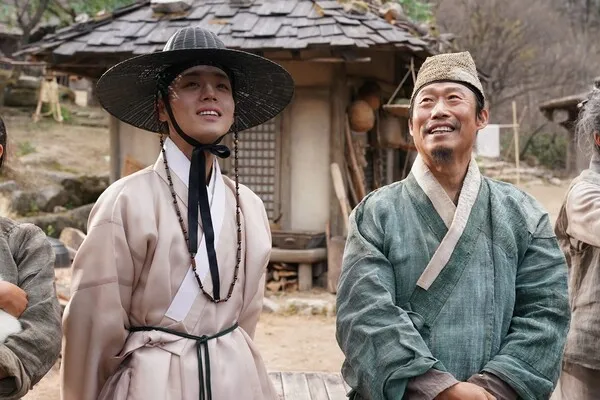
On the 23rd, the 21st Civil Division of the Seoul Western District Court (Presiding Judge Shin Myung-hee) dismissed the application for a preliminary injunction filed by the bereaved family of the screenwriter of the drama 'Eom Heung-do.' The suit was brought against co-producers Onda Works and BA Entertainment, as well as distributor SHOWBOX Co., Ltd.
With this decision, the production company can proceed with its scheduled distribution plans, including theatrical screenings, in-flight screenings on aircraft and ships, OTT service releases, DVD launches, and overseas exports.
Previously, the bereaved family claimed copyright infringement, asserting that the script for the drama 'Eom Heung-do,' which was submitted to broadcasters in the 2000s, was used without authorization during the production of 'The King's Warden.' They sought an injunction to immediately halt the film's screening and online availability.
The production company has strongly refuted the allegations, calling them "clearly groundless." They maintained that the film was produced through an independent creative process and that the crew never referred to or utilized the plaintiffs' script.
The court determined that, at this stage, the plaintiffs' claims had not been sufficiently proven.
In its decision, the court stated that the submitted materials did not sufficiently prove the film was produced based on the plaintiffs' script, nor were the rights to prohibit the reproduction, distribution, or screening of the film sufficiently demonstrated.
While acknowledging that both works utilize historical figures from the Joseon Dynasty—such as King Danjong, Eom Heung-do, and Han Myeong-hoe—and actual historical events, the court ruled these are common elements that naturally occur within the historical drama genre.
The court noted that while similarities may exist in subject matter, historical background, and certain settings, there are fundamental differences in the creative expressions protected by copyright law, such as the overall story structure, character relationships, event composition, and thematic consciousness.
Furthermore, the court found it difficult to confirm the "substantial similarity" required to establish copyright infringement.
The court emphasized that copyright law protects the specific creative expression of an idea or historical fact, rather than the ideas or facts themselves, explaining that it is difficult to recognize a comprehensive or non-literal similarity in expression between the two works.
Additionally, the court ruled there was insufficient objective evidence to support the claim that Jang or the production crew had reviewed or accessed the script in advance.
In the cultural content industry, where works based on historical events and figures are frequently produced, the consistent standard for domestic and international judiciaries is to judge infringement based on specific methods of expression, creativity, and accessibility rather than simple similarities in subject matter.
Since its release, 'The King's Warden' has seen explosive success, surpassing 16,910,000 viewers and ranking as the second highest-grossing film in Korean history. Following this court decision, the film's theatrical run and various secondary rights businesses are expected to proceed without disruption.
Related articles