Kang Bu-ja critiques wives calling husbands 'Oppa'
Actress Kang Bu-ja shares her blunt views on the modern trend of wives calling their husbands 'Oppa' during an appearance on MBN.
Actress Kang Bu-ja has expressed her firm stance on the recent trend of wives calling their husbands 'Oppa' (older brother).
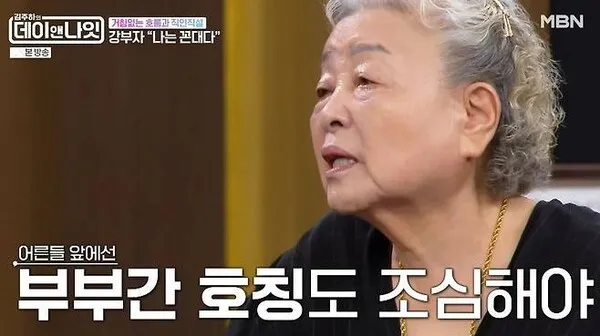
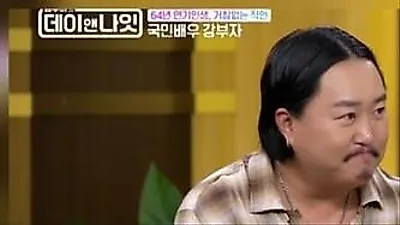
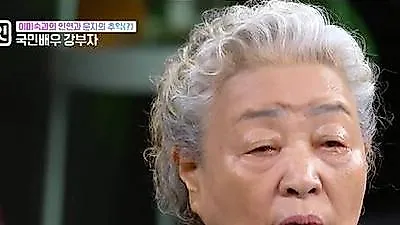
On the 15th, Kang appeared on MBN's 'Kim Ju-ha's Day and Night,' where she shared reflections on her long acting career and her life. During the broadcast, Kang stated, "I have a lot to say to young people," before bringing up the issue of titles used between married couples. In particular, she expressed strong disapproval of calling a husband 'Oppa.'
"Do not call your husband 'Oppa' between a married couple," Kang said, causing laughter on set. "Throughout all of history, has anyone ever had a baby with an 'Oppa' under the covers? How do you make a baby with an 'Oppa' under the covers?"
What she pointed out was not merely the titles themselves, but rather a generational perception regarding etiquette and language within a marital relationship. Kang remarked, "When my parents were around, I couldn't even brazenly say 'Yeobo' (honey) or 'Dangsin' (darling) to my husband. But these days, oh my, it's unbelievable."
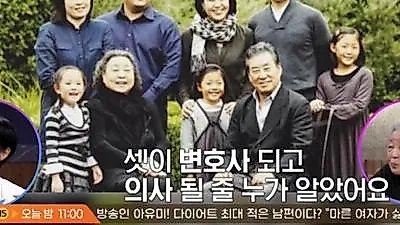
She further revealed that throughout her own marriage of over 60 years, she has been careful about using names or specific titles when addressing her husband. "Even though it has been over 60 years since I got married, I have never once said 'Yeobo' or 'Dangsin,'" she said.
Instead, Kang explained that she uses the expression "Yeobwayo" to address her husband. Explaining that "Yeobwayo" means "Look here," she introduced her own method of calling his name or using the title "the kids' father" depending on the situation.
She emphasized once more, "Let's all refrain from calling them 'Oppa.' Let's at least fix this."
Kang's remarks drew attention for highlighting the generational gap in values regarding marital titles. Unlike modern linguistic culture, which uses 'Oppa' as a natural term of endearment between lovers or spouses, Kang viewed it from the perspective of traditional family relationships and etiquette. Through her characteristically blunt speech and uninhibited expressions, she honestly shared her thoughts on the marital titles and etiquette maintained by her generation, eliciting both laughter and empathy.
Related articles