Marriage Hell: Couple's year-long silence linked to anxiety
Dr. Oh Eun-young analyzes a couple's communication breakdown and potential selective mutism on MBC's 'Oh Eun Young's Report Marriage Hell'.
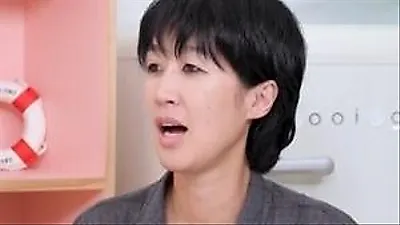
For a couple whose communication had been severed for nearly a year, the issue ran deeper than a simple "cold war." The husband felt ignored without knowing why, while the wife found herself unable to speak the moment she faced him. Dr. Oh Eun-young noted that this silence cannot be explained solely by personality differences, pointing to the wife's high social anxiety and the possibility of "selective mutism."

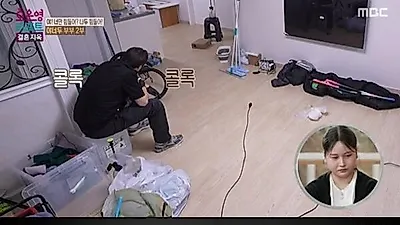
In episode 184 of MBC's 'Oh Eun Young's Report Marriage Hell,' which aired on the 7th, a "top priority couple" in their seventh year of marriage raising four children appeared. In the observation footage, the couple stayed in the same space without making eye contact, and even when the husband spoke first, the wife limited herself to short answers. The silence lasted up to two weeks at a time, and the total breakdown in communication had persisted for about a year.
The husband perceived the silence as a form of "rejection." He confessed that he lived walking on eggshells around his wife without even knowing what he had done wrong. After suffering from indigestion and sleep disorders, he was diagnosed with severe depression and underwent medication treatment for over two years; since then, he has worked to recover through daily 10km runs.
On the other hand, for the wife, the silence was less a choice to ignore her husband and more a defense mechanism to avoid conflict. She expressed that the moments when her husband said, "Let's talk," were the most terrifying, as his subsequent questions felt like attacks rather than conversation. Notably, while she could converse naturally with members at her Pilates center, she described feeling as though "the words get stuck in my throat" in front of her husband.
This difference was exactly what Dr. Oh focused on. She mentioned the possibility of "selective mutism," noting that the wife does not fail to speak in all situations but shows extreme tension and anxiety in specific relationships. She added that as the pressure to speak increases, actual vocalization can become more difficult. However, as the expressions mentioned on the broadcast are the expert's analysis of the specific scene, they should not be immediately accepted as a medical diagnosis by viewers.
Upon hearing this explanation, the wife showed a new understanding of her own reactions, which she herself had not realized. The husband also reacted by saying, "All the emotions I felt are now explained," unlike before when he had interpreted her silence as rejection or contempt. It turned out that while one person perceived the same behavior as "avoidance," the other perceived it as "evasion due to fear."
The couple's conflict was not limited to communication. After focusing on the exercise he started to overcome depression, the husband continued self-management to the point of shooting a body profile. However, the wife pointed out that the husband prioritizes his own life over the family. She claimed that even at a kids' cafe, he would eat chicken breast to stick to his workout schedule and tried to postpone a meeting for his mother's birthday citing diet management.
Specific spending habits also became a spark for conflict. The wife revealed that the husband spent 3 million won on sneakers, about 1 million won on a fish tank, and 3 million won on a dedicated refrigerator for chicken breast. In response, the husband countered that it was unfair to place all economic responsibility on him, citing the house and the deposit for the Pilates center he covered, as well as expensive gifts.
Past financial issues were also amplifying the current conflict. According to the wife, after the husband's license was revoked due to a DUI, he paid a fine of approximately 9 million won, and with business failures and money borrowed from acquaintances, the couple's debt approached 100 million won. She claimed they eventually had to sell the apartment they had won through a housing subscription. The husband countered, stating that expenses such as the sitter costs for the Pilates center operated by the wife were also included in the debt. Their perceptions of economic responsibility were significantly different.
Dr. Oh analyzed the husband's current state, noting that it is not a situation where depression or burnout is persisting. Rather, she pointed out that the energy he poured into self-management to overcome depression is currently being focused on himself rather than on his relationship with his family. She expanded the core of the problem from "who sacrificed more" to how each person's efforts are directed within the family community.
Toward the end of the broadcast, another issue emerged that shook the entire family beyond the scope of the couple's conflict. At 3 AM, the eldest child, who had not appeared throughout the observation footage, cautiously came out of the room. The eldest child had been living at a distance from the family, and after the father returned home, he would message his mother to let her know his situation. Upon seeing her son, the wife wept, but the husband remarked, "I guess you can't help it if the blood is different," revealing another layer of conflict between them.
Ultimately, this couple's issue cannot be reduced to the simple dynamic of an "uncommunicative wife" and a "husband demanding speech." While silence can sometimes be a tool to punish a partner, in this case, it was a complex overlap of differing coping mechanisms, anxiety, economic pressure, and the relationship between parent and child. It serves as a case study of how conflict can escalate when one interprets another's actions solely through their own lens.
The specific background regarding the relationship between the husband and the eldest child will continue in episode 185 of 'Oh Eun Young's Report Marriage Hell,' airing on the 14th at 9 PM. The broadcast is expected to further reveal how the year-long silence between the couple fits into the broader web of the family's relationships.
Related articles