Wife's compulsive calls to delivery husband stem from trauma
A wife's constant calls to her husband reveal deep-seated anxiety rooted in the sudden loss of her previous husband.
The behavior of a wife who calls her husband dozens of times a day has emerged as a central conflict in her marriage, transcending simple expressions of affection. Behind the repetitive calls intended to monitor her husband's daily routine lies a deep-seated anxiety and sense of loss, stemming from the traumatic memory of witnessing her former husband's sudden death.
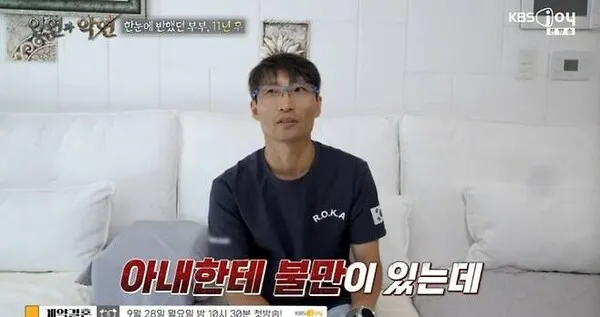
On the September 9 broadcast of KBS JOY's 'Good Relationships and Bad Relationships,' the story of a couple married for 11 years was shared. The pair, who married after falling in love at first sight, built a family with two sons, but over time, the wife's excessive contact and anxiety created a rift in the marriage.
On the surface, the wife's affection for her husband appeared profound. She took care of her husband, who works in delivery, early in the morning and even admitted, "I think I love my husband more than he loves me," adding, "I feel like I'm losing out because I love him more."
She also appeared relatively accommodating toward her husband's hobbies. She supported his collecting hobby, which cost tens of millions of won, and even permitted him to attend social gatherings with members of the opposite sex. In her, a generous attitude that respects a spouse's privacy coexisted with an obsessive need for contact.
The problem intensified the moment the husband left the house. The wife called her husband, who is busy with delivery work, at all hours. The husband expressed his distress, saying, "She calls dozens of times a day. It was like that when he was at work, and it's even worse when he's out." His warning, "I feel like I'm going to explode at any moment," reflected a sense of crisis that the relationship itself was being exhausted by more than mere annoyance.
More seriously, the target of these calls was not limited to the husband; the wife also repeatedly called her son. She explained that even when she knows nothing is wrong, her anxiety grows if the call goes unanswered, prompting her to call again.
This dynamic shifts the situation away from a simple case of "pathological jealousy." Regardless of whether suspicion is present, the psychological structure—where one must constantly verify the other's response to soothe anxiety—is what places immense pressure on the marital relationship.
Lawyer Ko Seung-woo expressed caution regarding immediately labeling excessive contact as "pathological jealousy" on the broadcast. He explained that the issue is not simply the frequency of calls, but rather when suspicion escalates to extremes, such as hiring private investigators or monitoring a spouse through illegal methods like illicit filming or wiretapping.
Ultimately, it is not just the frequency of contact that erodes a relationship. The core issues involve how much of a spouse's privacy and autonomy is respected, how much verification is demanded to alleviate anxiety, and how to manage the psychological burden placed on the partner in the process.
The key to understanding the wife's behavior lies in her past experience of loss. Before meeting her current husband, she experienced the profound trauma of bereavement. She revealed that she once approached her former husband to wake him for work, only to find his body was already cold, realizing too late that he had passed away suddenly in the early morning.
This unexpected death left a lasting mark on her life. The experience of a loved one disappearing without warning can cause even a routine absence to feel like a warning sign. This context explains her statement: "Even though I know nothing will happen, I feel anxious if he doesn't answer the phone."
However, past wounds do not justify current actions. The existence of trauma and actions that infringe upon a spouse's freedom are separate issues. To protect the relationship, both must be addressed simultaneously.
Rather than attempting to soothe her anxiety through constant verification, the wife may need to examine how her fear of loss is being projected onto her current relationship. Similarly, the husband needs to set clear boundaries while attempting to understand the fear driving her actions, rather than dismissing her behavior as mere obsession.
In marriage, love is not synonymous with occupying every aspect of a partner's life. As a relationship grows longer, partners must constantly navigate the fine line between affection and trust, and between interest and control.
This is particularly vital for this couple, as they have two sons. If the conflict between the parents persists, the emotional impact will extend beyond the couple to the entire family environment.
While the affection that sustained their 11-year marriage is being shaken by dozens of daily calls, the root of those calls is the fear of losing her husband. It is a paradox: the moment love transforms into an excessive need for verification, the relationship becomes even more unstable.
Ultimately, the question is not how much the wife loves her husband, but how she manages the fear of losing him, and how she can set boundaries so that fear does not stifle his life.
While the past cannot be changed, the current relationship does not have to be held captive by past loss. Acknowledging a wound and respecting a partner's autonomy can coexist, potentially serving as the starting point for turning old scars into renewed trust.
Related articles