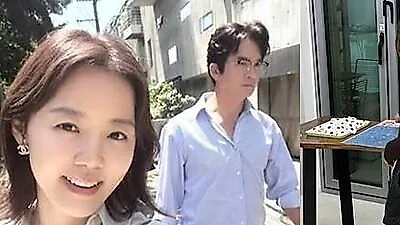
Chef Sam Kim: 'I Said I'd Become an Accountant, But I Became a Chef' — The Weight of His Mother's Debt and Guilt
Veteran chef Sam Kim, the real-life inspiration for the character in the drama 'Pasta', tearfully shares the painful truth about his mother's sacrifices and the debt incurred to fund his culinary journey.
Sam Kim, the veteran chef with 27 years of experience known as the real-life model for Chef Choi Hyun-wook (played by Lee Sun-kyun) in the drama 'Pasta', tearfully revealed his most painful memory: the immense sacrifice made by his mother.

Under the guise of pursuing a stable professional career, he boarded a plane to the United States, but instead of an accounting certification, he was handed a new life as a chef. The heavy consequence of that choice was borne entirely by his family, specifically his mother.
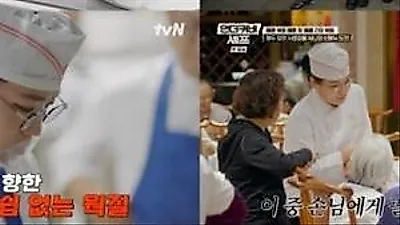
In the upcoming episode of the tvN variety show 'You Quiz on the Block' (Episode 356), Sam Kim's appearance was previewed. He shared that his culinary journey did not begin in a glamorous restaurant or a famous chef's kitchen, but in the small kitchen of the boarding house his mother operated during his childhood.
To Sam Kim, the kitchen was more than just a place for cooking. It was a site of labor to sustain the family's livelihood, and simultaneously, his first classroom where competitiveness, curiosity, and his future professional identity were forged.
Recalling his childhood, he said, "It was a time when many relatives were running boarding houses like a trend. Ours was located in front of Sogang University." He confessed that he felt a sense of competitive drive whenever he heard stories about his aunt, who ran a boarding house near Sungkyunkwan University, mentioning that her daughter helped out with the work.
His recollection of fueling competitiveness through these small stories serves as a clue to understanding the nature of Chef Sam Kim. While the profession of cooking is often described through artistic sense or taste, the reality of a professional kitchen is an extremely labor-intensive field that requires intense repetitive training, physical stamina, respect for hierarchy, patience to endure time pressure, and immediate responsibility for the results.
The fact that he experienced the kitchen environment closely from a young age suggests where his culinary philosophy originated. However, the process of becoming a chef was not smooth from the start. Rather, at his most critical moment of choice, he hid his true dream from his mother.
Sam Kim confessed that when he left to study in the United States, he told his mother, "I will become an accountant." He did not honestly tell her that he was departing to learn cooking.
"When I told my mother, she was truly angry. I left after saying I would become an accountant," he revealed.
While the trip to the U.S. was the beginning of a new life for him, it was the starting point of another economic burden for his family. To make matters worse, as the entire Korean society was engulfed by the shock of the foreign exchange crisis, his family could not escape the economic turbulence.
The 1997 foreign exchange crisis, known as the IMF crisis, was an event that completely upended the economic order of many households. As a chain of corporate bankruptcies, mass unemployment, and the restructuring of financial institutions ensued, individual economic stability collapsed rapidly. At that time, the concept of a 'lifetime job' was shaken, and the debt burden families had to bear grew sharply.
Sam Kim's family faced this massive economic wave head-on. He shared that his mother became a credit delinquent due to debts. He further disclosed that his mother even took out loans from secondary financial institutions to prepare for his studies in the United States.
While he pursued his dream of learning to cook, his mother borrowed money from financial institutions for her son's future, ultimately enduring a situation where her own credit and economic life were devastated.
For Sam Kim, this memory is not just a simple family history. It is a memory where the guilt of having predicated his dream on another's sacrifice overlaps with the belated realization of his parents' devotion.
Even more ironic is the fact that he ultimately did not become an accountant. Although he promised his mother he would choose a stable profession and left for America, his life flowed in a completely different direction. He chose cooking, had to survive in the kitchen, and finally grew into a chef with his own name.
In retrospect, that lie was his first deviation to choose his own destiny. However, success does not automatically erase the guilt of the past.
Upon returning to Korea, Sam Kim did not immediately focus on actions to earn money. Instead, he participated in free meal services. He confessed feeling sorry because he felt he did not fully understand the reality of Korea.
"I felt so sorry because I thought I didn't know much about the situation in Korea. It was hard," he said, shedding tears while speaking.
Sam Kim's tears do not simply signify apology toward his mother. It is an emotion stemming from the belated recognition of how someone else's sacrifice intervened in the process of a person completing their dream as a profession.
The autobiographies of successful people are often summarized into simple narratives of dreams, effort, challenge, and overcoming. However, the actual trajectory of life is not that smooth. A person's success is complexly intertwined with family economic power, social environment, temporal conditions, accidental encounters, failures, and sometimes the sacrifice of others.
What makes Sam Kim's story special is that he does not hide this uncomfortable truth.
The keyword running through his life is perhaps closer to 'responsibility' than 'cooking.' The cooking that began in his mother's boarding house kitchen led to the adventure of studying in the U.S., and through the historical tragedy of the foreign exchange crisis, he confronted the reality of family debt and sacrifice. After returning to Korea, this led to volunteering to share food through his skills.
Food is a primal condition for human survival, but it is also a medium that stores memories and relationships. Preparing a meal for someone is closer to a promise to care for that person's existence rather than a mere act of providing nutrition. From this perspective, the process by which Sam Kim made the kitchen the center of his life is quite paradoxical.
The dream of a boy that started in a kitchen where a mother fed boarders eventually led to a chef's kitchen, and that chef then handed food to strangers through free meal services. The labor of the kitchen, which began to feed a family, eventually expanded into a professional philosophy of caring for others.
Since then, Sam Kim has established himself as one of Korea's representative star chefs. In particular, his public recognition grew significantly as he became known as the real-life inspiration for the drama 'Pasta.' While the drama dramatically depicted the competition, love, and pride of chefs against a kitchen backdrop, Sam Kim's actual life contains a much more complex and realistic narrative.
In the world of chefs shown on screen, a completed plate receives attention, but in the reality of the kitchen, there is an accumulation of countless hours endured to make that single plate. For Sam Kim, the starting point of those hours was his mother.
Therefore, the tears he shed in this broadcast are not simple sentimental tears from a successful chef reminiscing about the past. They are closer to the repentance of a human being who belatedly understood the cost his closest person had to pay for his dream.
The son who left saying he would become an accountant eventually became a chef. And in that process, his mother bore the debt. As time passed, the son came to have a kitchen with his own name, but in his memories, the oldest kitchen remains his mother's boarding house kitchen.