Critically panned 'Dragon Wars: D-War' hits Netflix global top 10
Nineteen years after its controversial release, the SF fantasy film 'Dragon Wars: D-War' has surged to 6th place on Netflix's global charts.
Director Shim Hyung-rae's SF fantasy film 'Dragon Wars: D-War' is drawing attention once again, recording an unexpected comeback on the Netflix global charts 19 years after its initial release. The film, which was once an ambitious challenge for the Korean film industry and a centerpiece of 'flop' debates, has found new life on a completely different platform: OTT.
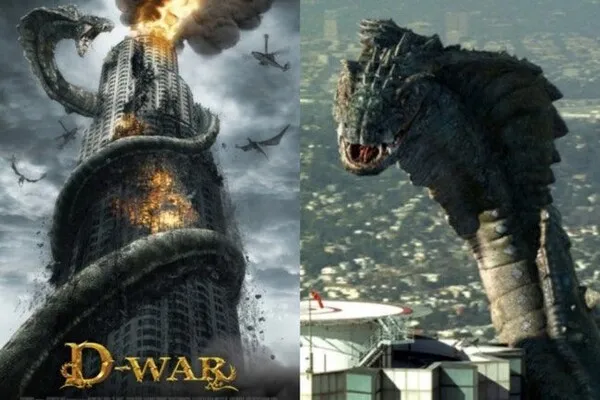
According to FlixPatrol, a global OTT ranking aggregator, 'Dragon Wars: D-War' rose to 6th place on the Netflix global movie rankings on the 10th. In major European countries such as Germany, France, and Italy, it climbed as high as 2nd in the film category, appearing on charts in as many as 20 countries.
Released in 2007, 'Dragon Wars: D-War' is an SF fantasy film directed by comedian Shim Hyung-rae. Using the Imugi (a legendary Korean serpent) as its central subject, it depicts a massive war between monsters surrounding the Yeo Eui-ju, set against the backdrop of Los Angeles, USA.
At the time, it was a highly unusual project within the Korean film industry. It aimed at the global market by translating traditional Korean monster folklore into Hollywood-style blockbuster grammar, utilizing massive CG and action. Above all, the fact that a Korean film was producing a large-scale monster movie set in the United States was treated as an event in itself.
However, evaluations regarding its box office success and artistic quality were extremely polarized.
At the time of its release, 'Dragon Wars: D-War' drew approximately 8 million viewers in Korea, recording the number one box office hit of 2007. However, the response from audiences and critics was cold. Continuous criticism followed, stating that the narrative lacked probability, characters were flat, and the story and direction were weak compared to the CG and action.
In particular, as the pride of 'Korea can also make monster movies of this scale' clashed with critical evaluations of the film itself, 'Dragon Wars: D-War' expanded beyond being just a single movie to become an object of cultural debate.
One side raised criticisms regarding its completeness, while the other emphasized the symbolism of a Korean film challenging Hollywood blockbusters. This is why 'Dragon Wars: D-War' was a significant social phenomenon in Korean popular culture at the time, regardless of the film's aesthetic achievements.
That work is now meeting audiences again, not in theaters, but on Netflix.
However, it is difficult to immediately interpret this rise in rankings as a re-evaluation of the artistic quality of 'Dragon Wars: D-War.' This is because the film was newly released on Netflix on the 6th, and in the OTT era, initial viewing demand for new releases can significantly influence rankings.
In fact, local evaluations abroad remain quite cold. It is reported that on the German film portal Filmstarts, the audience rating was only 1.7 out of 5, and on the French film rating site AlloCiné, it stood at a mere 1.2.
Nevertheless, this comeback is interesting because it demonstrates that a film's longevity is not determined solely by the critical evaluation at the time of its release.
The phenomenon of a film that was ignored or panned in theaters being consumed again through new platforms and new audiences is no longer unfamiliar. While films were evaluated based on production scale, technical completeness, and narrative integrity during their theatrical releases, in the OTT era, entirely different values operate: 'how curious is it?', 'how unique is it?', and 'how interesting is it to watch right now?'
In that sense, 'Dragon Wars: D-War' might actually be a film that fits the current era better.
While the core evaluation criterion back then was 'how lacking it is compared to Hollywood,' for today's audience, the curiosity itself—"Why on earth did they make a movie like this in Korea in 2007?"—becomes the content. The stigma of being a failure is instead transformed into a cultural archive and an interesting viewing point 19 years later.
Furthermore, Shim is garnering even more interest by recently expressing his intention to push forward with the production of 'Dragon Wars 2.' He plans to hold a production presentation within the year and enter full-scale production.
It is known that approximately 30 billion won was invested in 'Dragon Wars: D-War' at the time. Shim took on significant debt during the film production process and later suffered major economic aftereffects, including filing for personal bankruptcy.
Therefore, 'Dragon Wars 2' holds a meaning beyond being a simple sequel. It is as if a project where the technical limits, ambitions, patriotic desires, and Hollywood complex of the 2007 Korean film industry were intertwined is challenging the same dream again after spanning about 20 years.
Interestingly, if 'Dragon Wars 2' is produced, the audience's question is likely to change.
If the question in 2007 was "Can Korean films make Hollywood-style blockbusters?", the question now becomes "In an era where K-content competes globally, what can Shim's monster movies show us?"
The record of 6th place on Netflix does not fully rehabilitate the film's past. However, it is clear that a film once thought to be finished is meeting audiences again 19 years later.
Ultimately, a film's fate is not entirely decided on its release date. Some films disappear after failing, while others survive precisely because they failed.
If 'Dragon Wars: D-War' uses this Netflix comeback as a springboard to return with 'Dragon Wars 2,' it will be seen not just as a sequel, but as a second experiment for the Korean-style monster movie that was once a subject of ridicule and debate.


Comments 0