
Chef Kang Leo criticizes youths traveling in Japan on unemployment benefits
Chef Kang Leo shared an anecdote about refusing to take photos for young people traveling in Japan using unemployment benefits, sparking renewed debate over the misuse of the social safety net.
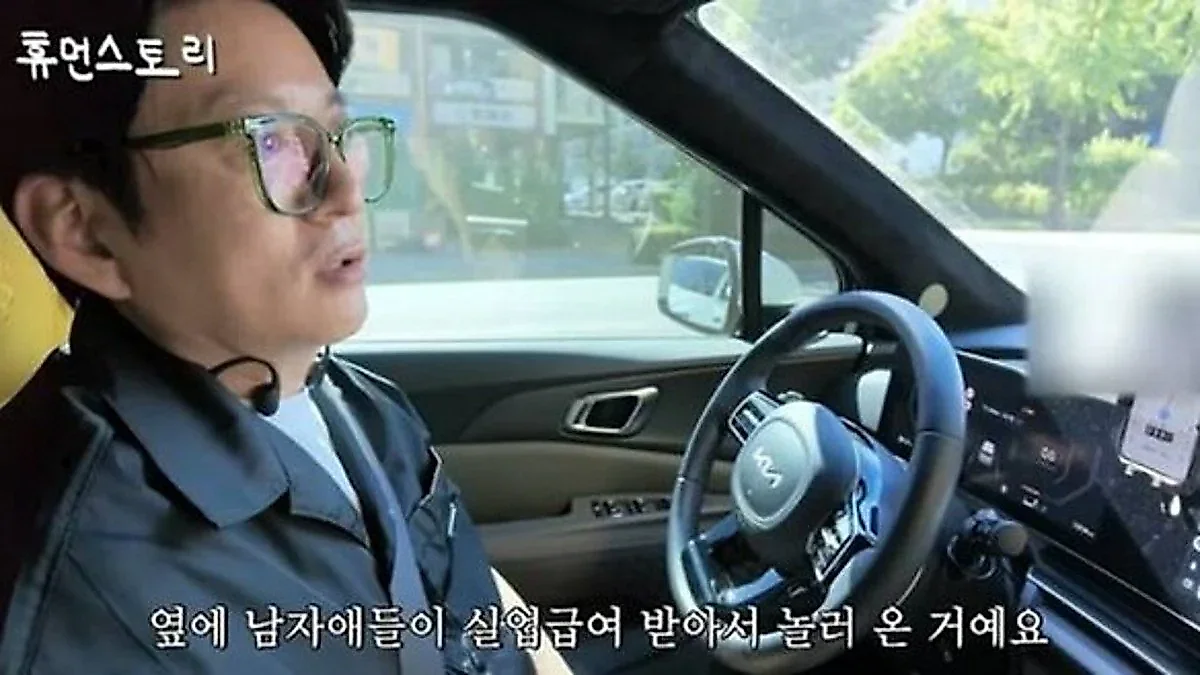
Chef Kang Leo refused to take photos with young people traveling in Japan after hearing them discuss using unemployment benefits for their trip. The incident highlights growing concerns over system misuse, as 113,000 repeated recipients received benefits three or more times last year.
Chef Kang Leo has voiced sharp criticism after recounting an incident where he refused photo requests from young people who were traveling in Japan using unemployment benefits. He expressed anger at seeing individuals enjoying travel instead of seeking re-employment while receiving benefits funded by taxes. As social debates continue regarding the youth employment crisis and job shortages, his blunt remarks have brought the purpose of the unemployment benefit system and the issue of repeated recipients back to the forefront.
Appearing on the YouTube channel 'Human Story,' Kang shared the experience he had during a past visit to Japan. He observed young men sitting next to him discussing how they were traveling using unemployment benefits, including details about their benefit amounts and whether they could receive additional payments. "I went to Japan before, and there were young guys next to me saying they came to play because they received unemployment benefits. They were talking about 'how much they received' and 'that they can get more,' and it made me angry," he recalled.
The situation became even more absurd when the young men, recognizing Kang, asked him for a photo. He revealed that he did not readily comply, instead responding, "I'll take it when you get a job." He did not hide his emotions at the time, adding, "It made me angry because they were traveling on taxes." His sentiment was that he felt unpleasant seeing a system designed to help those in unemployment prepare for re-employment being used as if it were travel funding.
Kang's criticism extended to the perception of jobs among young people. Questioning the claim that there are no jobs or paths available, he asked, "People are saying everything is difficult and there are no paths right now, but why is it that there is nothing to do?" He continued, "Go to a Gamjatang restaurant; there is so much to do. If there are no jobs, they should come here to work. Nothing is easy." His argument is that while acknowledging the difficulty of finding work, one should not ignore the labor opportunities right in front of them.
Unemployment benefits are a social security system designed to reduce livelihood instability and support preparation for re-employment when workers enrolled in employment insurance lose their jobs involuntarily. The system serves as a safety net in the labor market by filling the income gap during unemployment and supporting job-seeking activities. However, contrary to the original purpose of the system, controversies regarding the financial burden and misuse of the system persist as cases of repeated recipients or those receiving benefits without actual job-seeking activities are revealed.
According to data submitted to the Ministry of Employment and Labor to the office of Kim So-hee, a member of the People Power Party belonging to the Climate, Energy, Environment and Labor Committee of the National Assembly of the Republic of Korea, there were 113,000 repeated recipients who received unemployment benefits three or more times within a five-year period last year. As of July this year, 77,000 people have received unemployment benefits three or more times. Last year, 599.754 billion won was paid to these individuals, with the average amount received per person being approximately 5.3 million won.
There were also many cases where the number of times benefits were received was five or more. According to related data, the unemployment benefits paid to those who received benefits five or more times reached 61.086 billion won last year, with the maximum number of times received by an individual being seven. It was also recorded that approximately 60,000 people each year receive unemployment benefits by repeatedly resigning and being re-employed at the same workplace. As cases are being caught where people falsely claim involuntary termination—such as contract expiration or recommended resignation—when they actually resigned voluntarily to receive benefits, voices calling for the supplementation of loopholes in the system are growing.
The issue of fraudulent receipt of unemployment benefits while staying abroad has also come under scrutiny. According to data submitted by the Ministry of Employment and Labor to the office of People Power Party member Kim Wi-sang, the number of unemployment benefit recipients caught for fraudulent receipt among those confirmed to have stayed abroad increased by 57% in one year. Unemployment benefit recipients must report their unemployment status and re-employment activities on designated unemployment recognition days to be approved. A representative type of fraudulent receipt involves staying abroad and having a family member or acquaintance in Korea submit the online unemployment recognition application on their behalf without actually engaging in job-seeking activities.
However, the fact that someone traveled abroad cannot immediately be concluded as fraudulent receipt. Whether a recipient is eligible or committing fraud must be judged comprehensively by looking at actual job-seeking activities, unemployment recognition procedures, and reported details. Repeated receipt also cannot be viewed solely as an abuse of the system based on frequency; the reality of workers experiencing multiple job losses due to an unstable employment environment must also be considered. It is important to distinguish between fraudulent acts exploiting loopholes and unemployed individuals in need of legitimate support.
Kang's remarks re-emphasized the core of the debate surrounding unemployment benefits. As a social safety net operated by taxes and insurance premiums, strict responses are needed for acts that abuse the system. However, the employment crisis and the quality of jobs faced by young people cannot be explained simply by a lack of individual will. This is because the reality of being unable to find desired jobs despite the will to work, along with the livelihood burden occurring during the job-seeking process, must be considered together. For unemployment benefits to function as a safety net that helps re-employment, a management system to prevent fraudulent receipt and policies to expand practical employment opportunities must be supported simultaneously.
Lee Chang-seok is the CEO and editor of Mediafine and writes for Mediafine Global, mainly covering K-Variety and also writing on K-pop, Celebrity and K-drama.


Comments 0
Comments are currently disabled.