
Son Seokhee Confesses Everything, Even His Most Cowardly Moments
Journalist Son Seokhee revisits major scenes in modern Korean media history, revealing behind-the-scenes stories of strikes, arrests, and the struggle for broadcasting independence.
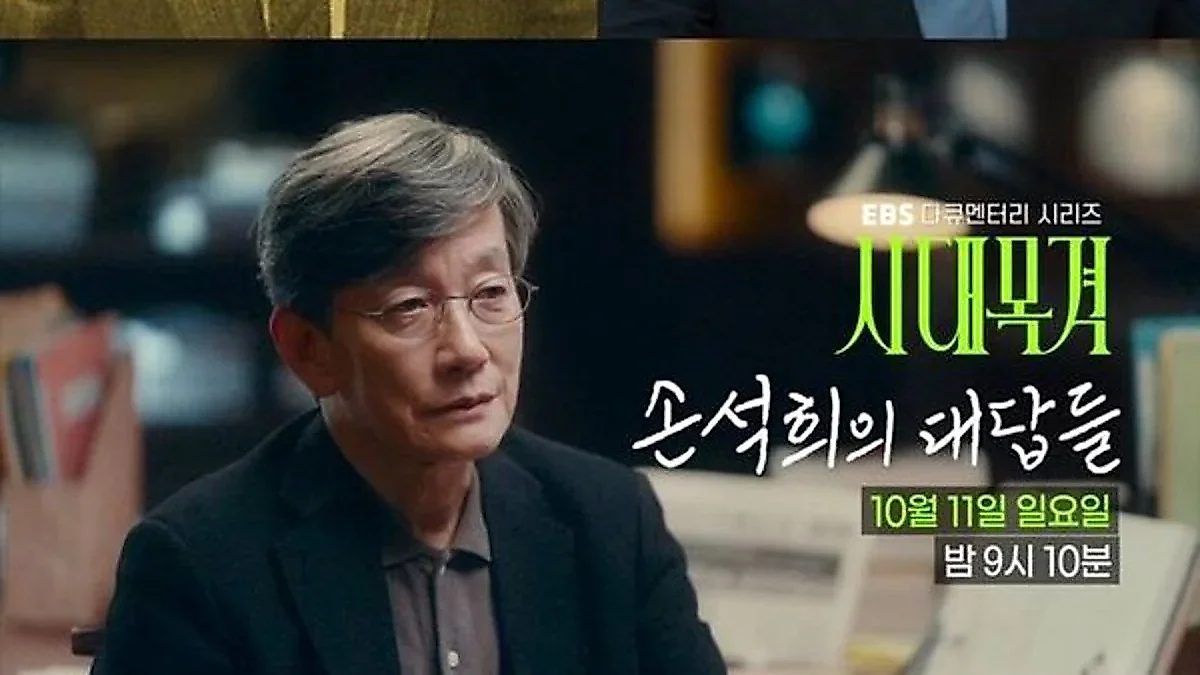
Journalist Son Seokhee revisits major scenes in modern Korean media history, revealing behind-the-scenes stories of strikes, arrests, and the struggle for broadcasting independence. In particular, attention is focused on the story behind the photo of him smiling while wearing a blue prison uniform after being arrested during the 1992 MBC strike, as well as his confession regarding the moment he felt he was at his most cowardly. As a figure who has long been evaluated as a symbol of a trusted journalist, attention is drawn to how he will look back on his choices and hesitations.
The 9th episode of the EBS documentary series 'Witnessing the Times', broadcasting at 9:10 PM on the 11th, highlights the major events of the era witnessed and experienced by the 43rd-year journalist Son Seokhee. Beyond his symbolism as a person who ranked number one as a trusted journalist for 20 years, this is an opportunity to examine the trajectory of change in Korean media through the conflicts and decisions he faced on the media front lines.
The broadcast begins from the period when Son Seokhee served as the weekend anchor for MBC Newsdesk. Looking back at the situation in 1988 when MBC entered its first strike to achieve fair broadcasting, Son Seokhee confesses the moment he considers to be the most cowardly in his journalistic life. It was a period when the conflict surrounding fair broadcasting did not stop at being an internal issue within the media industry but led to fundamental questions regarding the relationship between power and the press, and the independence of reporting. How a journalist who was on the scene at that time evaluates his own past is a major point of interest for this broadcast.
Stories from the time when MBC went on strike again in 1992 demanding broadcasting independence will also be revealed. Son Seokhee, who served as the deputy secretary of the External Cooperation Committee of the labor union leadership at the time, was arrested while active at the center of the strike. The broadcast conveys the situation at the time of his arrest, along with the story behind the photo known for showing him smiling while wearing a blue prison uniform. It is expected that the specific reasons why he was smiling amidst the heavy reality of intense struggle and arrest, as well as his feelings and the context of that time, will be revealed in detail.
This scene is meaningful in that it can symbolically show the risks and convictions that journalists had to endure at the time, going beyond a single individual's facial expression. While a photo sometimes leaves a stronger impression than a long explanation, one cannot conclude a person's emotions or the meaning of an event from an expression alone. The memories Son Seokhee will share directly are expected to serve as an opportunity to add specific context to the image fixed in that single photograph.
His feelings at the time of moving to JTBC in 2013 will also be revealed. Leaving the existing broadcasting environment to establish a new media outlet's reporting system must have accompanied considerable pressure. To the question of whether it was not a high-risk choice, Son Seokhee replies, "I will try to make the kind of broadcasting I wanted to do one last time, and if it fails, then let it fail. Whether it fails in a month or in a year." This part shows that the background of his job change was the will to directly implement the broadcasting he had pursued, rather than being certain of success.
The process of proposing a new journalism while holding the position of President of News at an unfamiliar broadcasting station is also covered. Changes in a media outlet are not completed merely through the movement of a brand name or individuals. How the priorities of coverage and reporting are set, to what extent independence from power and capital is secured, and in what way facts are delivered to viewers become the actual criteria for evaluation. Son Seokhee's move to JTBC caused significant waves in the media industry at the time, and this broadcast is expected to be an opportunity to look back on the background of that choice and the vision he held.
Behind-the-scenes stories of the field coverage that lasted 521 days during the Sewol tragedy and the exclusive report on the Choi Soon-sil tablet PC, which drew attention as a key clue in the 2016 political scandal, are also introduced. These two events are cited as occasions that greatly expanded the debate surrounding the role and responsibility of the press in Korean society. How to convey the voices of victims and bereaved families at disaster sites, and what evidence and verification procedures are needed when investigating power-related suspicions, are also issues that determine the credibility of reporting. The judgments and deliberations Son Seokhee experienced on the scene at that time are expected to make people rethink the role of the media.
The convictions of Son Seokhee, who was interested by the political world, such as rumors of running for Mayor of Seoul in the past, but walked the path of a journalist, are also highlighted. Journalists with great public influence are sometimes called upon to be subjects of political choice, but social influence and political participation are separate issues. The broadcast will also allow viewers to see for what reasons he tried to maintain his identity as a journalist and what he sought to protect in that process.
This 'Witnessing the Times' focuses on retracing the eras he passed through and the moments of choice, rather than summarizing Son Seokhee's career with only praise. The independence and fairness of the media are not guaranteed by the reputation of a specific individual alone; they must be supported by systems, reporting practices, and principles of monitoring power. From the memories of strikes and arrests to the reporting of major social events, interest is gathering to see whether we can examine what Korean media has protected and what tasks it has left behind through the experiences of Son Seokhee.
Lee Chang-seok is the CEO and editor of Mediafine and writes for Mediafine Global, mainly covering K-Variety and also writing on K-pop, Celebrity and K-drama.
Related Articles
Obituary for Huh Young-man, the truth is a person with the same name—what is his current status?

J.Y. Park to Face National Assembly Audit—Directly Addressing 'Phenomenon' Trademark Controversy and Business Expense Issues

Comments 0
Comments are currently disabled.