
'New Employee Chairman Kang,' the Burden of Fatherhood Heavier Than the Throne
JTBC's weekend drama 'New Employee Chairman Kang' reveals Kang Yong-ho not only as a chaebol patriarch, but as a flawed father confronting love, regret…
JTBC's Saturday-Sunday drama 'New Employee Chairman Kang' has reached an especially compelling point. On the surface, the series looks like a ruthless political drama about the succession structure of a chaebol family and the battle for corporate control. But when the story's center is examined more closely, what lies inside is one of the oldest human emotions: love for one's children, regret, and a paternal affection that could never be properly expressed.
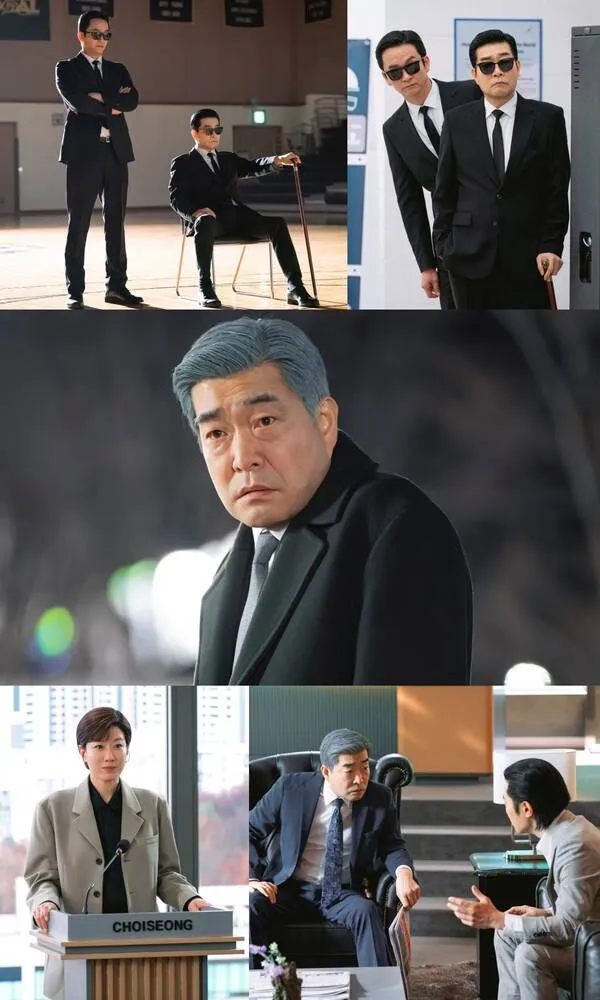
Son Hyun-joo, who plays Choi Seong Group chairman Kang Yong-ho, goes beyond the familiar image of a typical chaebol chairman. Kang is a man with power, but in front of the family he loves, he is also an awkward and incomplete father. The human cracks hidden behind his cold judgments and unsentimental decisions are what make the character more three-dimensional.
"Do not trust that child." The single sentence Kang Yong-ho says to his son Kang Jae-sung is not merely a warning. It is a moment where the judgment of a corporate leader and the worry of a father cross paths. On one side is the cool gaze of an executive who must protect the future of the group. On the other is the instinct of a parent who fears his son may be hurt by someone close to him.
In the end, the opponent Kang Yong-ho is fighting is not simply a rival or a candidate for succession. Inside the empire he has built over his entire life, he is fighting the collapse of his family's relationships.
Kang Yong-ho's life follows a familiar structure in Korean chaebol narratives. He is a figure who suppresses emotion to protect the company and sacrifices present happiness for the sake of the future. Yet the drama does not reduce those choices to simple cold-heartedness. Behind his actions, there is always a desire to protect.
His decision not to reveal the existence of his youngest daughter Kang Bang-geul, born from his remarriage to Cho Seon-hui, in order to protect her from the war of succession appears cruel on the surface. Forcing a young daughter to study abroad and ignoring her pleas to return home look like the indifference of a father. But behind that silence was Kang Yong-ho's own will to protect his daughter in the only way he knew.
When he learns that his daughter is being bullied at school, he goes overseas himself. Even then, he does not reveal that he is her father. He solves the problem as a man of power, while also trying not to interfere with his daughter's life. This scene shows the core of Kang Yong-ho as a character. He is not a father who does not love; he is a father who never properly learned how to love.
The philosopher Erich Fromm viewed love not simply as an emotion, but as an ability. To love means not to possess the other person, but to help that person grow. Kang Yong-ho has the heart to love, but the way he expresses it remains trapped in the language of power. He is accustomed to solving problems with money and influence, but he is clumsy when it comes to comforting someone with one warm sentence. That is why his love is often misunderstood.
To Kang Bang-geul, her father was someone who abandoned her. To Kang Jae-kyung, her father was a massive wall whose recognition was difficult to earn. To Kang Jae-sung, his father was both an object of respect and a rival he had to surpass. But after his soul comes to reside in Hwang Jun-hyeon's body, Kang Yong-ho is finally able to look back on his own past. Belatedly, he understands the wounds of his children that he did not recognize while he was alive, and he realizes that choices he believed were right had left deep scars on someone else. At this point, the drama moves beyond simple fantasy.
If we were given a chance to live again, what would we change? Kang Yong-ho's story begins from precisely that question. The fight within the Choi Seong family may appear to be a conflict over corporate management rights, but at its essence, it is the story of family members who want to be acknowledged. The competition between Kang Jae-kyung and Kang Jae-sung is not merely a collision of ambition. It is an old longing shared by children who want recognition from their father.
This is also why Kang Yong-ho remains silent even after witnessing Kang Jae-kyung cut the strings of her younger sibling's harp. It is not that he does not know his daughter's wrongdoing. Rather, he understands the inferiority complex and anxiety hidden behind that act. He chooses silence over punishment. That choice cannot necessarily be called right. Still, contained within it is the complicated psychology of a parent looking at a child. Parents sometimes see a child's wrongdoing, yet first notice the wound behind the action. Kang Yong-ho is precisely that kind of father.
The reason Son Hyun-joo's performance shines is that he does not turn Kang Yong-ho into a simple "good father." Kang remains a cold and calculating figure. When necessary, he judges as a person in power and makes decisions for the company. But inside that coldness are human fractures. Those fractures are exactly where viewers begin to emotionally identify with Kang Yong-ho.
Even a person who has reached the peak of power is ultimately the father of a family. Even a person who owns a vast company is, in front of the people he loves, only an incomplete human being. What makes 'New Employee Chairman Kang' interesting is not that it presents a success myth about a chaebol. Rather, it shows how much a successful person can lose.
Perhaps what Kang Yong-ho wanted to protect was not the throne of Choi Seong Group. Perhaps what he wanted to protect until the very end was the oldest value of all: family, which he had lost behind power. And it is exactly at that point that 'New Employee Chairman Kang' expands beyond a chaebol drama into a story about human beings.


Comments 0
Comments are currently disabled.