Park So Dam moved to tears by Lee Ha-nee's support during cancer battle
Actress Park So Dam opens up about her thyroid cancer battle and the heartfelt support from colleagues like Lee Ha-nee and Uhm Jeong-hwa.
Actress Park So Dam was moved to tears as she recalled the warm comfort provided by her fellow actors during her battle with thyroid cancer. From Lee Ha-nee's tearful empathy to Uhm Jeong-hwa's advice, and the calm check-ins from Cho Yeo-jeong and Sul Kyung Gu, it was the sincerity of those standing by her side—rather than grand gestures—that allowed Park to endure such difficult times.
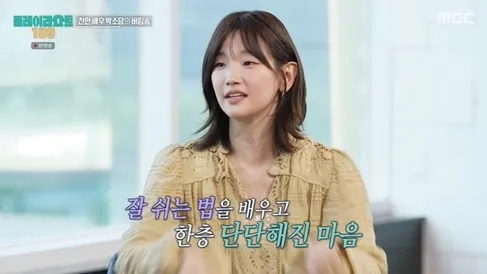
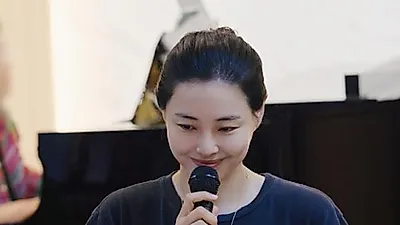
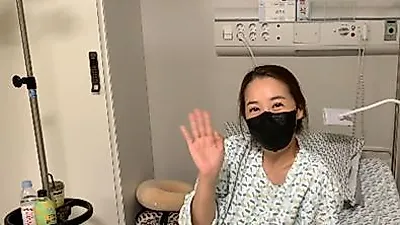
Appearing on MBC’s 'Songs That Survived Today - Playlist 109' on the 18th, Park spoke candidly about the psychological and physical changes she experienced around her thyroid cancer diagnosis and surgery, and her journey toward recovering her daily life.
Park began experiencing unexplained fatigue and depression while filming the movie 'Phantom.' At the time, she believed she was simply suffering from burnout due to her continuous work schedule without sufficient rest.
However, the test results were unexpected. Doctors discovered as many as 13 lumps in her neck, and the cancer had already metastasized to her lymph nodes.
For Park, who has always treated her body as her most important professional tool, the sudden diagnosis was more than a health crisis; it was an event that forced her entire life to come to a halt.
During that process, the presence of her closest colleagues provided immense strength.
Recalling a moment when she felt apologetic for not being able to fully perform her role on set, Park remembered how Lee Ha-nee cried alongside her. Park specifically recalled Lee's words: “Tell me if it's hard.”
Rather than a promise to fix everything, the mere fact that someone was willing to share in her pain provided Park with profound comfort.
The words of veteran actor Shin Gu left an even deeper impression.
Park recalled that whenever she burst into tears, Shin Gu would not rush her, but instead waited for her to cry her fill. Once her tears subsided, he would say calmly:
“Why are you crying? We still have to live today and live tomorrow.”
It wasn't grand hope or premature optimism. He didn't force her to erase her sadness or deny her pain; he simply told her to return to the present after she had finished grieving.
Shin Gu's brief sentence served as a reminder that life is ultimately about passing through each day rather than following massive future plans.
Advice from Uhm Jeong-hwa changed the very way Park treats her own body.
Having also experienced thyroid cancer, Uhm shared that while a person under general anesthesia might not fully remember the pain of surgery, the body itself remembers that time. She then asked Park:
“So-dam, have you apologized to your body?”
Though the question initially sounded strange, it prompted Park to begin saying, “You were in so much pain, I'm sorry,” to her own body.
While she had previously focused on pushing her body to its limits to complete projects, she no longer views her body merely as something to overcome. She realized her body is a living entity that has been with her for a long time and deserves care.
Cho Yeo-jeong's words even changed Park's daily habits.
Cho revealed that she asks herself before sleeping, “Did you live well today without regrets?” Following this, Park began asking herself both in the morning and before bed, “Did I live well today? Was it okay?”
Sul Kyung Gu's comfort was even simpler.
After her surgery, Sul called Park but did not pry into the specific details of her condition. Instead, he simply asked, “Have you eaten?” When Park replied that she had, he simply said, “Oh, okay,” and ended the call.
Though a brief conversation, those words provided deep comfort. For a sick person, what is often needed is not an analysis of the illness, but a sense of normalcy through everyday inquiries.
Following her surgery, Park focused on recovering both her body and mind.
She gradually rebuilt her strength by walking around Seokchon Lake, a place she had been familiar with since childhood. She started by slowly increasing her walking distance, beginning from a time when even a 15-minute walk left her breathless.
She did not force herself to hold back tears either.
Park cried so much at Seokchon Lake that those close to her joked, “Aren't all the tears at Seokchon Lake yours?” She described the lake as the place where she could fully let her emotions flow.
For her, walking was more than just exercise; it was a process of recovery, reclaiming her body's rhythm while releasing suppressed emotions.
This was also the context behind her solo 34-day trip to Europe. She drove all the way to Iceland to watch the aurora and would stop the car to take a nap whenever she found a beautiful landscape.
She learned how to use time at her own pace, stepping away from the life of an actress who must always move on a strict schedule to prepare for the next project.
Reflecting on her experience, Park said, “I wish it hadn't happened, but I think I handled being sick well.”
She felt that if she hadn't fallen ill, she might have continued running at the same pace without even realizing how much she was struggling.
While her illness was a forced pause that slowed her life down, paradoxically, that pause allowed her to finally look at what she was truly feeling.
During the broadcast, Park chose Hanroro's “0+0” as her "survival song." She noted that as she spent more time looking up at the sky following her illness, she began to notice the everyday scenery she had previously overlooked.
Ultimately, what Park gained was not a certainty of a "life without pain," but a sense of how to live through each day.
Just as Shin Gu said, “We still have to live today and live tomorrow,” life does not always begin after a perfect recovery. Sometimes, the process of living through each day—while crying, pausing, and fearing—is what life itself becomes.
The message Park delivered to those going through hard times reaches the same point.
She suggests asking yourself first:
“Are you really okay?”
Before waiting for the comfort of others, listening to the signals sent by one's own body and mind was the most practical and profound way of recovery Park learned while returning to daily life after her battle with cancer.
Related articles