Park Won Sook on divorce, debt, and losing her only son: 'I feel like I'm dying, but I'm still here'
Actress Park Won Sook shares her profound life philosophy after enduring two divorces, financial ruin, and the tragic loss of her only son.
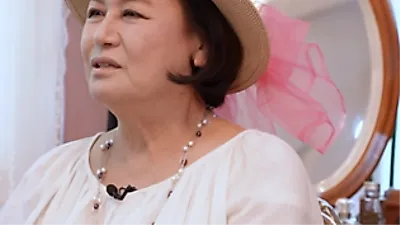
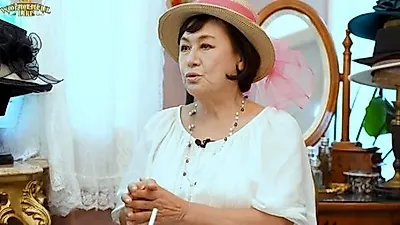
Actress Park Won Sook offered profound consolation to those enduring difficult times, opening up about the pain that has pierced her life, including two divorces, economic hardship, and the loss of her only son. Having navigated a turbulent life hidden behind her glamorous persona as an actress, she spoke of life's paradox, saying, “Even when it feels like I'm going to die, I am still living like this.”
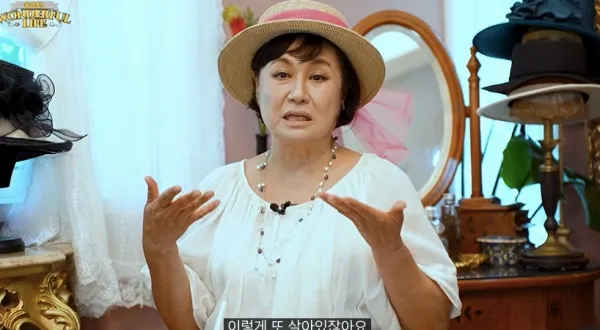
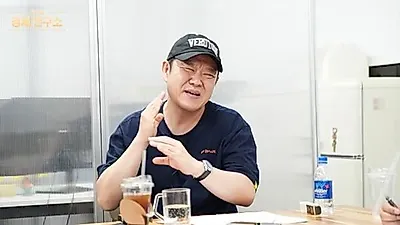
On the YouTube channel 'Song Seung-hwan's Wonderful Life,' a video titled 'Park Won Sook's Final Episode: Park Won Sook is also living, so please cheer up, everyone' was released on the 22nd. The production team noted that while listening to Park's life story, they realized anew that significant pain resided behind the moments she provided laughter as an actress, and they asked her to share words for those going through difficult turning points in life.
Park's life has a significant gap from the image the public has encountered through the screen. She revealed that she experienced two divorces in the past and faced extreme economic and social pressure, including organized crime members visiting the broadcasting station due to debts incurred in relation to her former husband. Even during her period of active work as an actress, she had to face a reality that was difficult to handle in her private life.
However, the deepest wound Park experienced in life was on a different dimension from economic hardship. She lost her only son in a car accident. The loss a parent experiences when a child dies is an event that is difficult to explain with the word 'sadness' alone. Park has also shared her feelings after losing her son and the process of enduring that time through various broadcasts in the past.
In this video, Park first pointed out how difficult it is to hastily comfort the pain of others. She said, “Even if I offer words of comfort, only the person themselves will know the pain or difficulty,” stating that the magnitude of suffering can ultimately only be fully felt by the person involved.
In particular, Park confessed that she used to think economic hardship was a relatively easier pain to endure, but her thinking changed only after losing her child. She said, “When I said that difficulties experienced through money are the easiest, that story felt hurtful, but after losing my child, I thought, 'Ah, so this is what it means.'” She added, “Living is difficult from the moment we are born,” emphasizing that life's pain does not visit only specific people as an exception, but exists for everyone in different forms.
The solution presented by Park was not grand. Rather, it was close to a small attitude that can be practiced in daily life. She advised not to compare one's situation by looking at the lives of others and not to be caught up in a sense of relative poverty. Her words, “Don't look at others and don't compare,” contained a warning against the psychology of modern people who constantly contrast their lives with the economic conditions or social success of others, defining themselves as lacking.
She continued by saying it is also necessary to think about what one can enjoy and to find satisfaction in small things. This means that rather than finding the meaning of life in grand success or external evaluations, one should secure the momentum to live again through the small joys of daily life given to oneself.
Above all, the reason Park's words carry weight is that they are not simple maxims or abstract optimism. This is because they are words released based on her own experience by a person who has directly passed through two marriages and divorces, situations close to economic ruin, social pressure, and the extreme loss of a child. She did not conclude that those who experience pain necessarily become strong, nor did she say that wounds are easily healed. Instead, she spoke of the fact that even in moments when one feels like collapsing, humans sometimes live through another day without even knowing it.
Park said, “Even when it feels like I'm going to die, I am still living like this.” She further shared that many people gained strength by watching her live, saying, “Park Won Sook also lived.” This part can be read as meaning that rather than consuming an individual's misfortune as a story of overcoming, one person's survival itself can become a reason for someone else to live.
Park, who has acted as an actress for a long time and played the lives of others in numerous works, is now telling another story through her life itself. The consolation she offered is more realistic than a simple slogan like 'cheer up.' It is to start by not comparing oneself to others, finding small satisfactions, and living through today if the pain cannot be eliminated. Even if life is sometimes as harsh as it is difficult to endure, her words, “Even when it feels like I'm going to die, I am still living like this,” remain a confession of the persistence of life proven by a woman who has endured pain for a long time.
 Up next
Park Won Sook: The passion for acting that marriage and pregnancy could not break
More on Park Won Sook