sinbyeong4: Sabotage mirrors real-life military assault in Yanggu
ENA's 'sinbyeong4: Sabotage' hits new viewership highs by tackling the harsh reality of military-civilian conflicts and the 2011 Yanggu assault case.
‘sinbyeong4: Sabotage’ directly addressed violence against soldiers and the unfair responses from local communities, evoking memories of a real-life incident from 15 years ago. By intertwining the story of a soldier assaulted by civilians simply for wearing a military uniform, the surrounding attitude of attempting to downplay the incident, and a commander who eventually takes a hardline stance against the entire local business district, the drama moved beyond a simple military episode to touch upon the long-standing tensions in military-civilian relations.
The 6th episode of the ENA Monday-Tuesday drama ‘sinbyeong4: Sabotage,’ which aired on the 8th, set a new record for the series, recording a nationwide viewership rating of 4.4% and a peak of 4.9% per minute. In particular, this episode enhanced its realism by bringing up not only internal military conflicts but also the relationship with civilian society that soldiers encounter during their leaves and outings.
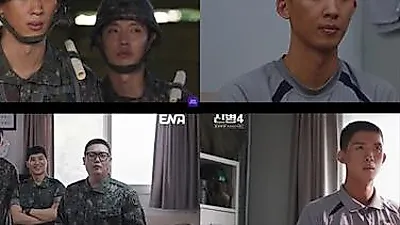
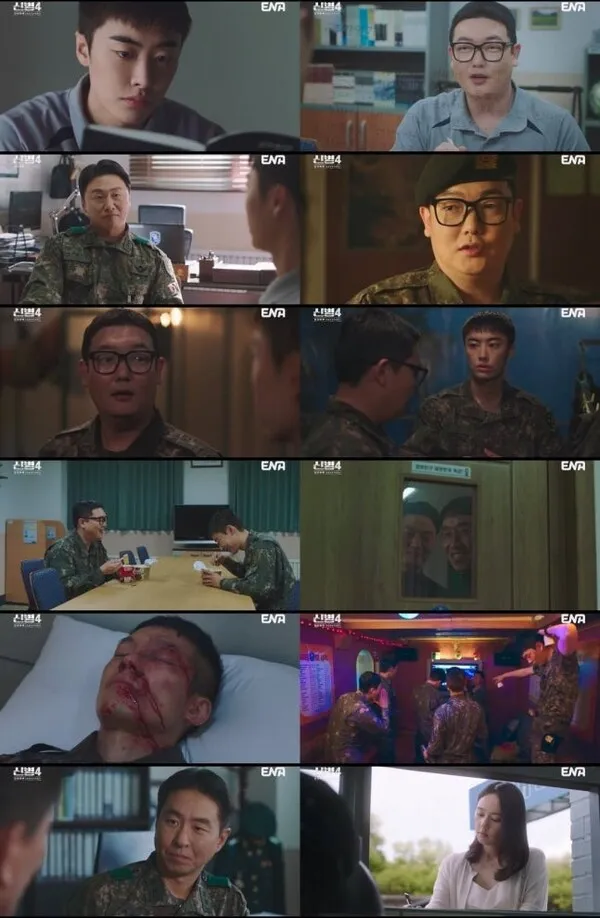
The first half began with the process of reconciling the conflict between Park Min-suk (Kim Min-ho) and Kim Hyeon-uk (Lee Won-jeong). Kim Hyeon-uk confirmed Park Min-suk's sincerity through his diary and poured out his pent-up emotions amidst the mediation of Jo Baek-ho (Oh Dae-hwan).
Park Min-suk also expressed his intention to take responsibility for Kim Hyeon-uk's mistakes. Ultimately, the two confirmed the misunderstandings and wounds they held toward each other and reconciled over a warm bowl of ramen. It was a scene that depicted the camaraderie and sense of responsibility formed within the closed organization of the military in a relatively emotional way.
The problem occurred after they went on a group outing. The soldiers from the 3rd barracks were mocked on the street with comments like "you smell like a soldier," and they also got into an altercation with male students. The situation escalated beyond a simple verbal argument into an incident where settlement money was demanded.
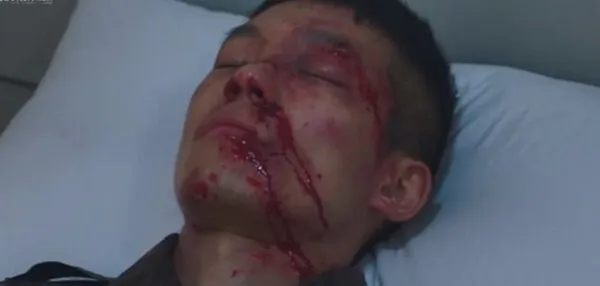
Kang Chan-seok (Lee Jung Hyun) stayed behind alone to send his juniors away first and handed over 50,000 won, but the situation did not calm down. Instead, the opposing party seemed to exploit the fact that soldiers go to the stockade if they fight, and eventually assaulted Kang Chan-seok while even tearing a group photo.
The bigger problem came after the incident. The police attempted to handle the facts as a "mutual assault," and local merchants also showed an attitude of not wanting to escalate the incident. At this point, the drama highlighted the paradox where it is structurally difficult for soldiers to defend themselves when they clash with civilians, and how their status as soldiers can actually act as a weakness.
Battalion Commander Byun Hyuk-jin (Lee Hyun-gyun) did not let this slide. He was infuriated by the reality that soldiers receive unfair treatment in the local community and eventually took the extreme measure of fully controlling the outings and leaves of all battalion members. By employing a method of attaching outings outside the designated military area to their leaves, he essentially declared a boycott against the local business district.
The reason Byun Hyuk-jin's choice in the drama left a strong impression is not simply due to a "superior's anger." It is because the scene asks to what extent a commander leading subordinates must take responsibility for the safety and honor of the organization members, and how conflicts should be resolved when the economic interests of the local community surrounding soldiers collide.
This episode feels particularly realistic because it is reminiscent of the actual military assault incident that occurred in Yanggu, Gangwon-do, in 2011. At that time, an incident occurred in Yanggu where soldiers on leave were group-assaulted by high school students. According to police reports, in March 2011, two soldiers on leave were assaulted by high school students in Yanggu-eup, and one of the victimized soldiers suffered a fracture below the eye, requiring 6 weeks of treatment. The police booked 10 high school students without detention at the time.
The incident at the time was not limited to a single act of violence. Police investigations revealed that the same gang had assaulted soldiers on leave in February, prior to that incident. It was reported that the victimized soldiers were wearing their military uniforms and had not responded actively because they had been educated by their unit not to cause unnecessary friction with civilians.
The reason this incident caused a huge social stir at the time was also due to the regional characteristics of Yanggu. This was because in an area where frontline military bases are concentrated, the outings and leaves of soldiers were closely linked to the local economy. Therefore, the violence against soldiers and the interests of the local business district inevitably expanded into the larger issue of military-civilian conflict.
‘sinbyeong4’ does not merely transplant the details of the real event, but rather uses such social memories as a dramatic device. While there are differences in characters and specific circumstances between the real-life event and the drama, the underlying concern—that soldiers in uniform are victimized in civilian society and fail to receive proper protection—remains the same.
The drama is particularly interesting in how it paradoxically demonstrates the obvious premise that "soldiers also have rights as citizens." While soldiers serve under national command, the moment they go on leave, they live in the same spaces as civilians. If their status as soldiers makes it difficult to respond actively to violence or unfair treatment, the uniform becomes both a symbol of protection and a marker of vulnerability.
In the Yanggu incident 15 years ago, it was also investigated that the victimized soldiers did not respond actively to avoid conflict with civilians. In this context, Kang Chan-seok's choice in ‘sinbyeong4’ is not mere dramatic exaggeration, but a reflection of the realistic dilemma the military organization faced when confronting civilian society.
The drama's solution is somewhat extreme. While a boycott against an entire local business district might create further conflict in real society, the dramatic narrative uses it to clearly deliver the message that "if soldiers are treated poorly, the local community will eventually pay the price." It also implies that if the military and local community fail to recognize their mutual economic and social dependence, the conflict will not end with a one-sided loss for one party.
This episode expanded its focus from internal military friendship and conflict to the issues of discrimination and violence in external society. This is why the ‘sinbyeong’ series does not stop at depicting the laughter and hardships of barracks life, but instead satirically touches upon the relationship between the unique military organization and Korean society.
At the end of the broadcast, Jeon Woo-ju (Han Ga-in), the older sister of Jeon Woo-ju (Kim Dong-jun), appeared at the guard post, hinting at further developments. The appearance of an unexpected character in the closed space of the military leaves the possibility of a different kind of incident unfolding in the next episode.
Ultimately, the question posed by episode 6 of ‘sinbyeong4’ is simple: Can violence that soldiers must endure because they are soldiers truly exist? Through a narrative reminiscent of a real incident from 15 years ago, ‘sinbyeong4’ reopens this question, using the language of popular culture to highlight the civil rights of soldiers and the long-standing cracks in military-civilian relations that were hidden behind laughter.
Related articles