AI revives 'A Chinese Ghost Story' star Joey Wong, recreating her prime beauty
AI technology recreates the legendary beauty of Joey Wong from 'A Chinese Ghost Story,' sparking debates on innovation and ethics in the industry.
The Chinese content industry is heating up as the prime appearance of Joey Wong, an actress who defined Asian cinema in the 1980s and 1990s, has been perfectly recreated through artificial intelligence (AI) technology. As an actress who has been away from the entertainment industry for over 20 years is brought back to life as her youthful self on screen through the latest AI technology, praise for technological innovation is being accompanied by spreading debates surrounding the artistry and ethics of actors.
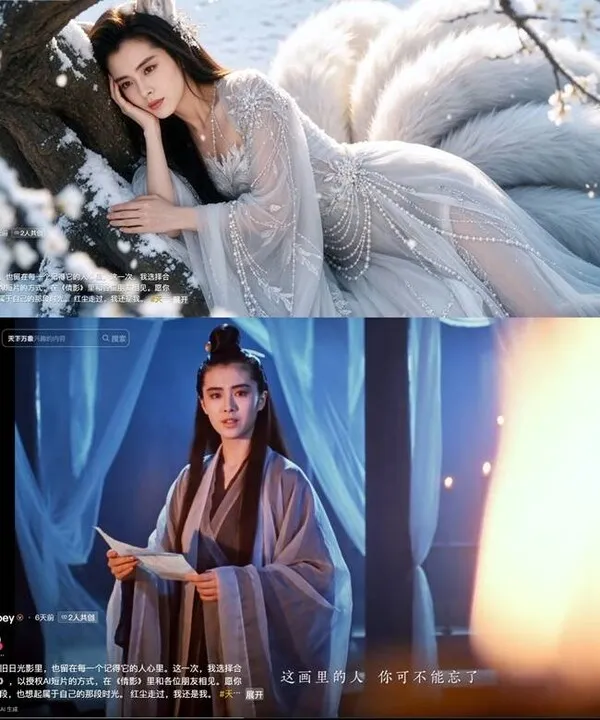
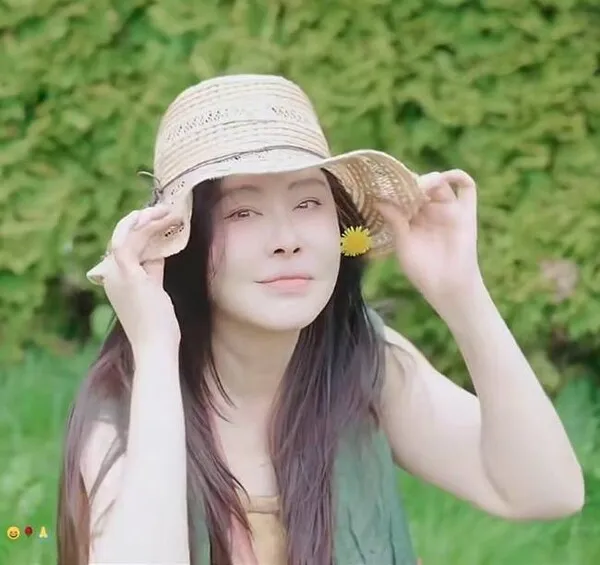
Wong recently released a video approximately two minutes long through her social media (SNS). The video caught the attention of fans by featuring Wong, whose face was implemented exactly as it was in her 20s, making it hard to believe her current age. Rather than simply restoring or retouching past footage, it is drawing attention as a case that demonstrates the advancement of AI technology, as new scenes that have never been revealed before are naturally implemented.
Introducing the video, Wong left a message saying, "In the heart of everyone who remembers, there is a story kept individually." She further explained that this work is an AI short film titled 'Qian Ying' (倩影), produced to promote the game 'Tian Xia' (天下) by the Chinese IT company NetEase.
This project is evaluated as a large-scale AI content production case that differentiates itself from existing simple face synthesis or deepfake technologies. NetEase stated, "We trained the AI using video materials accumulated over approximately 15 years, including more than 200,000 frames of data containing Joey Wong's face, expressions, and movements," adding, "A dedicated development team worked on the project for about one year to increase its completeness."
The industry evaluates that the AI has reached a level where it looks like a newly filmed video of the actual actress, as it elaborately implements not only the actress's face but also changes in expression, emotional expression, and natural movement. It is also being mentioned as a representative case showing that generative AI technology is changing the very methods of film and game production.
Local Chinese media also covered this project extensively. Many outlets showed great interest, introducing it as "the legendary actress of 'A Chinese Ghost Story,' Joey Wong, returning in a short film after 22 years."
In particular, analyses followed that this is a symbolic case of the AIGC (AI Generated Content) trend that is rapidly spreading in the Chinese content industry recently. It suggests that an era is fully beginning where AI is utilized not just as a simple production assistance tool, but as a core technology for creation.
Citing the 'China Digital Content White Paper 2026,' local media reported that in the first half of this year, 83 Chinese film, drama, and game production companies pursued digital artists and AI projects, and about 60% of these were works of modernly reinterpreting classic intellectual property (IP). This means that the method of producing new content by restoring popular actors and works from the past with AI is expanding across the industry.
However, views on technological development were mixed.
In Chinese online communities, positive reactions followed, such as "It really feels like the past Joey Wong has come back to life," "The technological power is amazing," and "I thought it was actually filmed at first."
On the other hand, there were not a few voices of concern, such as "No matter how high the completeness is, I don't want to watch an AI movie without a soul," "Technology cannot replace an actor's emotions and breathing," and "If it continues like this, won't actual actors become unnecessary in the future?"
As the restoration of actors' faces and the production of digital humans using generative AI rapidly spread in the global film industry recently, discussions surrounding portrait rights, copyrights, actors' creative rights, and ethical standards are also becoming active. The fact that SAG-AFTRA put AI as a major negotiation agenda is also not unrelated to these changes. It is essentially posing the question of how far technological advancement can replace the unique artistry of human actors while simultaneously opening up new creative possibilities.
Wong debuted in 1984 with the film 'The Legend of the Condor Heroes' and was active moving between Taiwan and Hong Kong. Subsequently, she established herself as a representative actress of Asia in the 1980s and 1990s by successively making hits such as 'A Chinese Ghost Story' and 'Swordsman.' Her mysterious atmosphere and unrivaled beauty remain a symbolic image in Chinese-language film history to this day.
She left the entertainment industry after the 2004 film 'Beautiful Shanghai' and has refrained from public activities for a long time. However, after opening a Douyin account in January, she has begun communicating with fans again, and this AI project has become her most talked-about moment since her retirement.
This project is not merely about restoring an actress's younger years. It serves as a symbolic milestone showing that the era of AI summoning past stars and classic content into the present has truly begun, while simultaneously triggering new debates on the boundaries between technological innovation and art.