Stephen Chow’s ‘Kung Fu Soccer’ sparks controversy over mockery of Korean women's football
Stephen Chow's new film 'Kung Fu Soccer' faces backlash for using cultural stereotypes to caricature a Korean women's football team.
While director Stephen Chow's new film 'Kung Fu Soccer,' which garnered high expectations as the return of a representative Chinese-language comedy, is creating a box office sensation immediately after its release in China, it has become the center of controversy due to allegations that it includes scenes caricaturing the Korean women's football team.
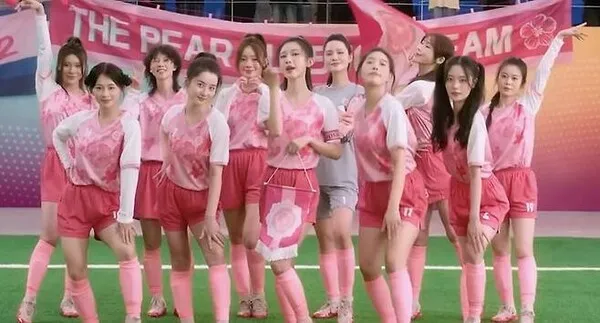
Despite its genre characteristics as an entertainment film combining football, martial arts action, and comedy, criticism is emerging that it negatively portrays a specific country and a group of female athletes, expanding into a debate over the boundary between cinematic satire and cultural representation.
'Kung Fu Soccer' was released in China on the 11th. The work is a sports comedy that follows the lineage of Chow's representative masterpiece 'Shaolin Soccer,' which gained worldwide popularity in 2001, combining traditional martial arts like Kung Fu with modern sports like football to feature exaggerated action and his signature B-movie humor.
Its box office performance since release has been notable. Within just five days of opening, it recorded revenues of approximately 800 million yuan (about 170 billion won), attracting high interest from Chinese audiences. It is evaluated that Chow's unique slapstick comedy and fantasy action directing reassembled his long-time fan base.
However, separate from the film's popularity, some scenes are sparking controversy for being mocking expressions aimed at Korea.
The problematic scene features an 'Ewha Women's Football Team' with a name reminiscent of Ewha Womans University in Korea. In the film, the team is depicted as tripping opposing players or committing intentional fouls during matches. Subsequently, criticisms have been raised that the film imparts a negative image to viewers by portraying them as a team that induces red cards or warnings for opponents through exaggerated acting, so-called 'Hollywood acting.'
In particular, the point of contention is that the team is expressed not merely as villains, but as a 'team that uses fouls as a strategy.' While using an opposing team as a device for conflict is a common narrative method in sports movies, it is argued that when combined with settings that evoke a specific country or a real existing institution, it carries cultural significance beyond a simple dramatic device.
Furthermore, the way Korean language is expressed has fueled the debate. Scenes where Korean characters shout "Please help the referee" with awkward Korean pronunciation, as well as depictions of wearing circle lenses or touching up makeup during matches, are receiving criticism for potentially consuming Korean female athletes through fixed stereotypes.
Critics point out that this is not merely about awkward foreign language expressions or comedic exaggeration, but a method of repeating old cultural stereotypes regarding a specific country and women. Especially in a recent era where awareness is spreading in the international sports arena that female athletes should be evaluated based on their performance and professionalism, the direction emphasizing appearance-centered depictions and unprofessional images is criticized for being out of step with modern trends.
While a film is inherently a fictional creation and the comedy genre broadly allows for expressive methods that exaggerate and satirize reality, in cultural studies and media criticism, when a specific group is caricatured and the target is a social minority or linked to national identity, the direction of the laughter becomes an important issue.
As French philosopher Roland Barthes pointed out, images in popular culture produce social meaning beyond simple representation. This means that while a scene on screen may be consumed as a simple joke, repeated images and narratives can become cultural devices that form perceptions of a specific group.
In particular, due to the genre characteristics of sports movies dealing with competition and identity between nations, it is an even more sensitive area. In the process of building a narrative through wins, losses, and competition, how the opposing team is depicted can lead to issues of cultural attitude beyond simple character setting.
Currently, the 'Kung Fu Soccer' side has not released an official position regarding the controversy. While the work continues its box office momentum in China and is preparing for overseas release, there remains a possibility that the scenes used as comedic material for Korean audiences may instead be received as uncomfortable cultural codes.
Ultimately, this controversy is evaluated as a case that once again reveals the problem of balance between the freedom of expression found in Stephen Chow's exaggerated comedy and the cultural sensitivity required in the era of global content. The old questions of where to draw the line between entertainment and satire, and what level of responsibility creators should bear when depicting other cultures, are once again surfacing.
Related articles