Film poster designer Park Si-young settles in Goheung with partner of 15 years
Film poster designer Park Si-young shares how his 15-year relationship led him to leave Seoul for a rural life in Goheung to support his partner.
Film poster designer Park Si-young has opened up about how his relationship with his same-sex partner of 15 years prompted a deep reflection on his life. Unlike himself, who was accustomed to urban living, he moved his base of operations to Goheung to accommodate his partner's desire for a rural lifestyle, experiencing firsthand how love can reshape one's values and way of life.
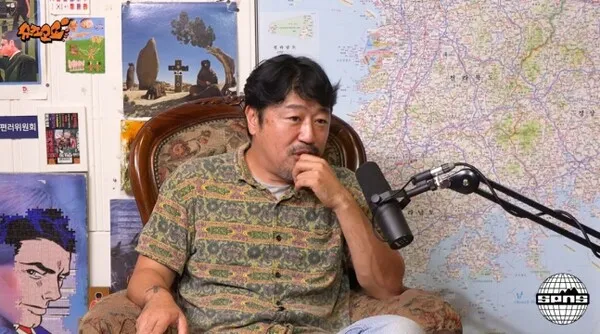
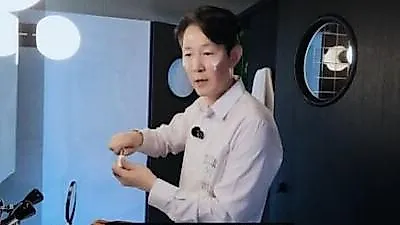
On the 19th, Park appeared on the YouTube channel 'SPNS TV' in a video titled "The 10-Million-Viewer Film Poster Designer Who Fled to Seoul to Avoid Becoming a Gangster," where he shared stories regarding his life, romance, and his decision to settle in Goheung.
During the appearance, Park was asked, "You look healthy and seem to have reflected a lot; was there a specific catalyst for your positive change?" He replied without hesitation, "The true catalyst was romance."
He explained that through love, he was able to view himself objectively, stating, "If that catalyst hadn't existed, I wouldn't have realized that I had problems."
"Because I am so accustomed to my own life, it is difficult to realize what problems exist when I am within my own routine. But when you fall in love, you begin to see those problems, and because of your feelings for the other person, you feel a desire to improve yourself somehow."
In Park's words, love functions not merely as an emotional connection, but as a catalyst for self-awareness. While living alone, it is easy to accept one's habits as a normal order; however, the moment one forms a close relationship, they begin to perceive how their familiar behaviors are received by their partner.
In particular, romance served as the decisive moment for Park to reconsider his urban-centric life.
Park has been living in Goheung with his partner for five years. He revealed that the mismatch between his partner's needs and urban living was the primary driver for the move, noting, "I have lived with this person for about 15 years, and they were originally not suited for the city."
While his partner was working in the city, they even suffered from alopecia and had consistently expressed a desire to pursue farming. In contrast, Park had built his entire professional career around the city for a long time.
In essence, the two had different lifestyles from the beginning.
However, Park noted that his partner had been the one adjusting to his lifestyle for years. "That person was not suited for city life. Since they endured city life for nearly 10 years, I felt it was time to switch roles," he said.
He added, "Since I have a certain reputation, I also had the thought that I wouldn't starve," explaining that he felt secure enough in his professional foundation to make this choice for his partner's sake.
The move to Goheung was more than a simple relocation to the countryside; it was a process of mutual adjustment in a relationship where one side had long catered to the other's lifestyle.
For Park, leaving the city meant stepping away from the familiar metrics of success. As a designer who built the visual identities of numerous films while working primarily in Seoul, the city and the film industry were the central axes of his life.
The weight of his contribution to the Korean film industry is evident in his portfolio. Park made his name by designing posters for major films that achieved both commercial success and critical acclaim, including 'The King's Warden', 'The Wailing', 'The President's Last Bang', 'Noryang: Sea of Death', and 'Veteran 2'.
A film poster is more than a promotional tool; it is the first image an audience encounters, a visual text that compresses the genre, emotion, character relationships, and atmosphere of a film. It serves as an "image narrative" that enters the audience's memory before the film even begins.
While Park has spent his career visually constructing the stories of others, he has now chosen to reconstruct his own life.
At the center of this shift is the partner he has been with for 15 years.
Rather than defining the relationship through specific labels, he spoke of his partner as a companion with whom he has navigated life's adjustments. This highlights that in long-term cohabitation, the accumulated time and mutual influence often matter more than the formal structure of the relationship.
Ultimately, Park emphasized that romance made him a more "positive person." He explained that love did not magically change him, but rather provided the motivation to recognize and improve his own flaws.
This perspective views love not just as a romantic sentiment, but as a process of reconciling one's own values and lifestyle with those of another. In that reconciliation, one often confronts aspects of themselves they had previously ignored.
For Park, these 15 years of romance have been a period of profound self-discovery.
The couple—one accustomed to the fast-paced film industry and the other longing for nature and farming—could have faced constant conflict. Instead, Park embraced these differences as a reason to change their shared path.
As a result, they have settled in Goheung.
His comment regarding the "switch in roles" serves as a symbolic expression of how long-term relationships are maintained: not through one-sided sacrifice, but through a process where partners occasionally step out of their own worlds to enter the other's.
What Park gained in Goheung likely extends beyond a new environment. For a successful professional, success is often measured by networks and recognition, but life satisfaction does not always follow that trajectory.
Sometimes, slowing down and re-evaluating the elements of one's life reveals values that were previously invisible.
Having spent his career compressing the lives of cinematic characters into single images, Park has now selected a new scene for his own life. Moving from Seoul to Goheung is, perhaps, the new poster for the next chapter of his life.
His confession that "when you fall in love, you begin to see those problems" carries weight beyond a simple romance. Love is not a magic spell that makes a person perfect; rather, it can be a mirror that reflects one's imperfections more clearly. Deciding how to respond to that reflection is ultimately up to the individual.
Through 15 years of cohabitation, a move to Goheung five years ago, and a storied career in film, Park Si-young's journey demonstrates that a successful career and urban stability are not the only ways to live. His story suggests that the most profound changes are often driven not by grand events, but by the presence of the person we face every day.
Related articles