Jeon Beom-seon expresses discomfort over comparison with Ha Young
Yangbans vocalist Jeon Beom-seon addresses the controversy surrounding actress Ha Young, distinguishing their family legacies and social benefits.
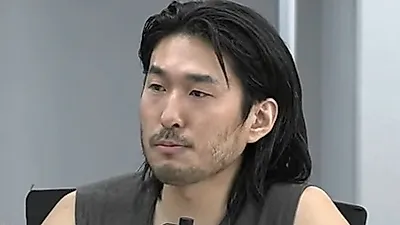
Jeon Beom-seon (35), vocalist of the band Yangbans, has expressed discomfort regarding being compared to actress Ha Young (33) amidst the recent controversy surrounding her pro-Japanese ties. While both individuals have ancestors known for their pro-Japanese activities during the Japanese colonial period, Jeon argued that it is inappropriate to evaluate both families on the same level based solely on bloodline.
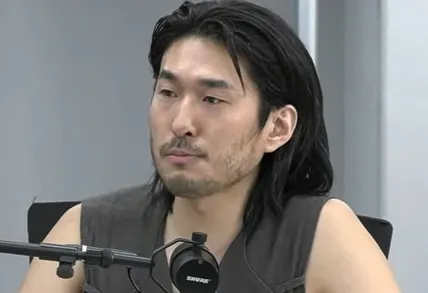
In particular, Jeon analyzed that the criticism against Ha Young has intensified because she is considered a "descendant of Japanese blood" due to partial Japanese lineage, and because her family inherited historical and socio-economic benefits. In contrast, he explained that while he is also a descendant of an ancestor who engaged in pro-Japanese activities, he is a "descendant of the abandoned Koreans" who did not enjoy any economic or social benefits in the process.
In a video released on the YouTube channel "SPNS TV" on the 26th, Jeon mentioned the recent controversy surrounding Ha Young and stated, "It is somewhat uncomfortable and I feel sorry," regarding the situation where he is being compared to her.
He explained his intention, noting that he does not wish to be highlighted as a relatively more moral figure through comparisons such as, "Ha Young is like this, but Jeon Beom-seon is like that," adding, "It is not that I want to be exceptionally morally upright."
The reason Jeon emphasized that their family lineages are different lies in the family history related to Ha Young's great-grandfather, An Sang-ho.
An Sang-ho is known to have formed a family by marrying a Japanese woman, Kawaguchi Isoko. In 1918, the Maeil Sinbo, an official organ of the Japanese Governor-General of Korea, featured family photos and the lifestyle of An Sang-ho and his children.
Mentioning this, Jeon claimed, "One-sixteenth of him is Japanese," and argued, "It is also ridiculous to call a descendant of Japanese blood a pro-Japanese collaborator." This is interpreted as a statement suggesting that the fact of having partial Japanese blood should be distinguished from the historical responsibility of an ancestor who participated in pro-Japanese activities during the colonial period.
However, the concept of a "pro-Japanese collaborator" does not simply refer to Japanese blood or nationality. Historically, it must be judged based on the actions of cooperating with or actively participating in the Japanese colonial rule and the resulting social and political context. Therefore, attributing pro-Japanese responsibility to a descendant simply because an ancestor was Japanese, and examining whether the social and economic legacy of a pro-Japanese actor has been passed down to future generations, are issues of different dimensions.
Jeon also spoke specifically about his own lineage. His ancestor, Yi In-jik, is a literary figure credited with writing "Blood's Tears," one of Korea's first modern novels, but he has been cited as a representative pro-Japanese figure who cooperated with Japanese colonial rule.
Jeon is known to be a fifth-generation descendant of Yi In-jik's maternal line, and he has publicly mentioned his lineage and Yi In-jik's pro-Japanese activities in the past.
Regarding his own family, he said, "It is said that my grandfather abandoned a Korean woman, married a Japanese woman, and started a new family. I am a descendant of that abandoned Korean family. Who knows what it would have been like if I were a descendant of a Japanese woman."
This is closer to an argument that the pro-Japanese actions and their results must be distinguished by how they were transmitted to descendants, rather than a simple explanation of differences in bloodline. In the past, Jeon has not denied that his ancestor engaged in pro-Japanese activities, but he has drawn a line at the perception that he inherited immense wealth or social status because of it.
On the other hand, regarding the background of why the criticism against Ha Young has become relatively more intense, he cited the social status and benefits her family enjoyed.
Jeon stated, "Because they received such benefits, they receive much more criticism." This implies that not only the actions of the ancestor themselves, but also how the social capital connected to those actions functioned in the lives of the descendants, can dictate public evaluation.
This perspective is also one facet of the recurring "liquidation of pro-Japanese elements" debate in Korean society. While it is a separate issue whether moral responsibility can be directly imposed on descendants simply because they are descendants of pro-Japanese figures, whether the wealth and social status formed through pro-Japanese activities were maintained across generations has been a constant subject of debate in terms of historical inequality and the inheritance of opportunity.
Jeon also maintained a certain distance from the controversy by suggesting that Ha Young might not have been fully aware of the historical context regarding her great-grandfather.
Jeon speculated, "She probably heard from her family that her great-grandfather was a great man. Since I majored in history, I could look at my ancestor in an objective context, but since Ha Young did not major in history, she likely made those remarks without fully understanding the social context."
This touches upon the question of how much descendants should be aware of their ancestors' actions. There is a social demand that when pride in family history clashes with historical evaluation, descendants should not merely accept past glory but also examine the history of colonial rule and collaboration that exists behind it.
The controversy surrounding Ha Young began during the broadcast of KBS2's "Problem Child in House" on the 7th. During the show, Ha Young introduced herself as being from a "four-generation doctor family," stating, "My great-grandfather studied medicine in Japan and opened the first Western-style clinic in Hanyang, where he treated Emperor Gojong."
Following the broadcast, it was revealed that her great-grandfather was An Sang-ho, and the controversy spread as his activities during the Japanese colonial period were re-examined. Criticism intensified as it became known that Ha Young had frequently mentioned her great-grandfather's achievements in various broadcasts and interviews.
Ultimately, Ha Young released a handwritten apology, stating that she had introduced her family history without fully grasping the historical context of her ancestor's actions.
Jeon Beom-seon's comments offer another perspective on this controversy. He suggests that rather than evaluating individuals equally based on the bloodline of pro-Japanese ancestors, it is necessary to distinguish between the specific actions of the ancestors, the social and economic benefits they generated, and how descendants perceive and inherit that history.
Ultimately, this debate is not just about identifying descendants of pro-Japanese collaborators. It is about determining the criteria for linking past actions to present individuals, distinguishing historical responsibility from biological lineage, and examining how the social assets formed during colonial rule persist to this day.
Jeon's emphasis on the difference between himself and Ha Young reflects this context. While he does not deny his ancestor's wrongdoings, he questions the application of the same moral standard to descendants. Meanwhile, Ha Young's case demonstrates how introducing family history can expand into a social debate when it intersects with historical context.
Related articles