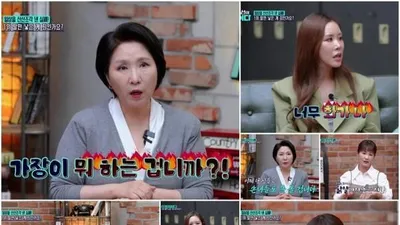
Lee Ho-sun: "Giving birth doesn't make you a parent"
On SBS Plus's 'Lee Ho-sun's Cider,' the host addresses the deep scars of familial discrimination and the true meaning of parenthood.
Family is considered the primary community where individuals learn to form relationships and the space that should be the safest. However, even within the bond of blood ties, repeated discrimination and exclusion can leave deep scars on one's lifelong self-esteem and identity. SBS Plus's 'Lee Ho-sun's Cider' shed light on the issues of discrimination and emotional neglect occurring within families, prompting a reconsideration of the parental role and the essence of family relationships.
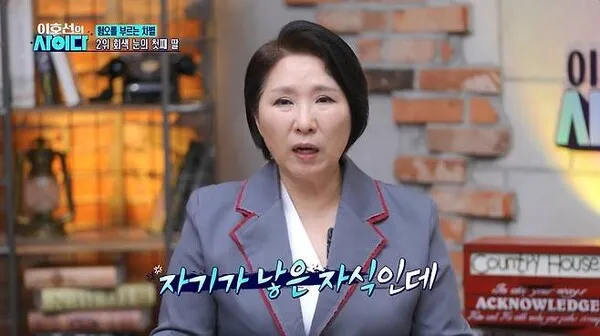
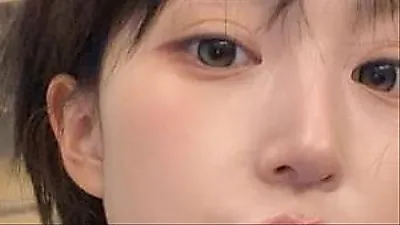
Broadcast on the morning of the 11th, 'Lee Ho-sun's Cider' introduced various real-life stories under the theme of 'Discrimination That Invites Hatred.' Among them, the case that garnered the most empathy was the story of a woman who inherited gray eyes from her foreign biological father.
According to the broadcast, the storyteller formed a new family after her biological mother divorced her foreign biological father and remarried, after which a younger half-sibling was born. She revealed that since childhood, she experienced prejudiced gazes in school and society because her appearance differed from her peers, but above all, what made her struggle most was the repeated discrimination within her own family.
The storyteller said her mother treated her and her sibling differently in everyday moments. She recalled that when going out, her mother would only hold her sibling's hand, and for school sports day lunch boxes, while a meticulously decorated character lunch box was prepared for the sibling, she was given fried rice mixed with leftover ingredients.
She also felt discrimination regarding educational opportunities. When she requested to be sent to a piano academy, she was rejected, but her mother actively supported the sibling so they could participate in various competitions. Furthermore, the broadcast noted that she was excluded from the stepfather's family gatherings while only the sibling attended, and her maternal grandmother also repeatedly said hurtful things regarding her appearance.
These experiences accumulated during her upbringing and continued even after she became an adult. The storyteller revealed that she finished her studies and prepared for marriage without any financial support from her parents, but her mother even tried to maintain distance during the formal meeting between the families and the wedding preparation process. She confessed on the broadcast, "I have been discriminated against my whole life, but I still want to receive my mother's love," revealing a long-standing emotional conflict.
Upon hearing the story, entertainer Kim Ji-min mentioned the impact that familial discrimination has on a child's ego formation and identity. She expressed sadness, saying, "If you repeatedly experience siblings being treated differently in the same house, you end up asking the fundamental question, 'Why am I not loved?'"
Counseling psychology expert Lee Ho-sun pointed out a more fundamental problem. She analyzed, "The most heartbreaking part is that the daughter, who was never recognized throughout her life, still craves her mother's love and recognition even at the moment she is facing marriage."
Continuing, Lee diagnosed, "No matter what she does, there is no place prepared for the storyteller within that family," and advised that forming a new community for life is essential. She explained that the process of building healthy relationships with a spouse and a future family, and creating a new protective circle for oneself, can be the starting point for recovery.
In particular, Lee emphasized, "It is difficult to see someone as having fulfilled the parental role if they did not provide love," adding, "Becoming a parent is not completed simply through childbirth." She stressed that the role of a parent goes beyond a simple biological relationship and only gains true meaning when accompanied by continuous protection, affection, and responsibility.
Recently, in the fields of psychology and family counseling, research has steadily shown that discriminatory parenting can have long-term effects on a child's attachment formation, self-esteem, and interpersonal relationships. Many analyses suggest that comparison and favoritism between siblings go beyond simple childhood conflicts and can lead to depression, low self-efficacy, and relationship anxiety well into adulthood.
This broadcast did not stop at merely introducing cases of family conflict, but provided an opportunity to question the role of parents and the meaning of the family community. It reminded viewers that the essence of a family is not completed by blood ties alone, but that healthy family relationships can only be formed when respect, affection, and fair care are present.
Related articles